
A Day in the Life with the HAT Field Crew
By Maya Irwin
Have you ever wondered what it’s like to work on the HAT field crew?
Well, let me show you.
7 AM: Wake up. Stretch! Eat a good breakfast to power up for the whole morning.
8:15 AM: Hop over to the HAT office on Burnside. Hug all my friends because it’s been a whole night since I’ve seen them.
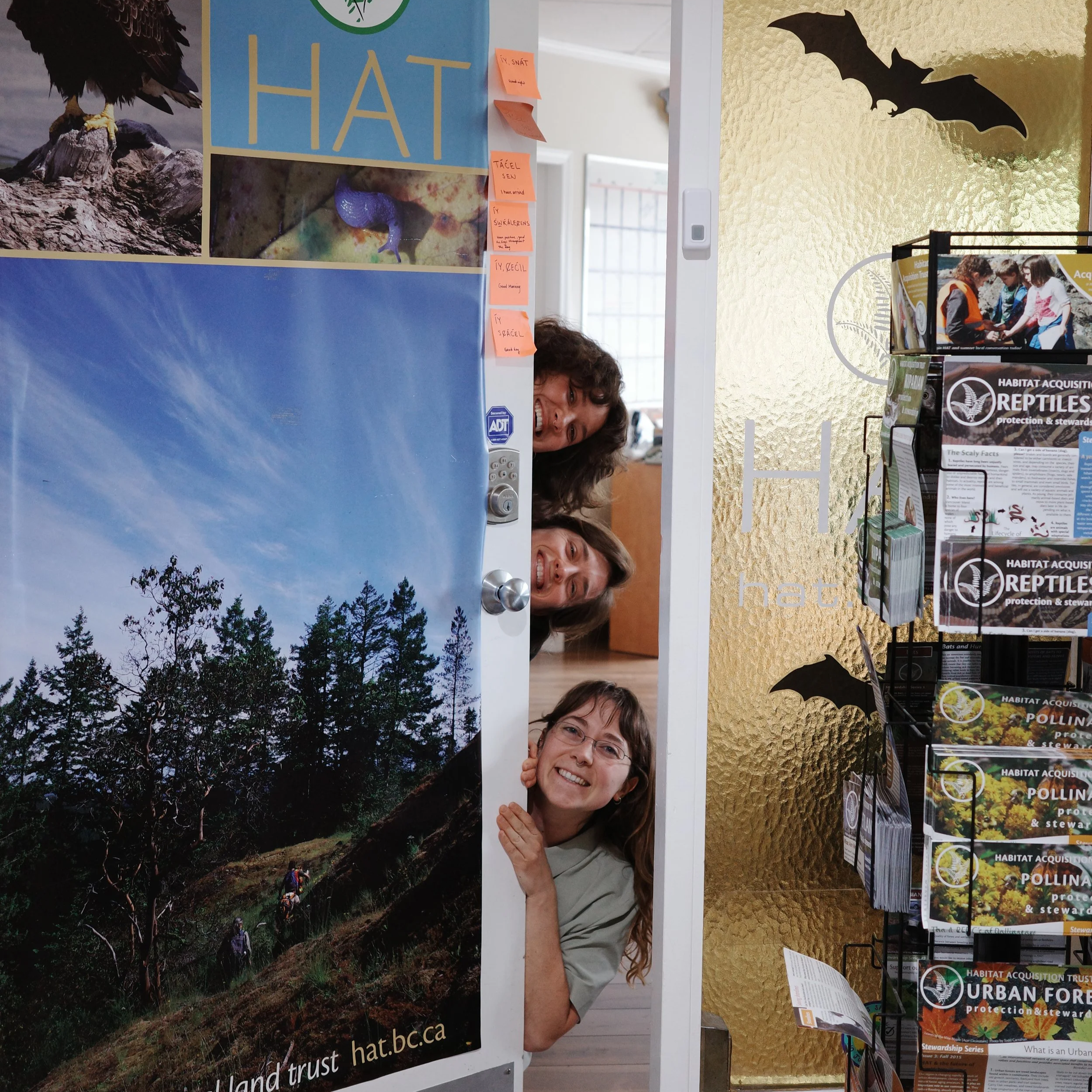
Photo by Gavin Sam
8:30 AM: Load up the work van (our beloved ‘Goldie Star’, in case you haven’t met her) with any tools we need and head out to site. Depending on where we are working that day, it could be anywhere from a 15 to a 50-minute drive. On the way, we choose from our assortment of thrifted CDs. On frequent rotation are Women in Songs 7, the Dixie Chicks, Ms. Dolly Parton, and the Buena Vista Social club for those quieter mornings.
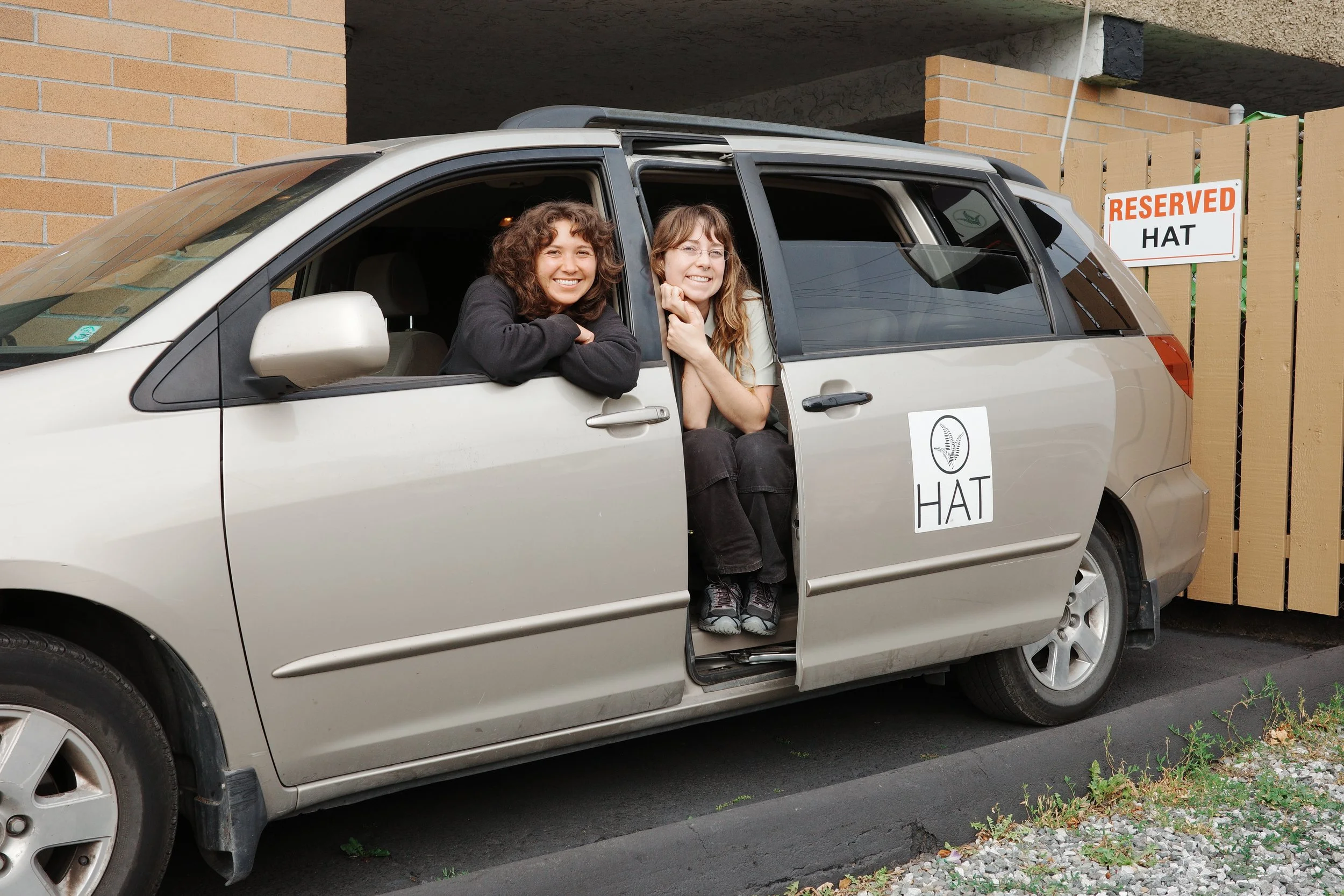
Photos by Maya Irwin
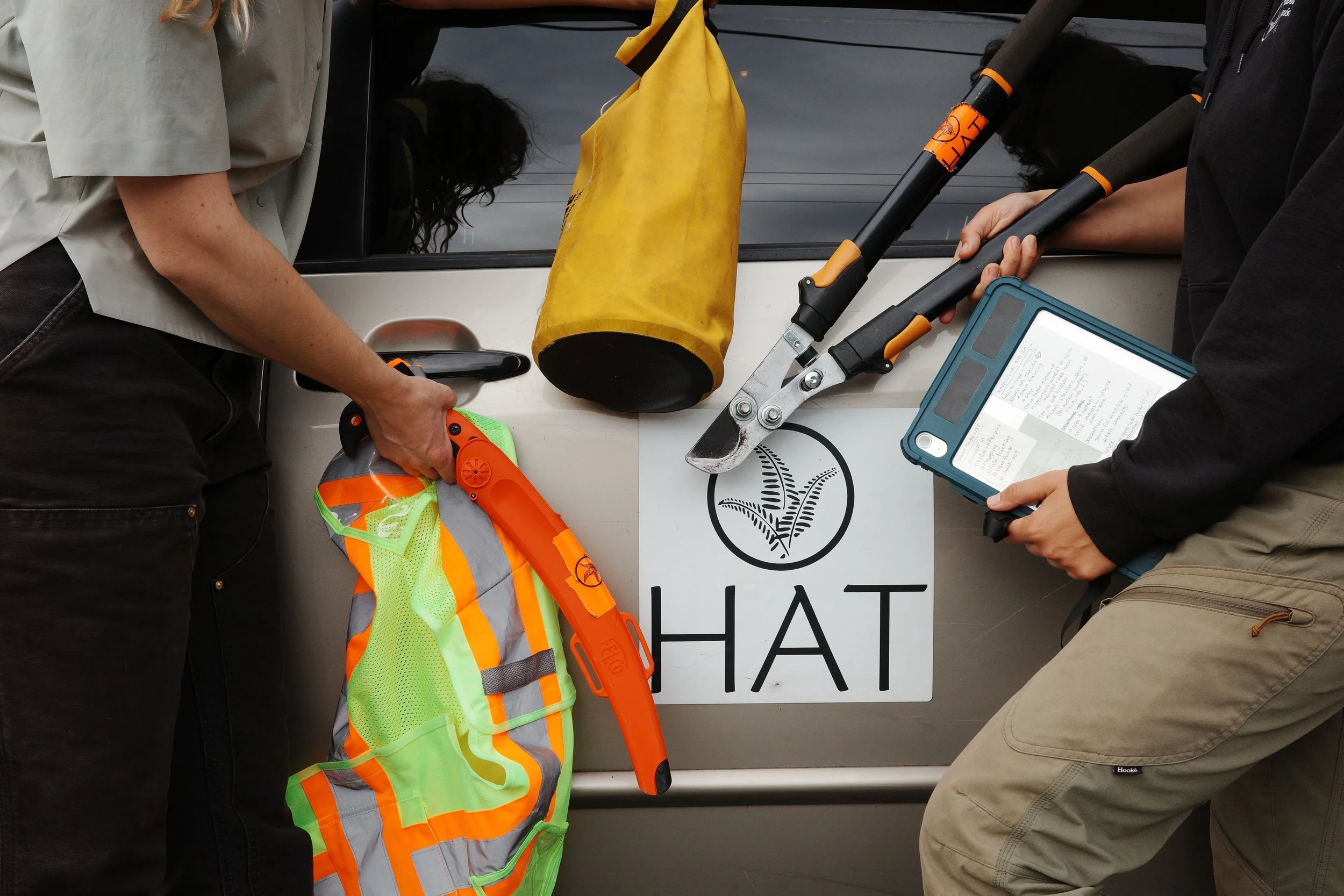
9 AM (ish): Arrive on site. Check-in with our besties at the office to let them know we have arrived safely.
If we have never been to the property before, we may meet with the landowner at this point to walk around and make a plan of action. If it’s one of our familiar sites, we will likely get straight to work. But not before we hit a lil’ stretch/safety talk/time for questions like:
Which species should we target?
Where do we pile the biomass?
If you were a bird, what bird would you be?
This includes a generous application of sunscreen and/or sun protective clothing, while taking stock of the general extent of the target species. If we’ve got a moment, we’ll snap some ‘Before and After’ photos to help show what progress we’ll make today.
9 AM - 12 PM: Get to WORK
At some sites, we focus on tackling one main species (such as Scotch Broom). At other sites we may be trying to clear a specific area of all the introduced species. We make these decisions on a case-by-case basis depending on the impacts on the ecosystem and the particularities of the site.
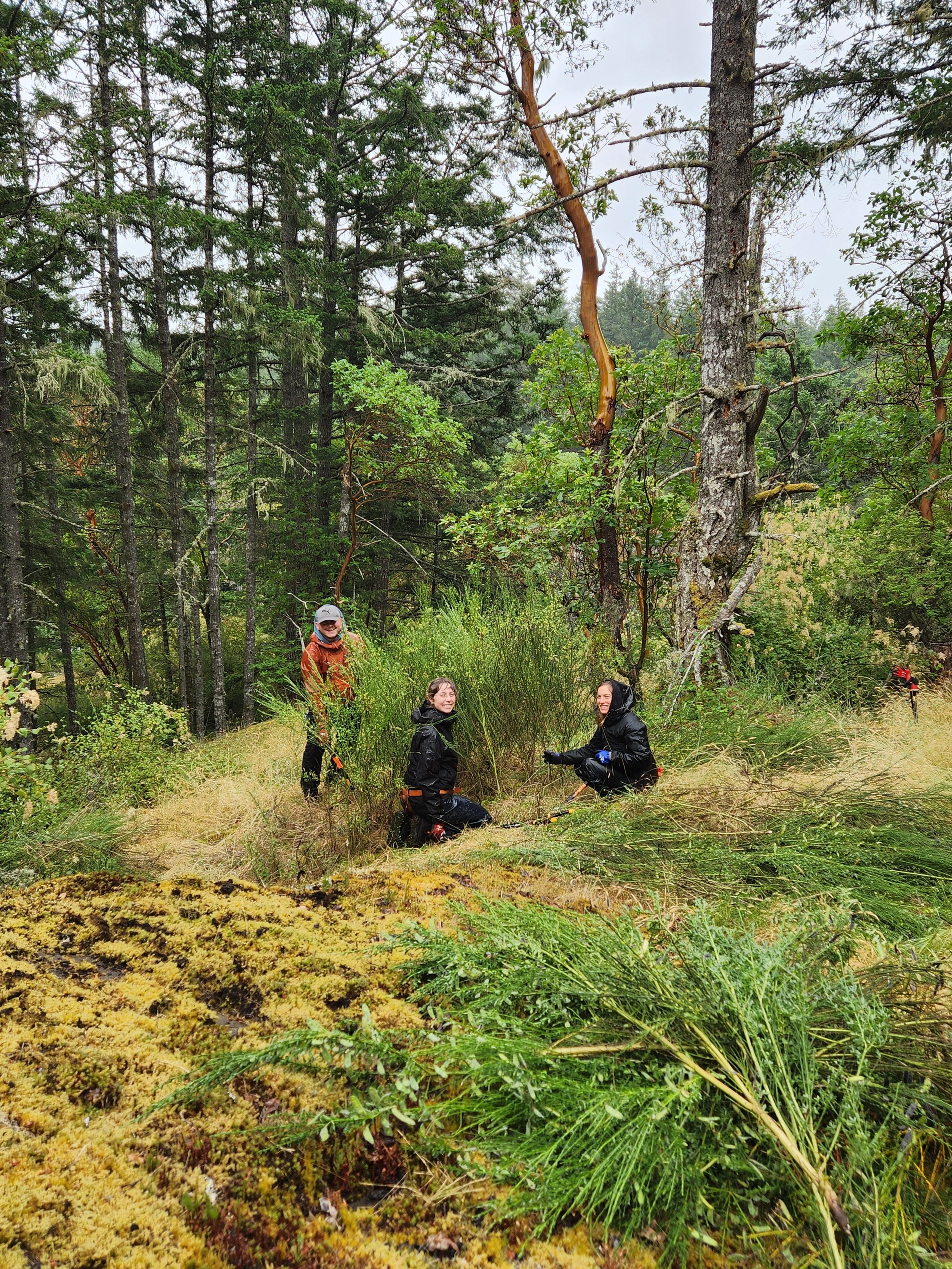
Photo by Chelsea Nuez
Though invasive species removal represents the bulk of our work, there are many other elements that go into what we do. For example, we collect geospatial data and metrics that we need to track where we’ve worked, what we’ve done, and to report to funders. All of this helps inform our work for future years.
We are constantly trying to make the best decisions for a site with many different factors at play:
How big is the area and what impact do non-native species have on this area? Which species should be targeted first? What can we feasibly accomplish within the allotted time? What has been done before?
What impact will we have on the ecosystem through our work? Could this work be better timed to protect plant or animal species that may be particularly sensitive?
How can we have FUN while doing it? (Easy answer: It’s not hard, we love working together)
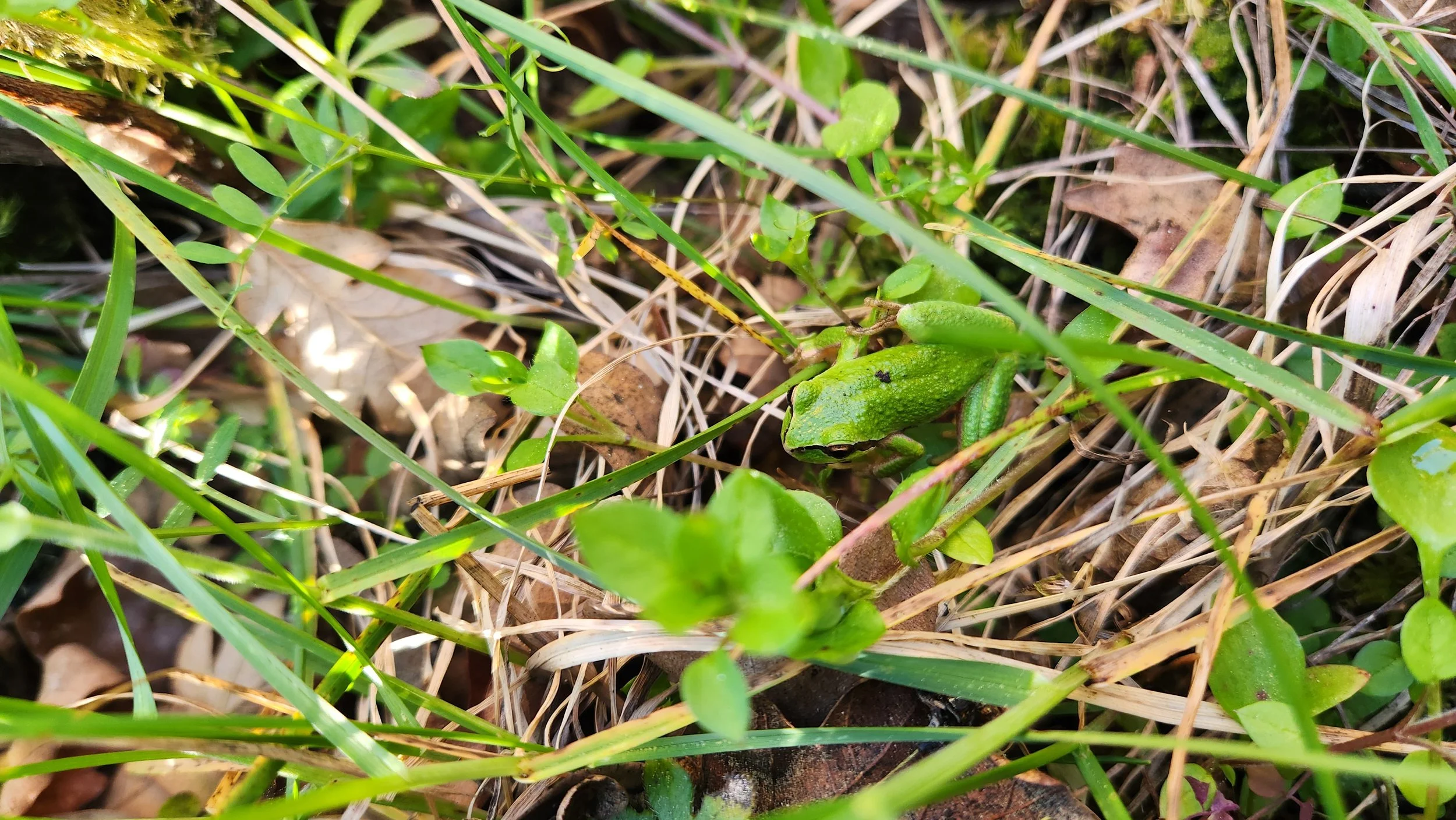
As visitors to these sites, we are officially or unofficially keeping tabs on the health of these special places. From native plant identification, to logging species at risk observations, and counting all the frogs we see, we like to keep our eyes OPEN while we work.
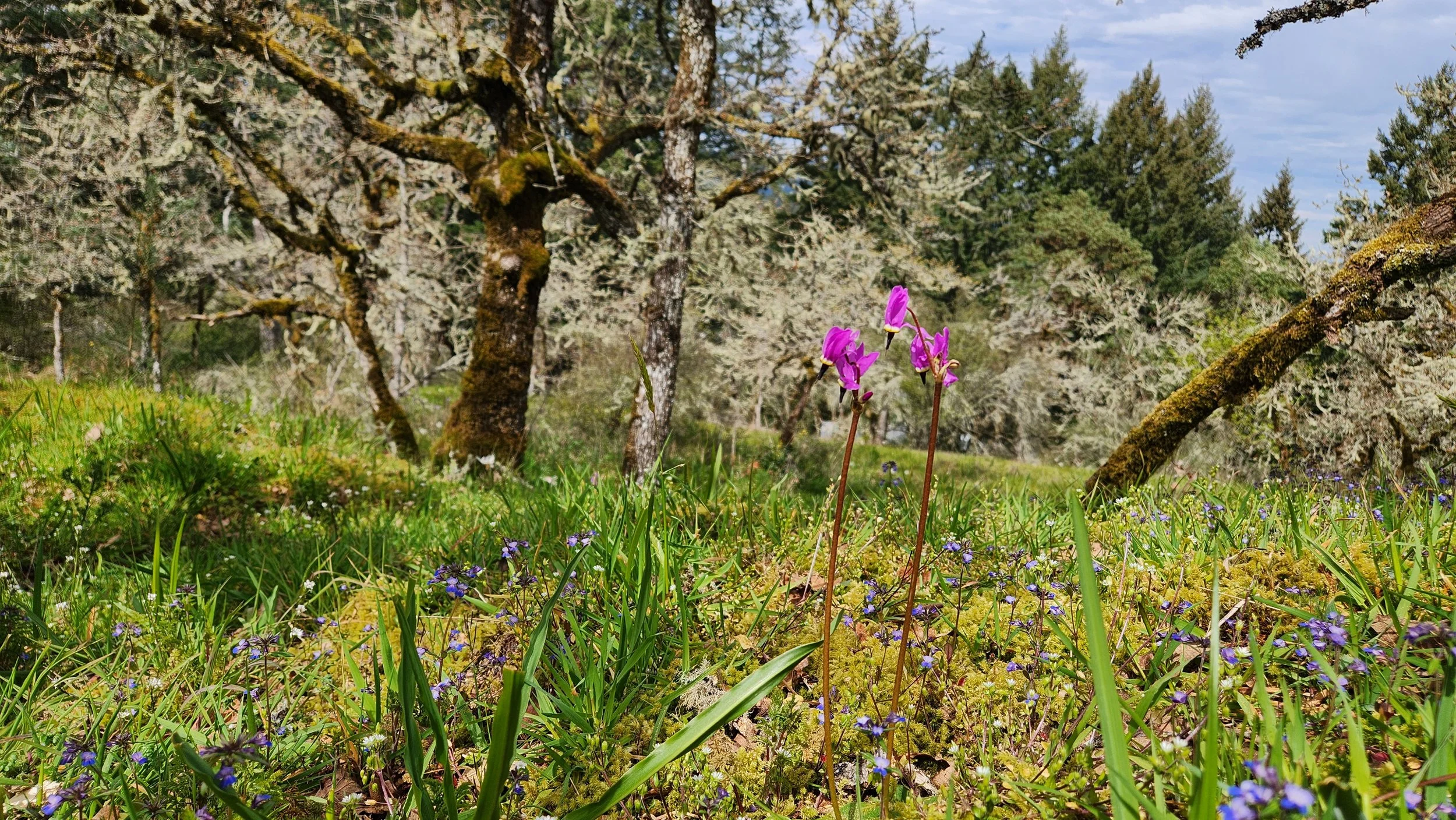
Photos by Chelsea Nuez
Noon: IT’S LUNCH. We eat lunch on the dot. We’ve been working hard and we’re hungry! Usually we just plop down in some shade close to our work spot. If it’s pouring, or if there is an ocean to sit by, we might take shelter in Goldie or move to the beach.
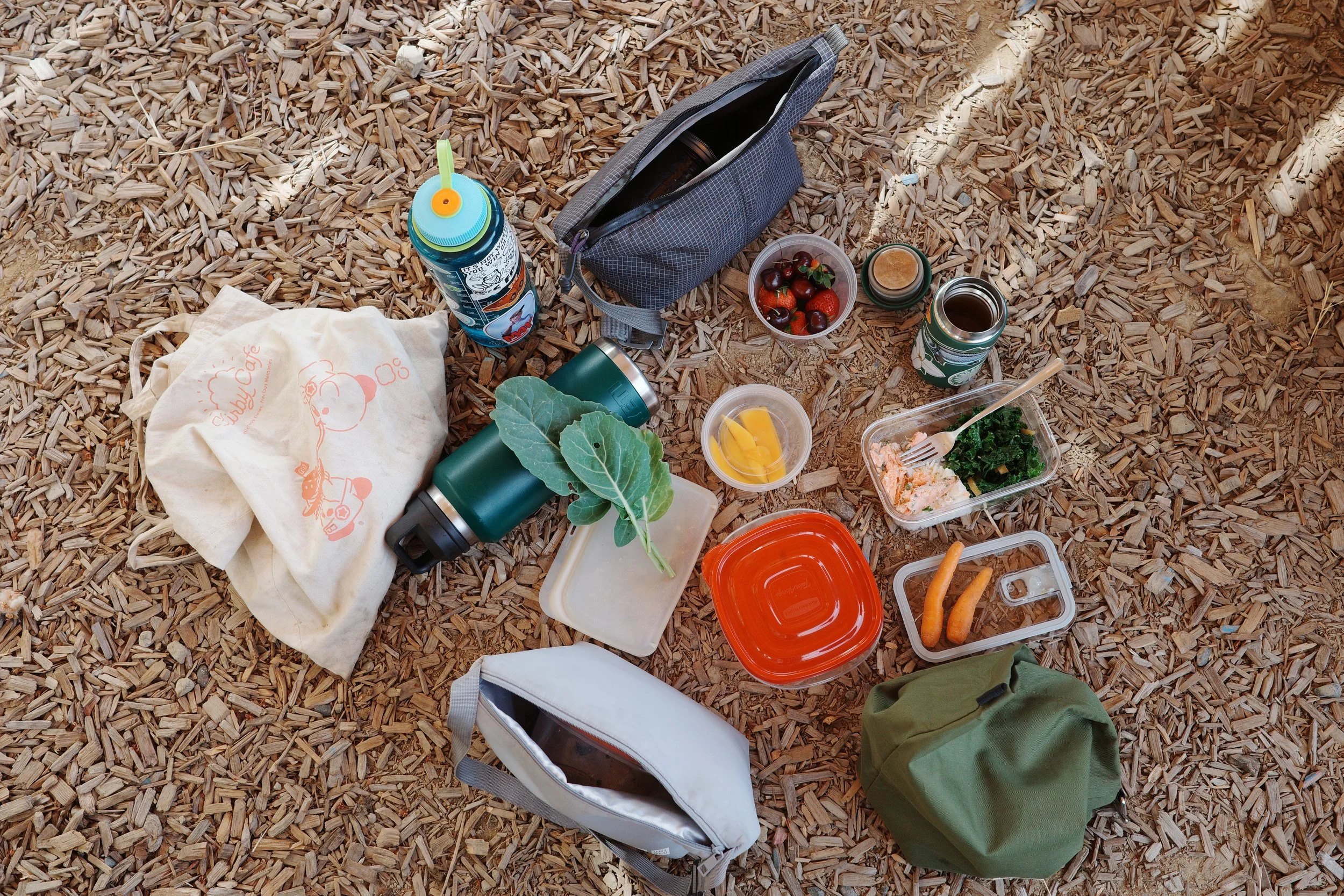
Photo by Maya Irwin
12:30 PM - 3 PM: WORK
We might continue the same task, or switch to something different for the afternoon, especially if we need to seek some shade in the forest or take a break from a toxic plant like Daphne Laurel or Poison Hemlock.
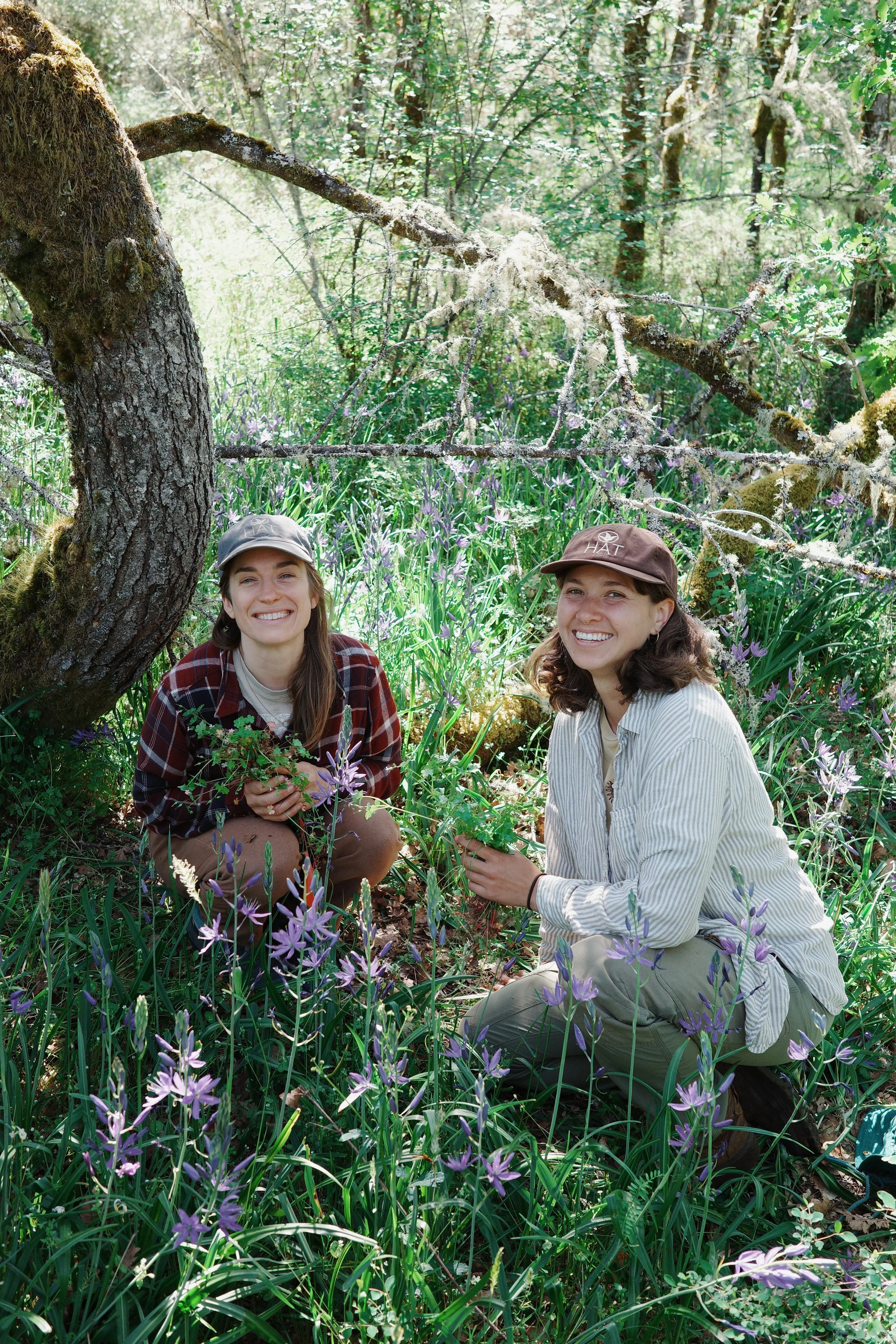
Photo by Jules Cundari
3-3:30 PM: Head back to the office - goodbye for now, everyone!
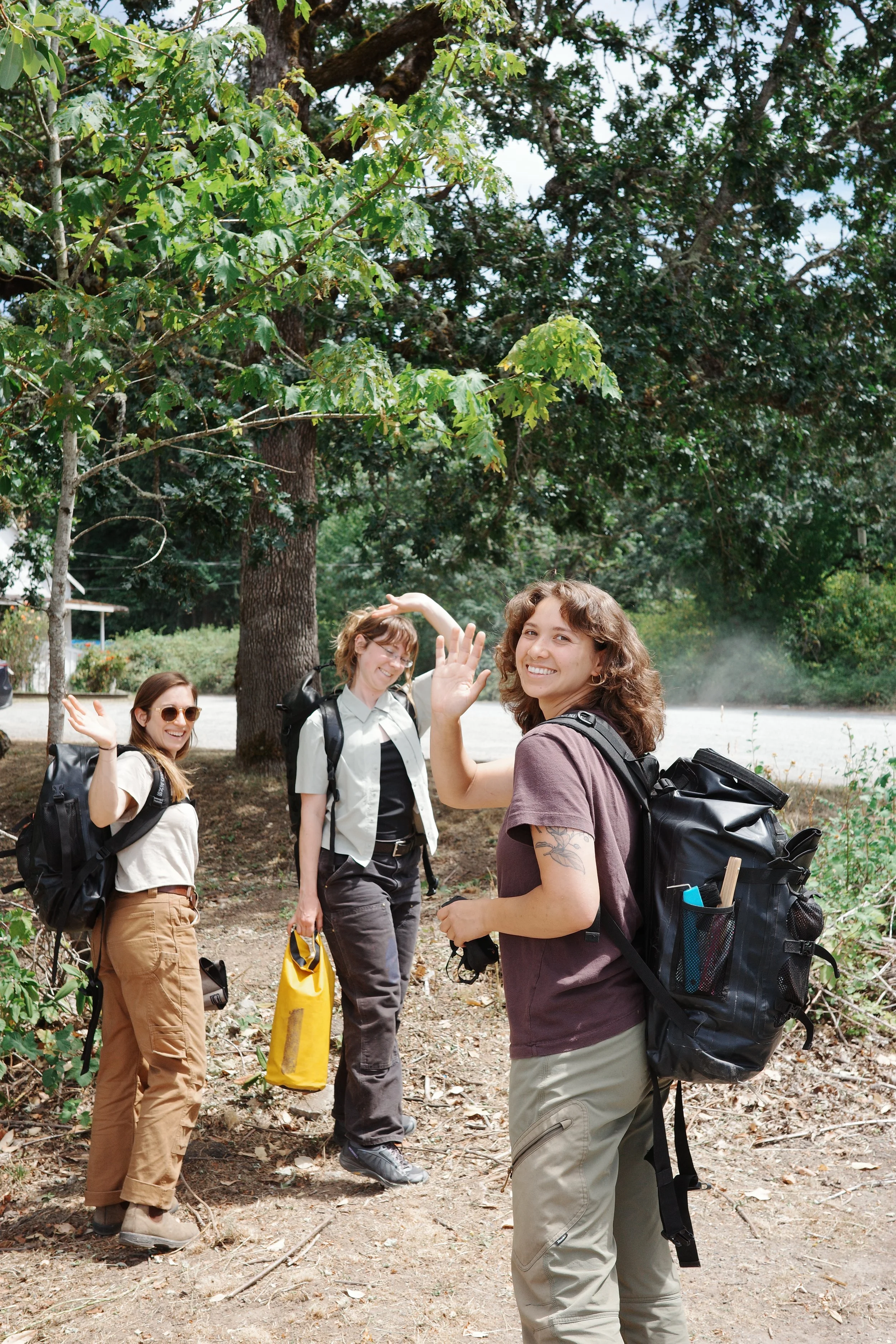
Photo by Kyle Clarke