
Bats Are on the Move!
At this time of year, bats are moving around a lot, which means people are more likely to see them. For the safety of both people and the bats, it’s important to remember to leave them alone and to never touch a bat.
In BC, there are at least 15 different species of bats. Some, like the little brown myotis, are found in urban areas of BC. Bats are the hardest-working and often the most underappreciated of all wildlife. A little brown myotis weighs less than a loonie and can eat hundreds of mosquitoes and other insects in a single evening.
In BC, bats have the important roles of controlling insect populations and cycling nutrients through our ecosystems. In other parts of the world, bats also pollinate plants, disperse seeds and even provide humans with medicines.
Summer is an important time for bats. Females gather in tightly packed maternity colonies to each raise a single pup. Come August, pups are fully able to fly. Sometimes these young ‘teenagers’ don’t come back to the maternity roosting site.
This is when people start to see more bat activity and sometimes see solitary bats roosting out in the open.
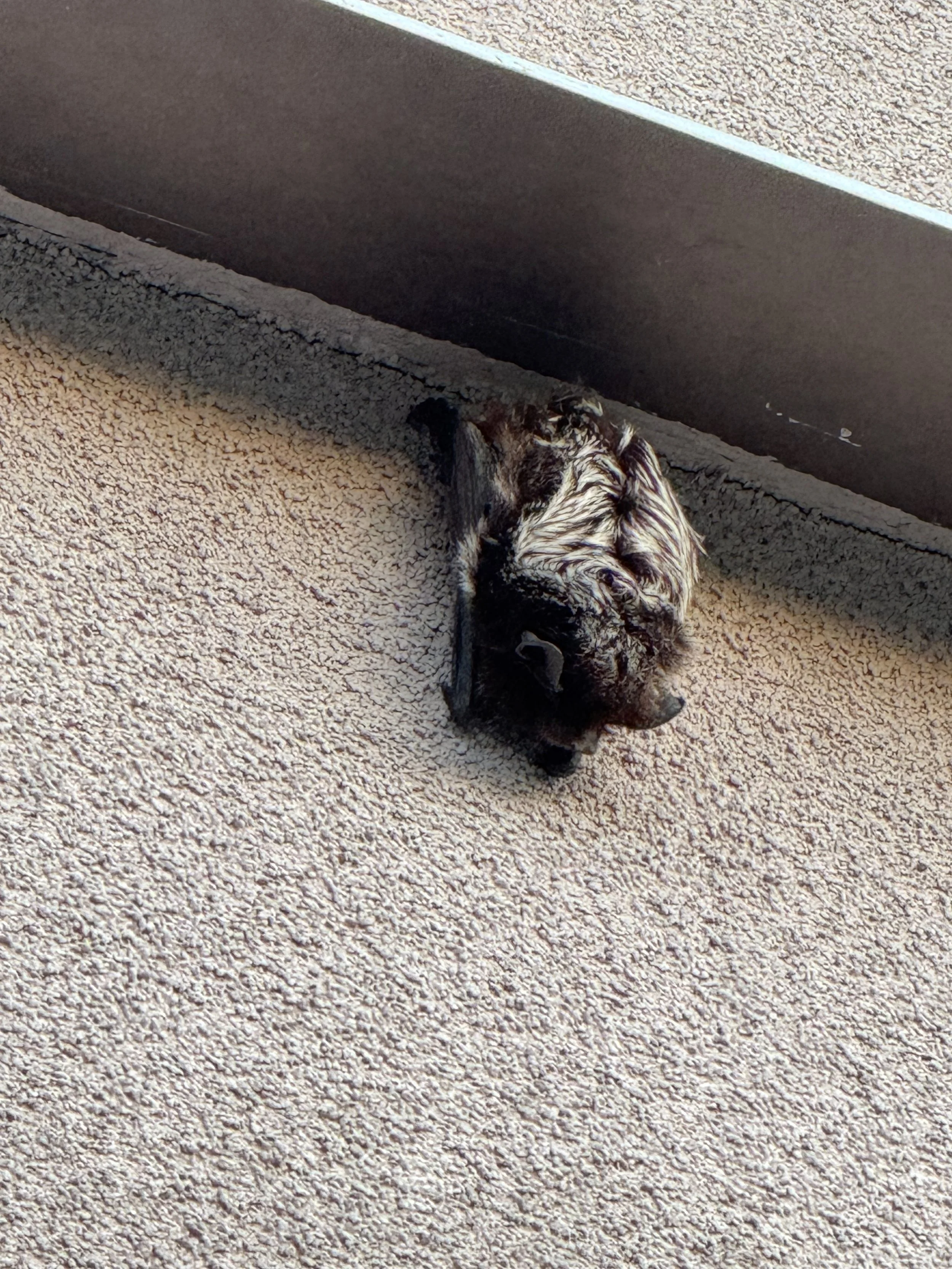
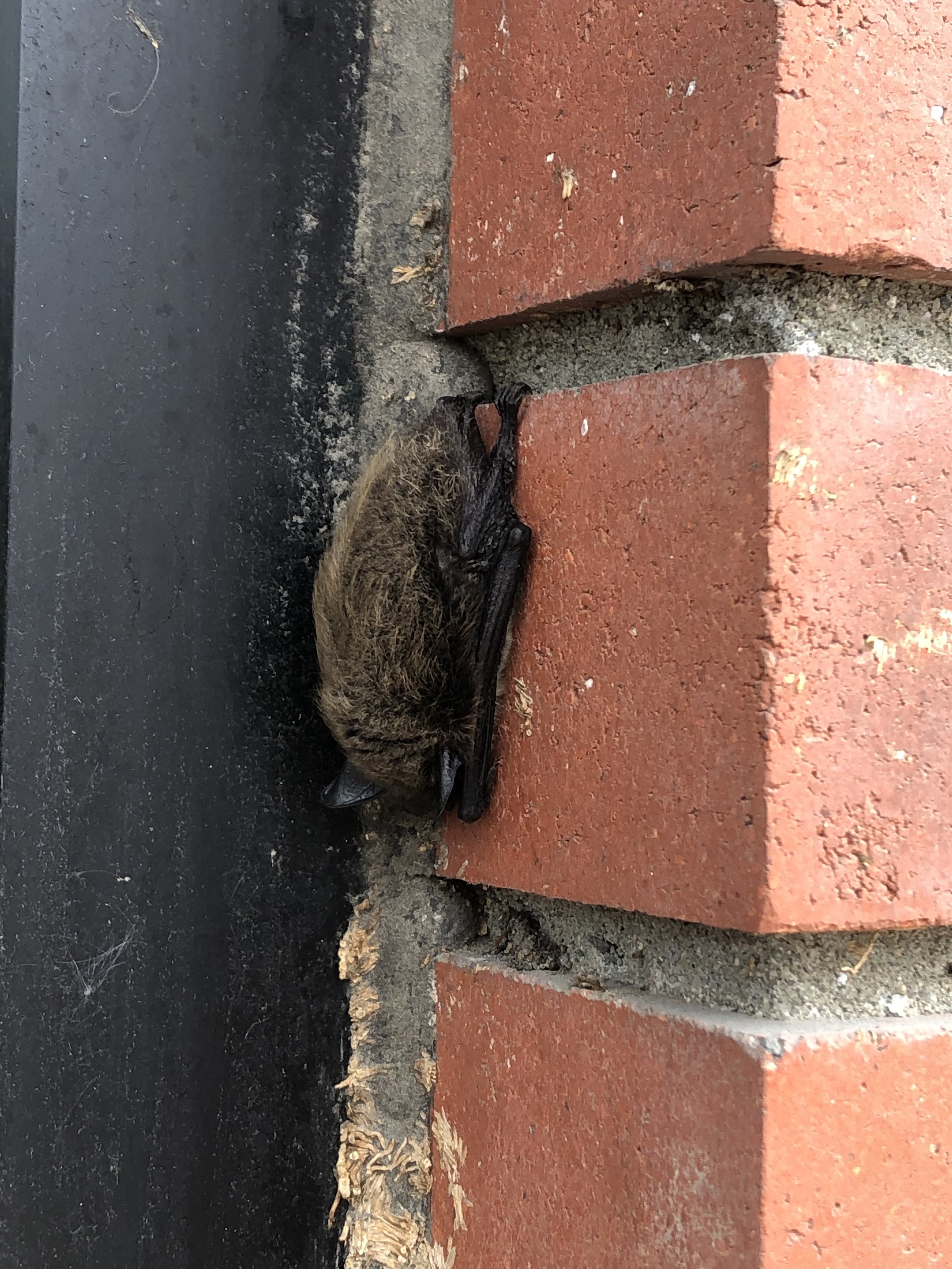
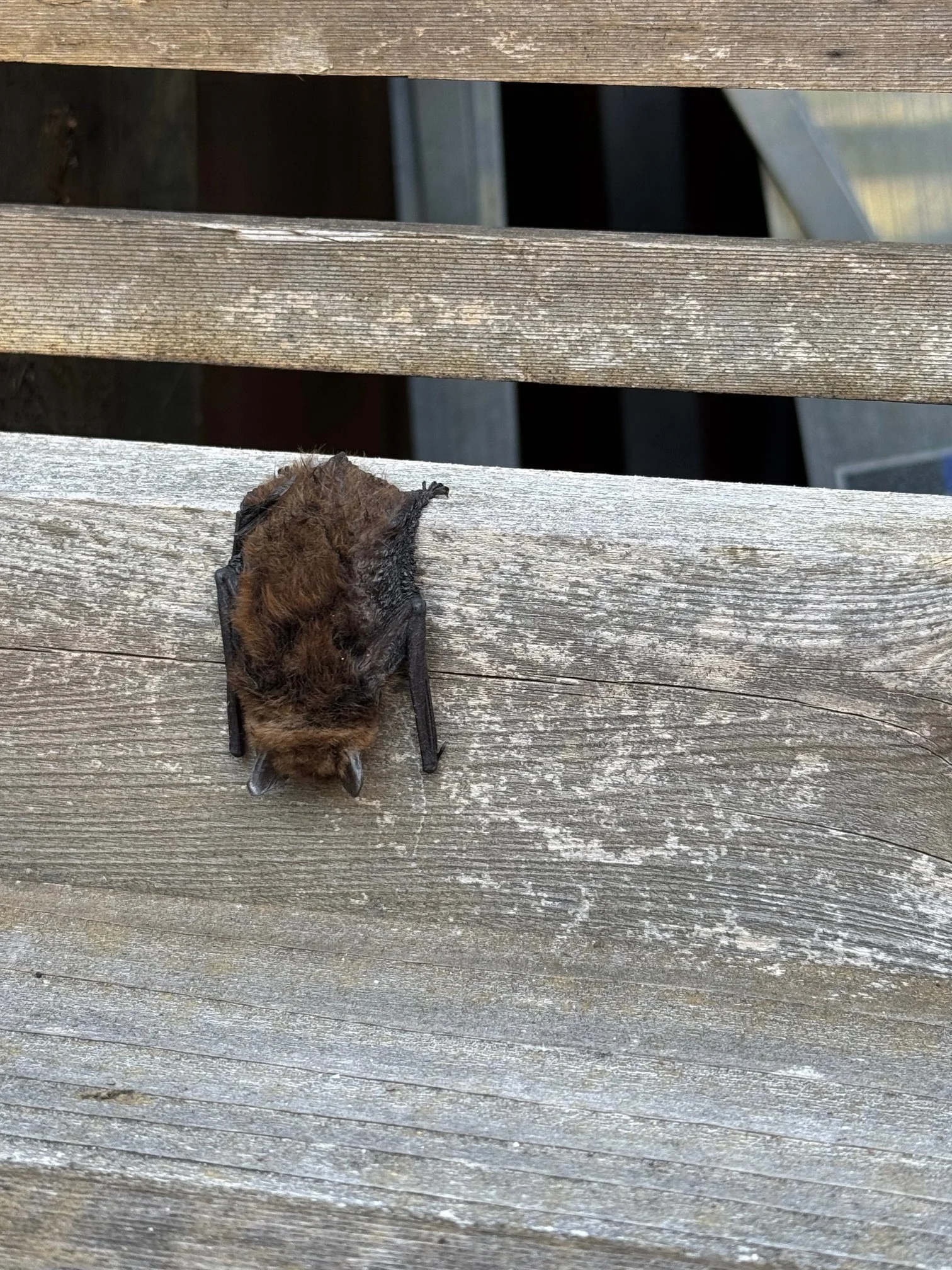
If a bat is roosting on a vertical surface like a wall, a fence, or an umbrella, the best thing to do is leave it alone. Give it space, keep children and pets away, and wait until the evening to watch it fly away. If it’s in a busy area, consider putting a pylon, a chair, or something in front of that spot so that people don’t accidentally bump into it. If you want to go the extra mile, you can put a sign up that says “Shh! Bat sleeping. Leave it alone. It will fly off soon.”
If it’s in an area where children or pets play, or inside your home, visit Found a Bat to learn how to move it safely.
Bats receive a lot of negative attention in the media due to the risk of rabies. However, less than 0.5% of bats carry rabies. People can only get rabies if there is ‘direct contact’ with a bat. This means a person is bitten or scratched by a bat, or the bat had contact with an open wound on a person, or if a person handles a bat with bare hands.
Bats prefer to rest hanging upside down, so if you find a bat on the ground, you can suspect the bat is either dehydrated, injured or ill - OR it may be a juvenile that fell from a roost or landed badly while learning to fly. Do not touch them. Visit www.bcbats.ca or email bat@hat.bc.ca for directions.
We want to remind people to never touch a bat. If you are bitten or scratched by a bat, you should immediately wash the wound well with soap and water under a running tap for at least 15 minutes, then rinse thoroughly with water. Seek medical attention immediately from a healthcare provider or local public health unit or call 811.
If pets come into contact with a bat, immediately call a veterinarian. The vet is responsible for a risk assessment and may contact the general Public Health Veterinarian for support.
Bats are protected under the BC Wildlife Act, and it’s important not to disturb them. Bats will leave for hibernation soon. In winter, they move into caves, hollow trees or on the coast, and sometimes to abandoned cottage attics. Most species survive the winter in a state of hibernation, while two species of bats migrate south for the winter. Together, we can help protect bats by giving them the space they need as they head into winter.
The BC Community Bat Program is made possible by the generous donations of many supporters, as well as funding from the BC government and the Habitat Conservation Trust Foundation. It is administered by the BC Conservation Foundation.
Learn more about bats and how to help
Whether you’ve found a bat, want to learn more about these fascinating animals, or are looking for ways to support bat conservation, these resources can help.