Amphibians
Amphibians
Frogs, Toads, and Salamanders play a vital role in our ecosystem, but road traffic, habitat fragmentation, pollution, and introduced species are putting them in danger.
Vancouver Island is Home to several amphibians
Frogs and Toads
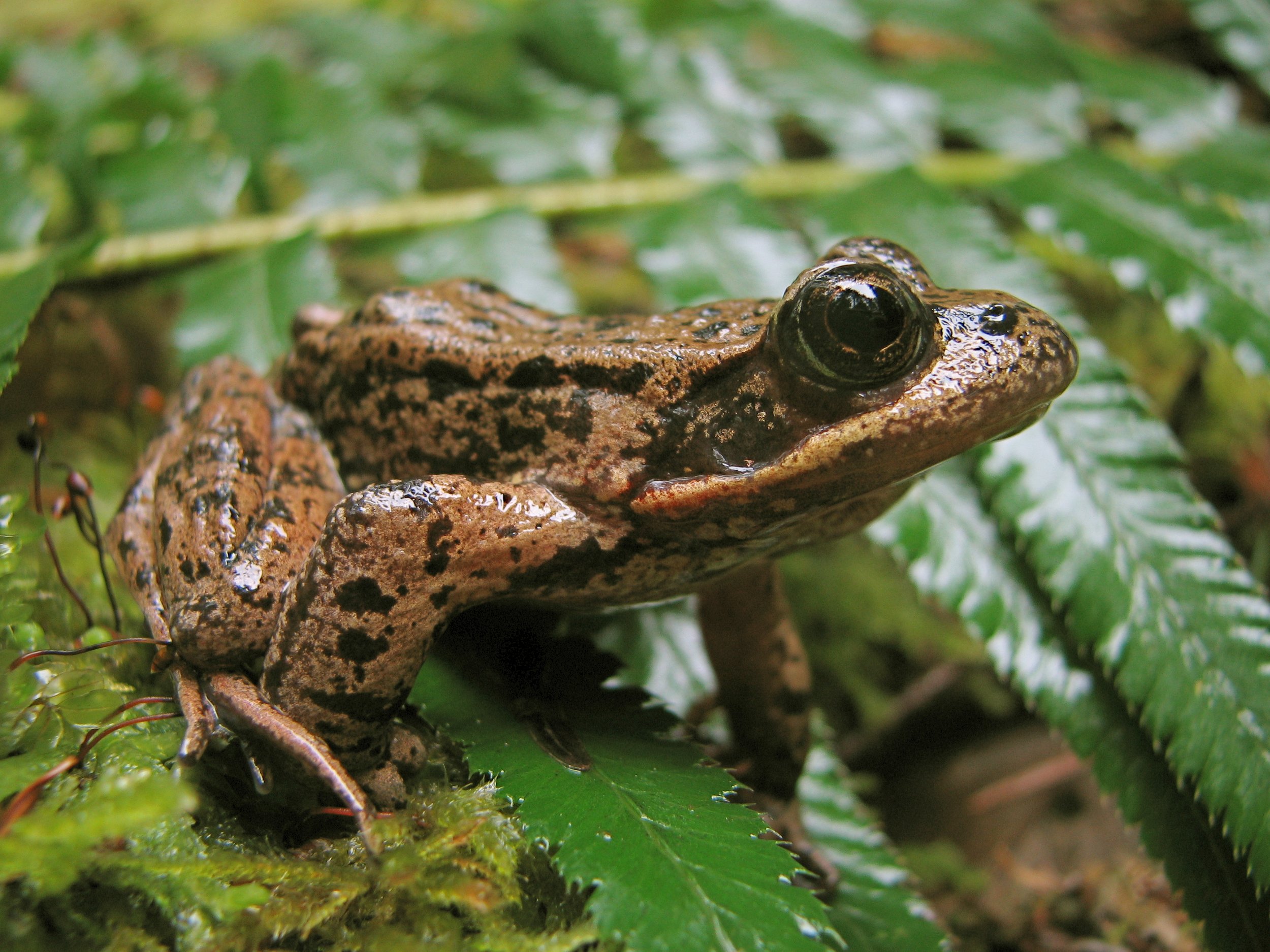
Our native frog species here on Vancouver Island include the Pacific treefrog (also known as the Pacific chorus frog) and the Northern red-legged frog. Pacific treefrogs can be found in many wetland and wetland-associated ecosystems like ponds, marshlands, and even meadows bordering riparian areas. The Northern red-legged frog prefers cool fast flowing streams but can also be found in more terrestrial areas, seemingly far from water. They are very sensitive to habitat fragmentation, especially clearcuts. Because of this, they are a Blue listed species within BC.
The Western toad is our only toad species on the island. Toads are more terrestrial and can be found in a variety of habitats and materials ranging from vegetation, coarse-woody debris, and leaf litter, to burrows made in well-draining soil.
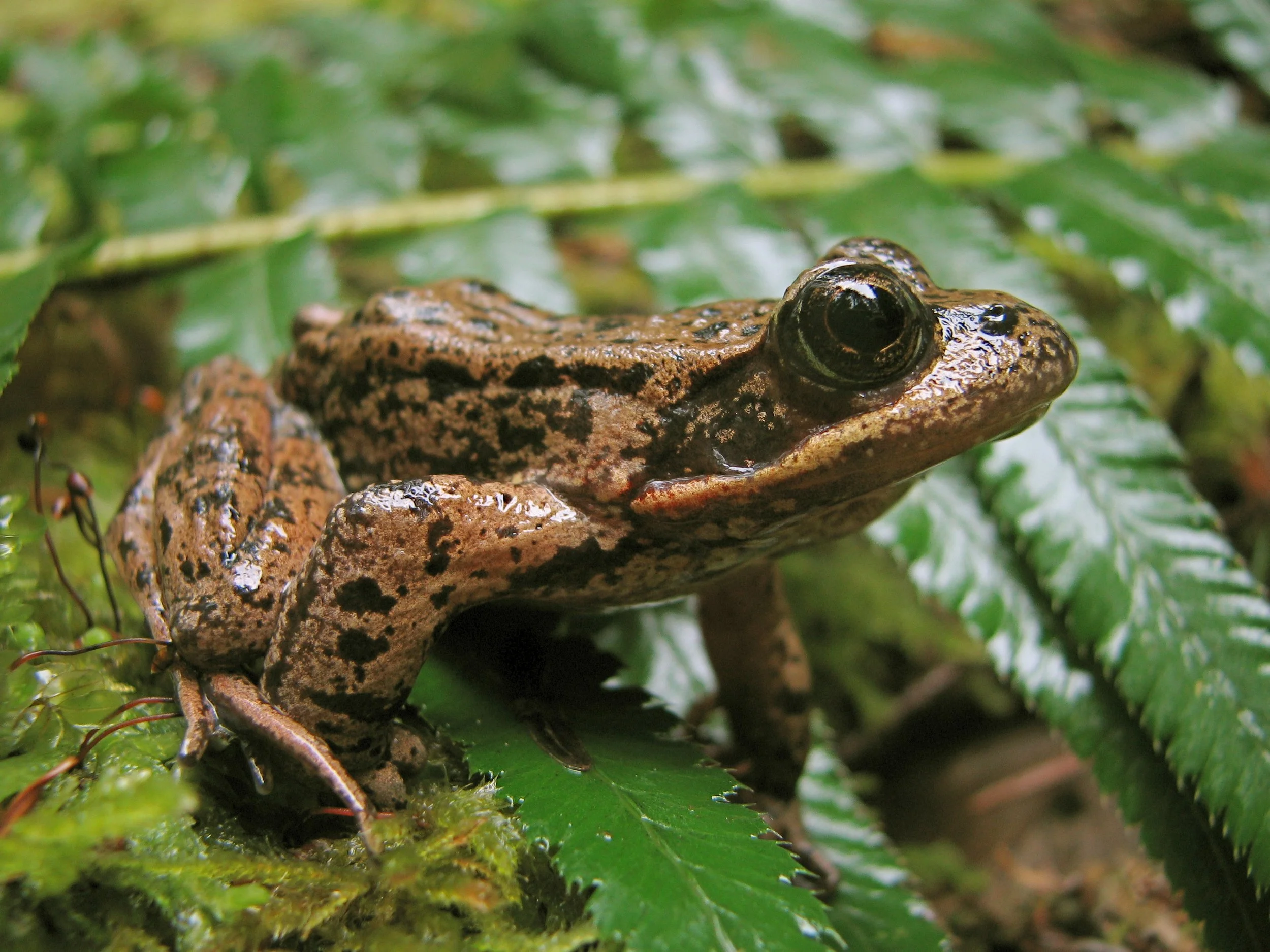
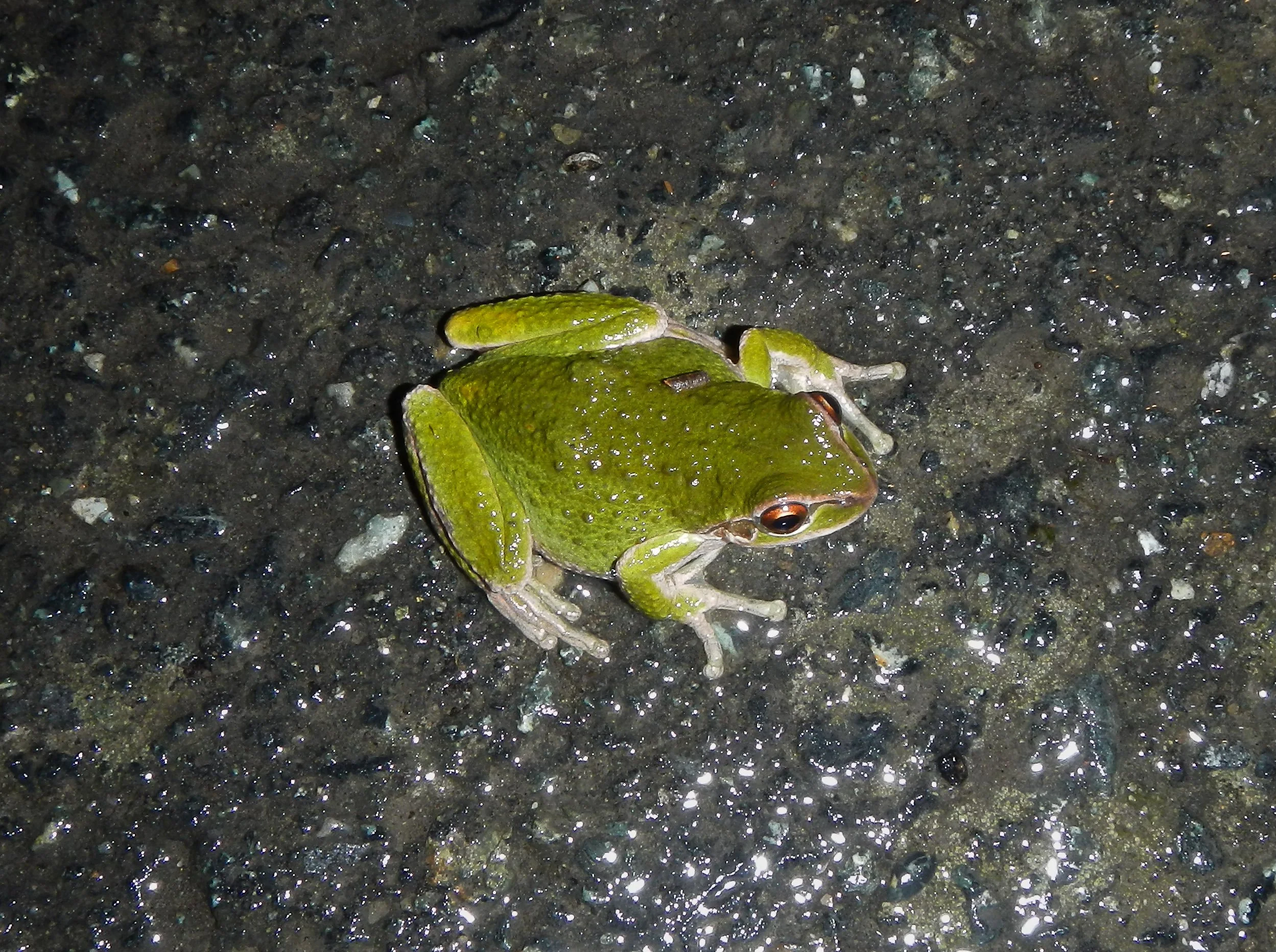
Northern red-legged frog
Photo credit: Kristiina Ovaska, Pacific treefrog
Salamanders
There are many species of salamander that call Vancouver Island home. We have five species of salamanders and one newt! The rough-skinned newt can be found near water in areas like wetlands. The long-toed salamander is a very small salamander that lives in moist habitats like those found in forests. Another species, called the common Ensatina lives completely on land for all stages of its life cycle. The Western red-backed salamander is similarly small and also has a completely terrestrial life cycle. A Douglas fir and Western hemlock specialist, the wandering salamander is closely associated with mature conifer forests. Lastly, the Northwestern salamander depends on old-growth conifer stands that have water nearby.
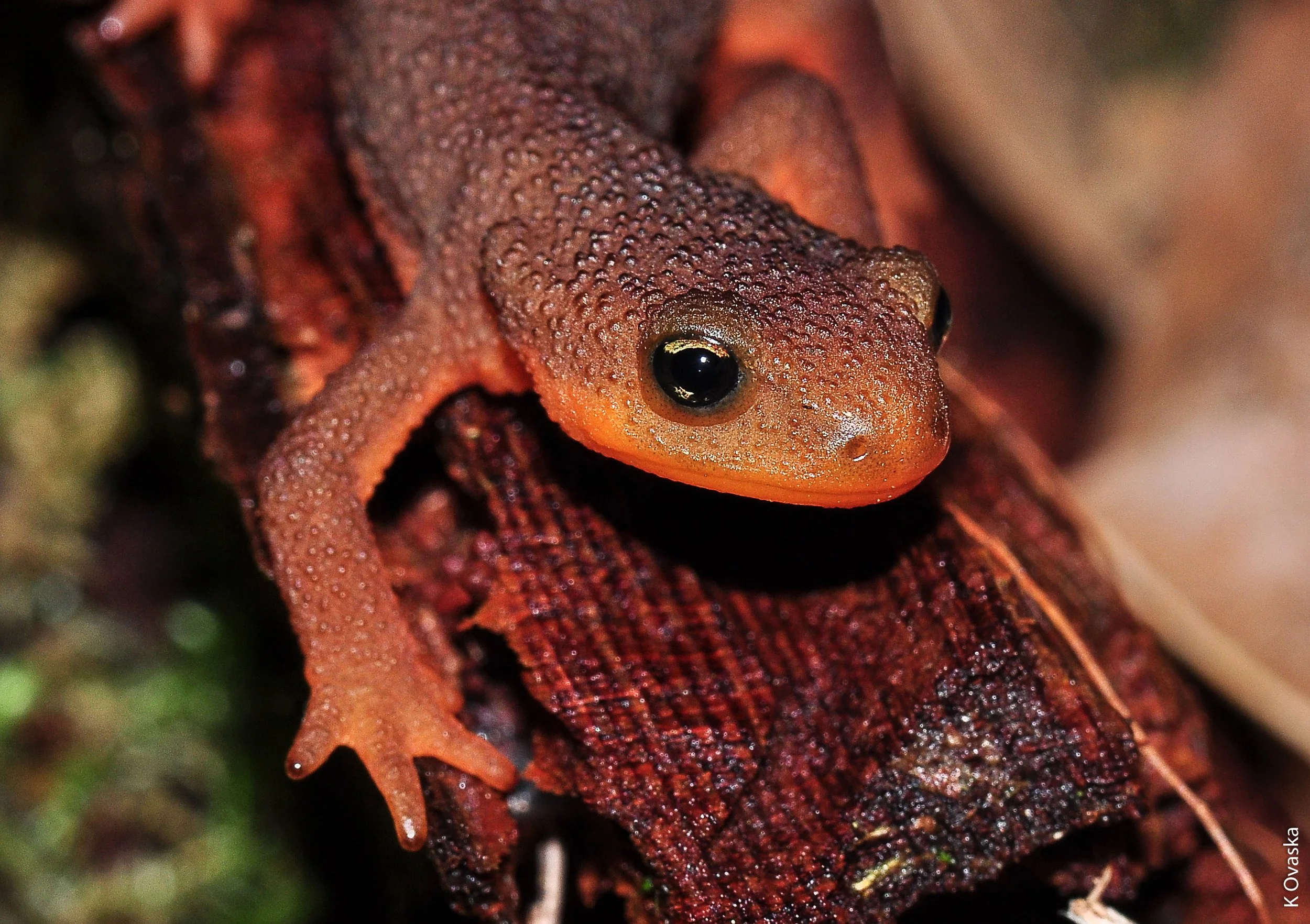
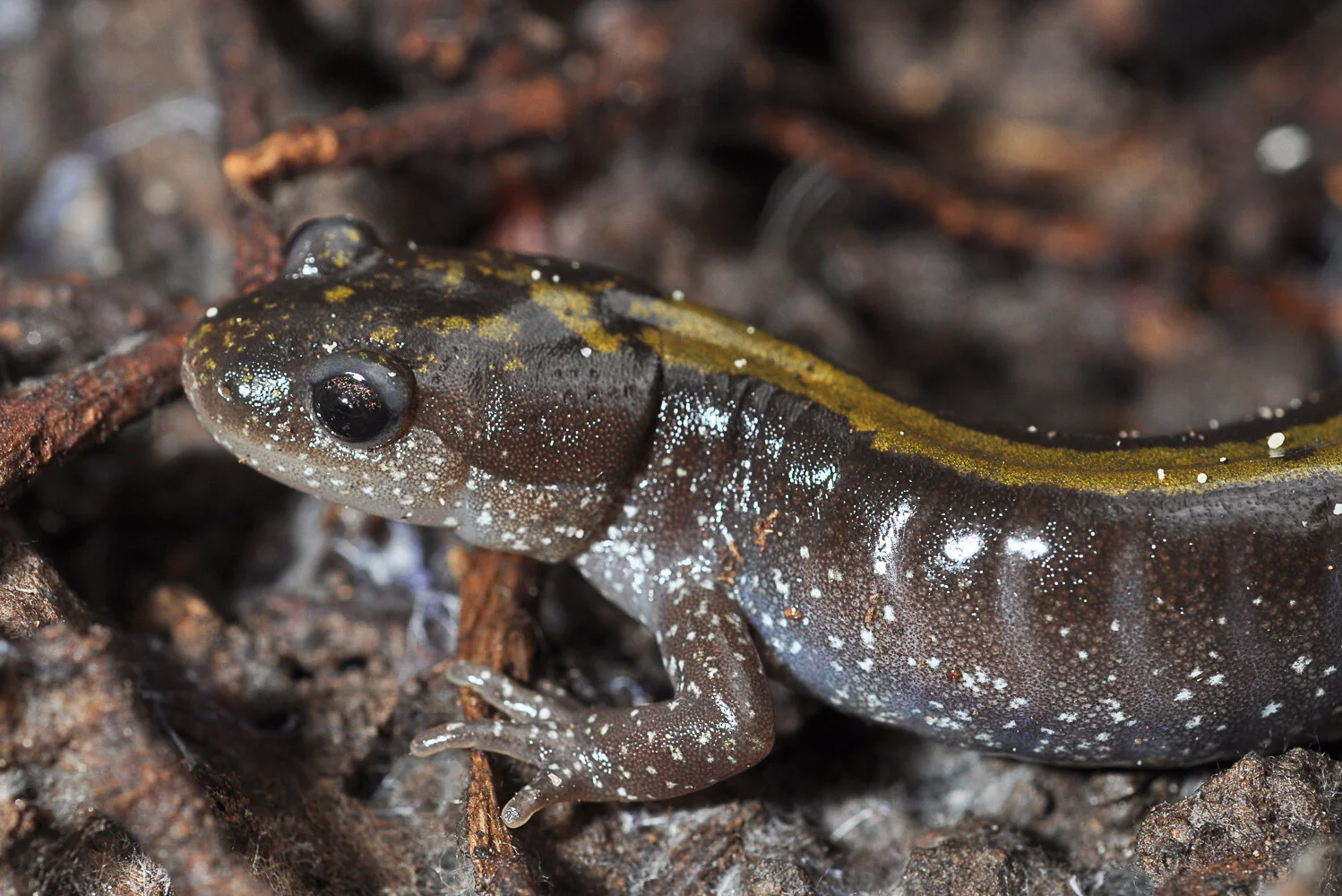
Photo credit: Kristiina Ovaska, rough-skinned newt
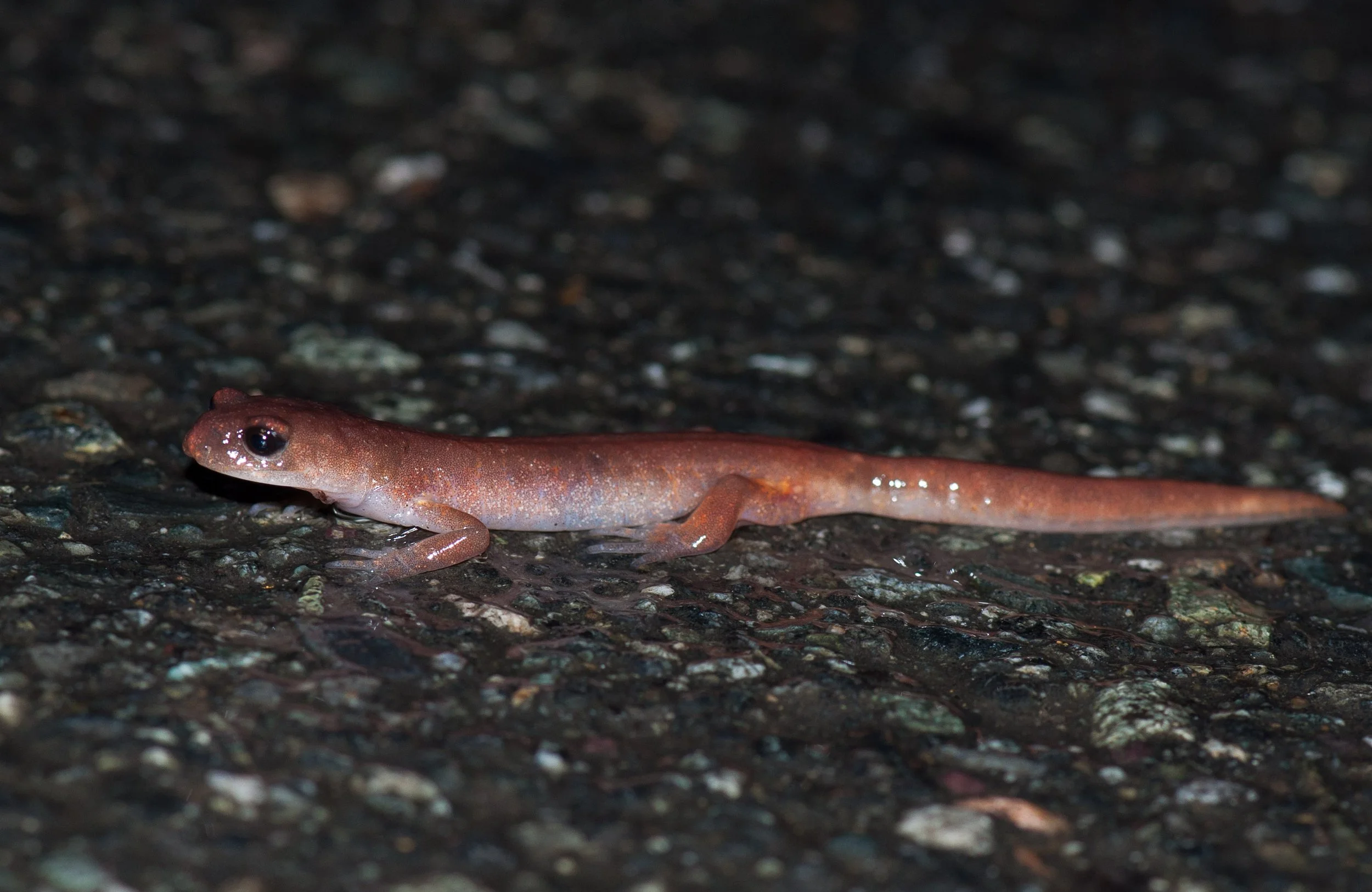
Photo credit: Kristiina Ovaska, long-toed salamander
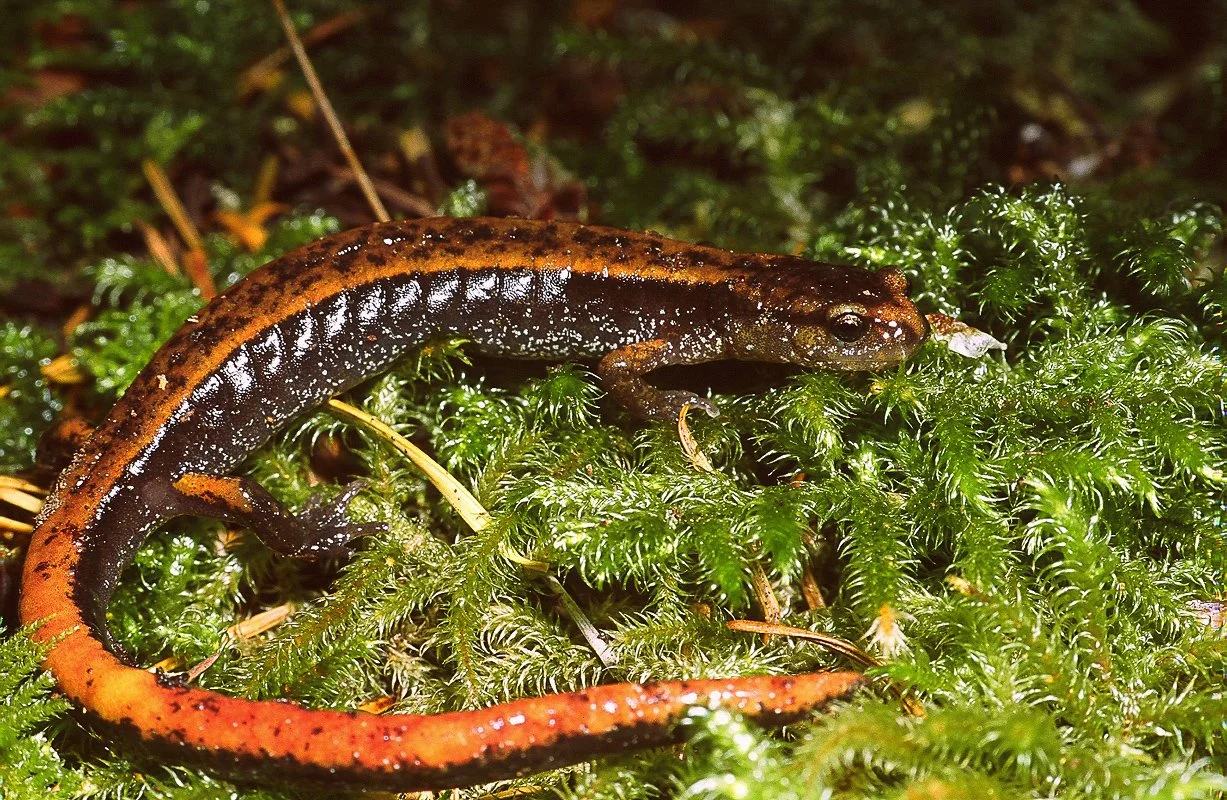
Photo credit: Kristiina Ovaska, Common Ensatina
Photo credit: Kristiina Ovaska, Western red-backed salamander
A Double Life
All amphibians go through a two-stage life cycle known as metamorphosis. When the eggs hatch, a larval form emerges and eventually develops arms and legs, becoming an adult. For most amphibians, the larval stage is fully aquatic, which means they are dependent on water bodies. As adults, many species will forage for food on land and use wetland habitats for breeding.
This affinity for both aquatic and terrestrial habitats means that amphibians require connectivity between the two. Although some amphibians can travel long distances, barriers such as roads or cut-blocks break the connectivity between habitats and hinder highly mobile amphibians from navigating to the habitat that suits their needs.
Threats to Amphibians
Many amphibians across Vancouver Island are affected by habitat loss and alteration, the effects of climate change, pollution, and the introduction of invasive species. Habitat loss in the form of urban expansion and the conversion of natural areas into farmland often results in the diversion or filling in of wetlands. For many amphibians, these wetlands are critical habitat for breeding and the development of young. Landscape development also leaves previously connected aquatic and terrestrial habitats, severed from each other. Roads cause many mortalities for amphibians that need to move from their non-breeding terrestrial habitats to their aquatic breeding grounds. On the Island, climate change is increasing the intensity of droughts, which may reduce or alter their livable habitat.
A key feature of amphibians is their permeable skin. Increasing development exposes amphibians to harmful pollutants, which are easily absorbed into their skin. Lastly, the introduction of invasive species like the American bullfrog puts many amphibians at risk due to competition.
The Bullfrog Problem
The American bullfrog is an introduced frog species originally from Eastern Canada. Bullfrogs are MUCH larger than our native frogs, reaching up to 20 cm! Unlike our Pacific treefrog and Northern red-legged frog, the American bullfrog requires large, permanent bodies of water to live in, hunt, and reproduce. Bullfrogs are also generalists when it comes to food and feed opportunistically on almost anything they can catch. This puts not just native frogs at risk but many other native aquatic vertebrates and invertebrates. Young American bullfrogs mainly eat insects but more mature individuals have been known to eat native frogs, mice, snakes, turtle eggs and hatchlings, young birds, and even other bullfrogs!
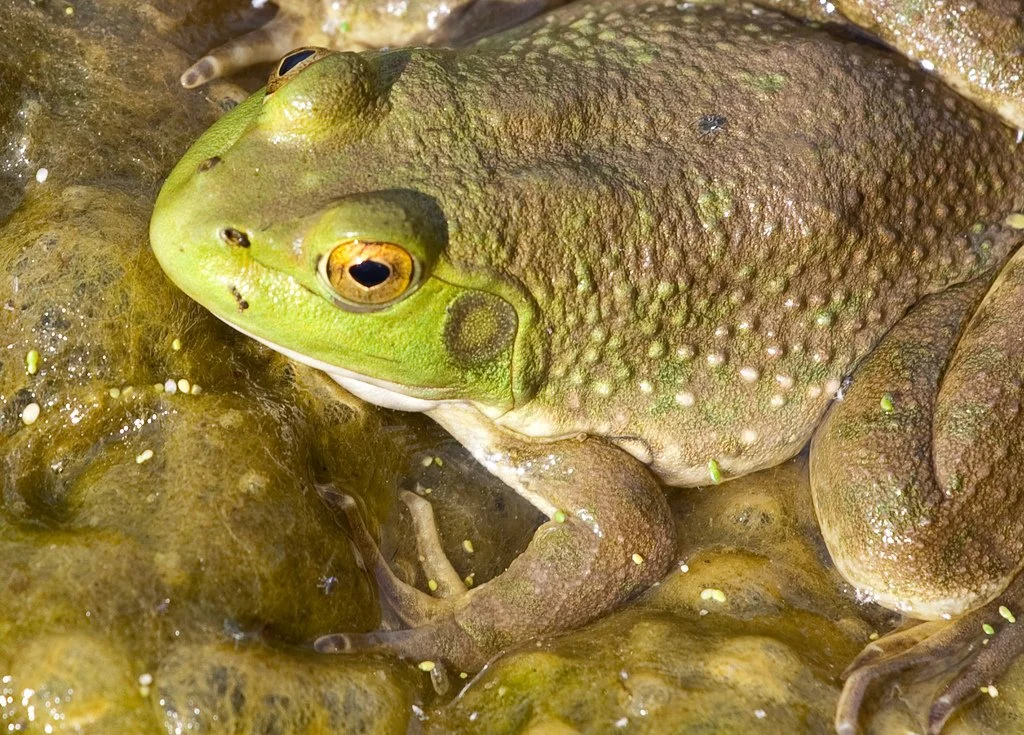
Photo credit: Mary Sanseverino
What Can You Do?
Bullfrog tadpoles that hatch in the spring do not go through metamorphosis until the next year. This means that they require standing water year-round in order to survive. Because of this, ephemeral ponds and wetlands (water bodies that are wet only for parts of the year) are vital for the survival of our native frogs. Wetlands that are full in the spring and parts of the summer allow native frogs eggs to hatch and go through metamorphosis, while American bullfrog tadpoles will be hindered by the fading water supply. Its important to preserve and steward these seasonal wetlands if you have them on your property or in your community! Similarly, never move bullfrogs or their tadpoles into unaffected waterways.
You can find more information on bullfrogs, wetlands, and amphibians in our Stewardship Guides!
For more information on American bullfrogs and how to manage them check out BullfrogControl.com Inc.
Read more in our Stewardship Guides!

Sharing the Road
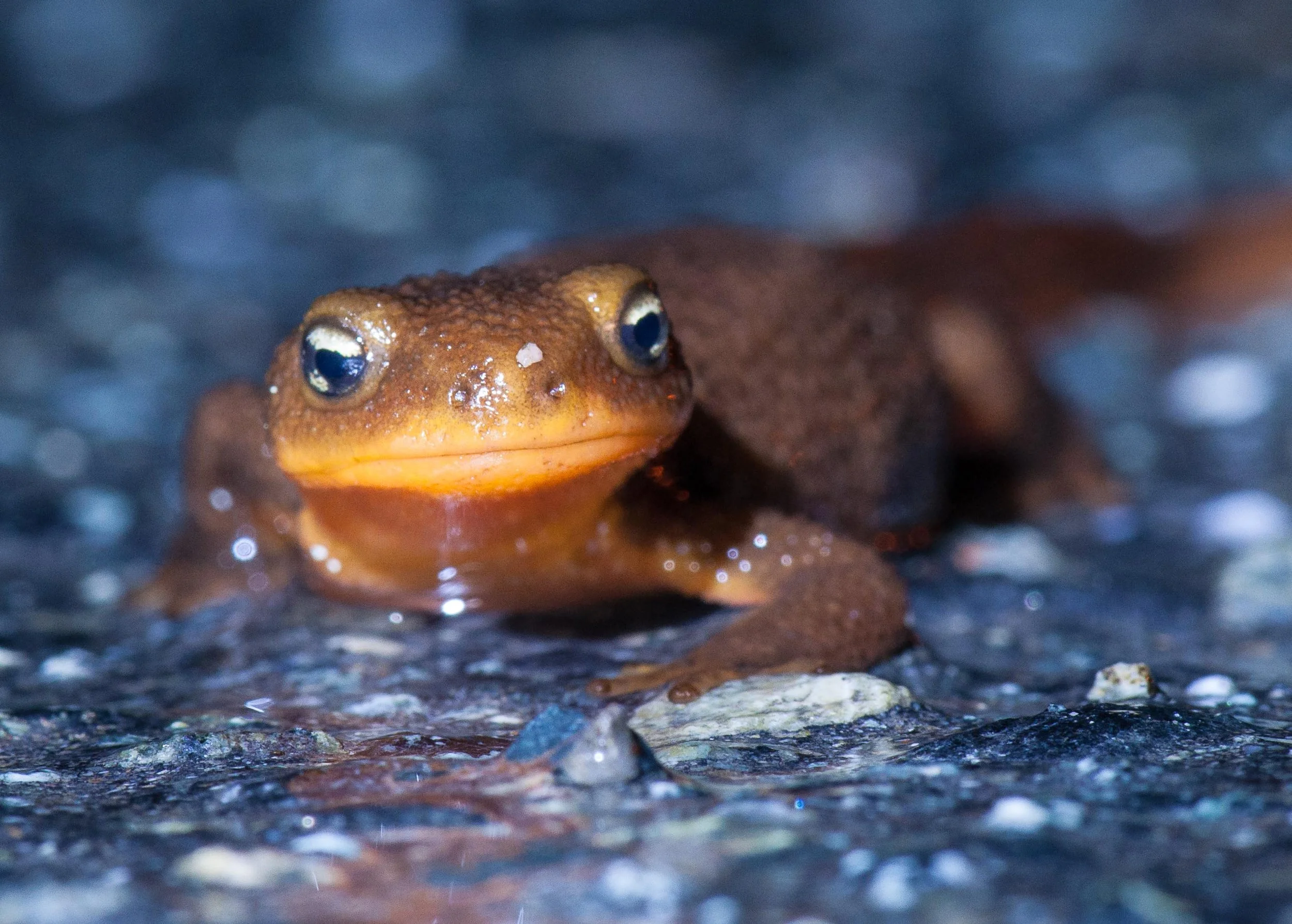
Frogs, toads and salamanders have terrible road sense. Help us find out where they like to cross!
Road crossings can be a major threat to many amphibians, particularly where roads and wetlands meet. Where roads intersect amphibian foraging habitat (often the forest in the Pacific Northwest) and their breeding habitat (wetlands), then amphibians will need to cross the road.
Unfortunately, frogs, toads, and salamanders are not known for their road sense, and far too many are crushed underneath car tires.
What is HAT Doing?
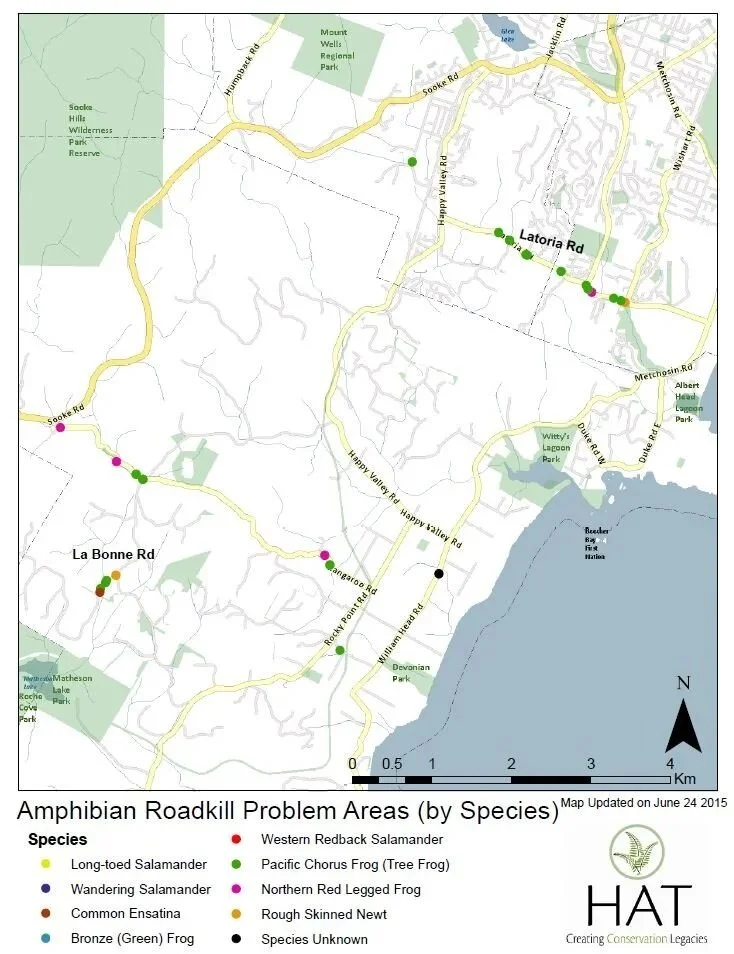
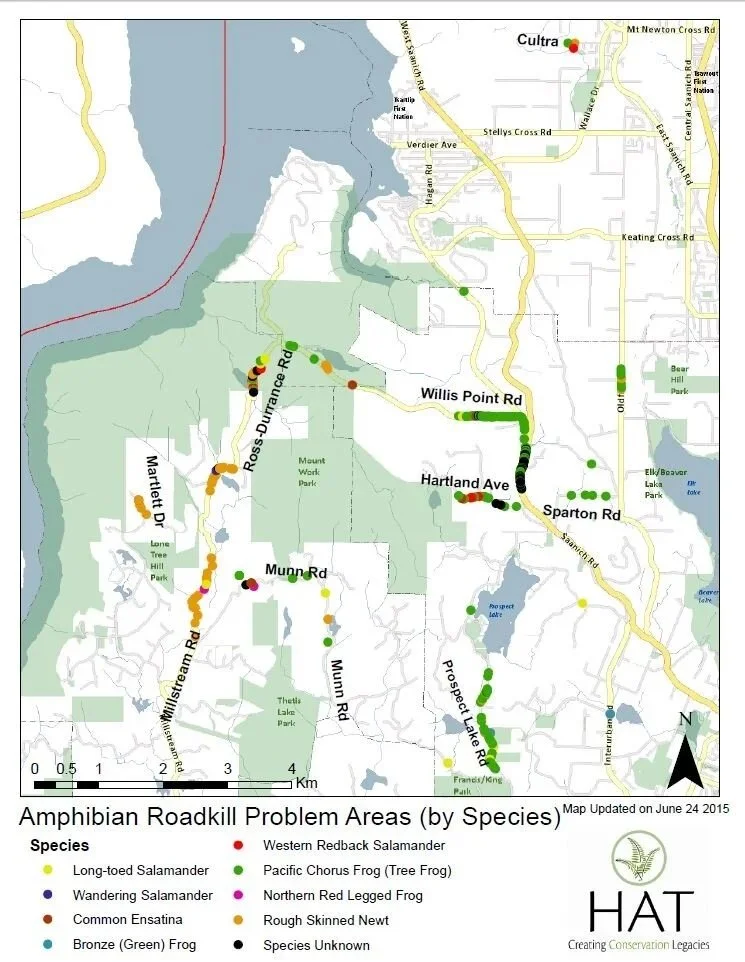
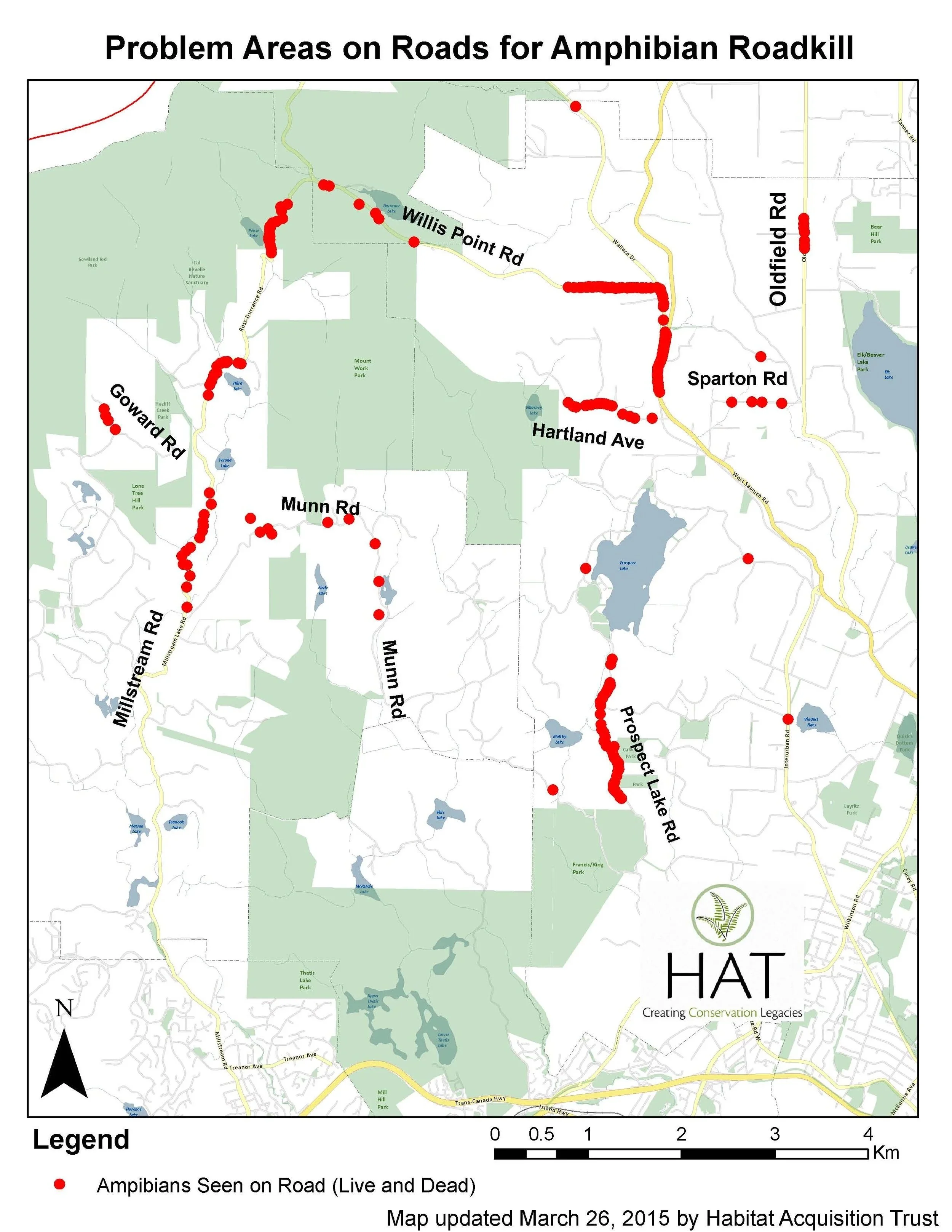
In 2015, HAT worked with biologists to create the Amphibian Roadkill Project with the goal of addressing the amphibian roadkill that was occurring on specific roads in Saanich. Biologists, along with a community of volunteers monitored road transects in the spring to estimate the number of dead frogs and salamanders along local roads. By doing this, ‘hotspots’ or problem areas could be identified. These are areas that have large amounts of amphibian roadkill from attempting to cross the road. Many of these crossings occur in the spring when amphibians are moving from their non-breeding, winter sites or foraging sites to their breeding grounds. Once identified, the hotspots could then be recommended as potential areas for the municipality to implement road closures and traffic calming efforts during crossing season!
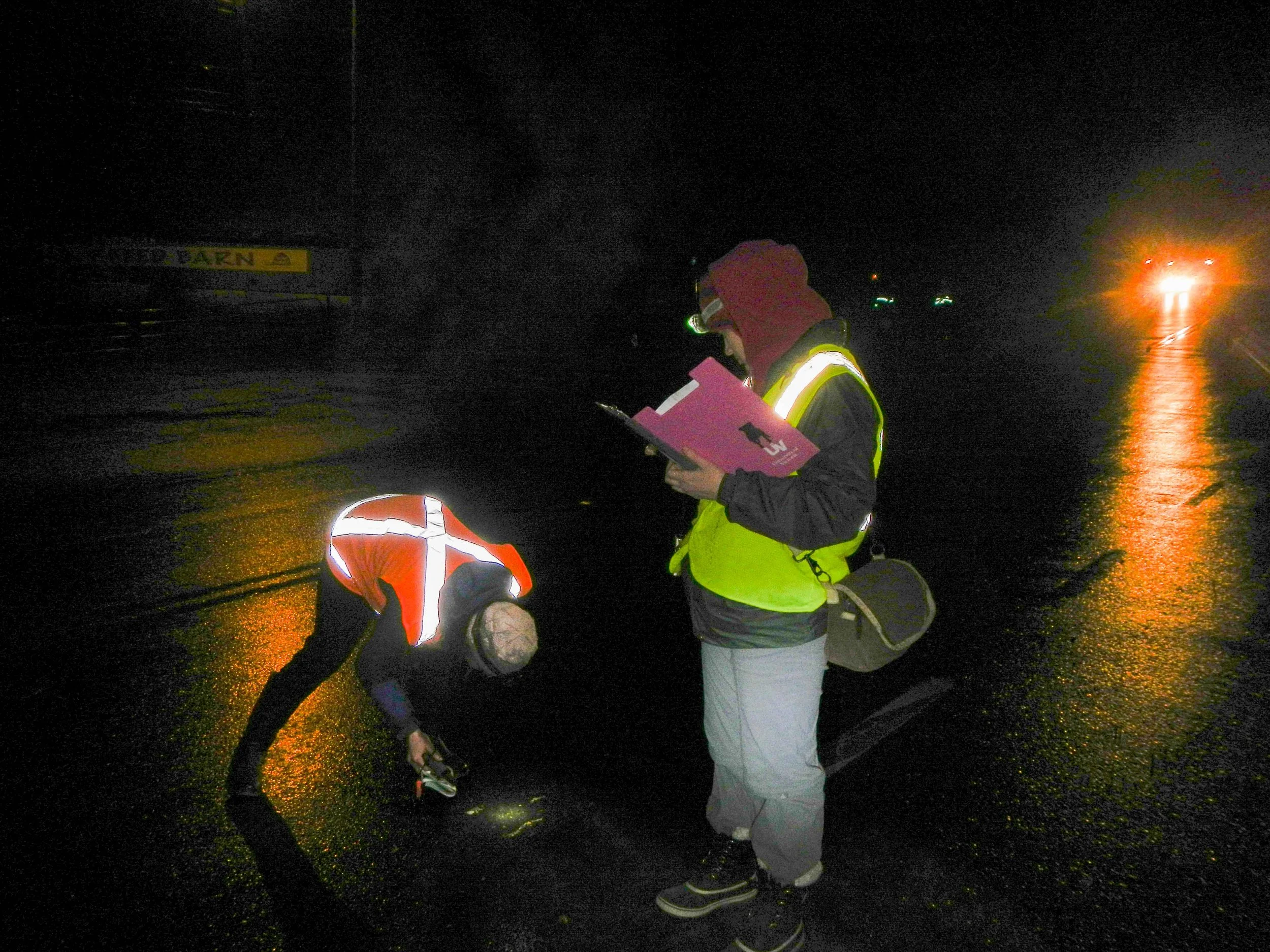
Photo credit: Kristiina Ovaska
Findings
Most species encountered through these surveys were Pacific treefrogs and rough-skinned newts, as well as five other species.
Hotspots identified:
West Saanich Rd — 369 dead amphibians found in one night
Prospect Lake Rd — 84 dead amphibians and 34 live treefrogs found in one night
Other hotspots:
Millstream Lake Rd
Ross Durrance Rd
Goward Rd
Munn Rd
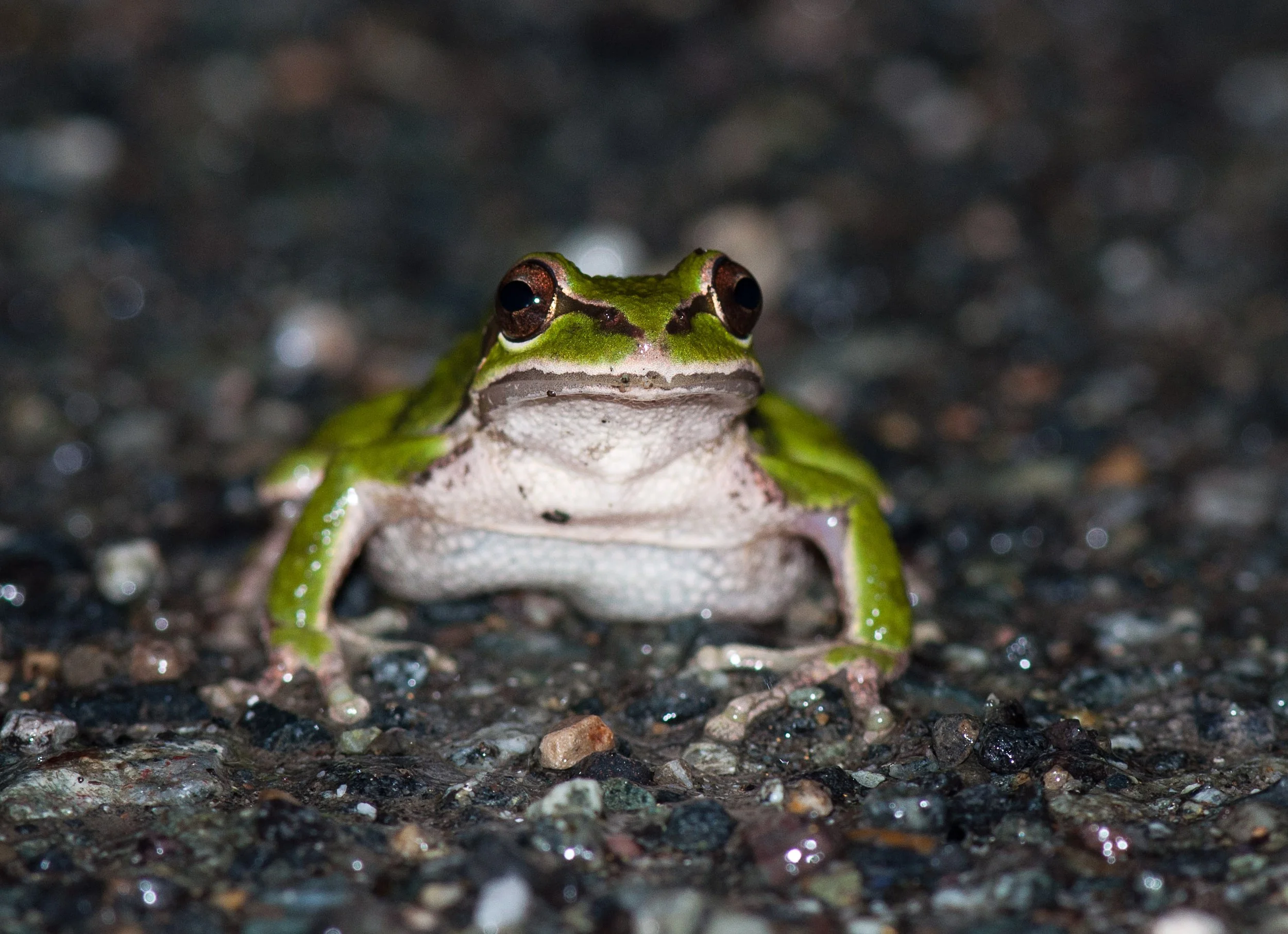
A Pacific treefrog found during road surveys Photo credit: Kristiina Ovaska
So if you’re driving in these areas, especially on a rainy night, please watch carefully for crossing amphibians!
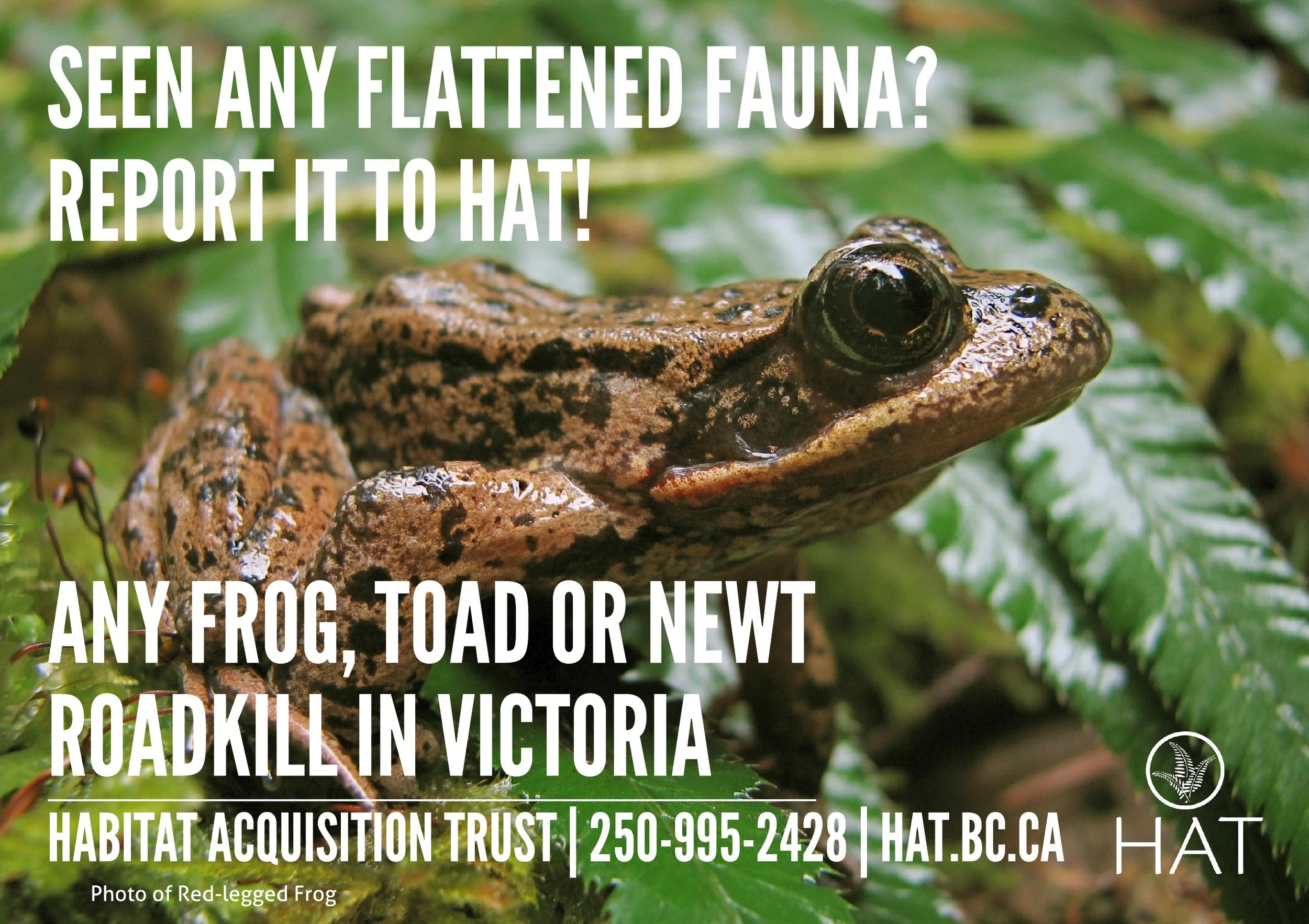
You can help HAT identify other hotspots for amphibian roadkill by reporting sites where you have seen frogs or salamanders crossing roads.
*HAT is not currently running surveys for the Amphibian Roadkill Project
Become an Amphibian Ally —
Support the Project Today!
Other Resources
Amphibian Roadkill Project: species maps

CRD
Metchosin
Highlands
Amphibian Roadkill Project: problem area maps
CRD

Metchosin

Highlands
Looking for more information and resources?
Check out these resources for more information on amphibians