
W̱SÁNEĆ Seasonal Activities: Fall Through Winter
By SNEMIŦIYE Dominique James,
The W̱SÁNEĆ year follows a 13-moon calendar — SḴÁU ȽTE — that guides cultural, economic, and spiritual life according to what each moon brings. Here's how the fall and winter moons shape community activity.
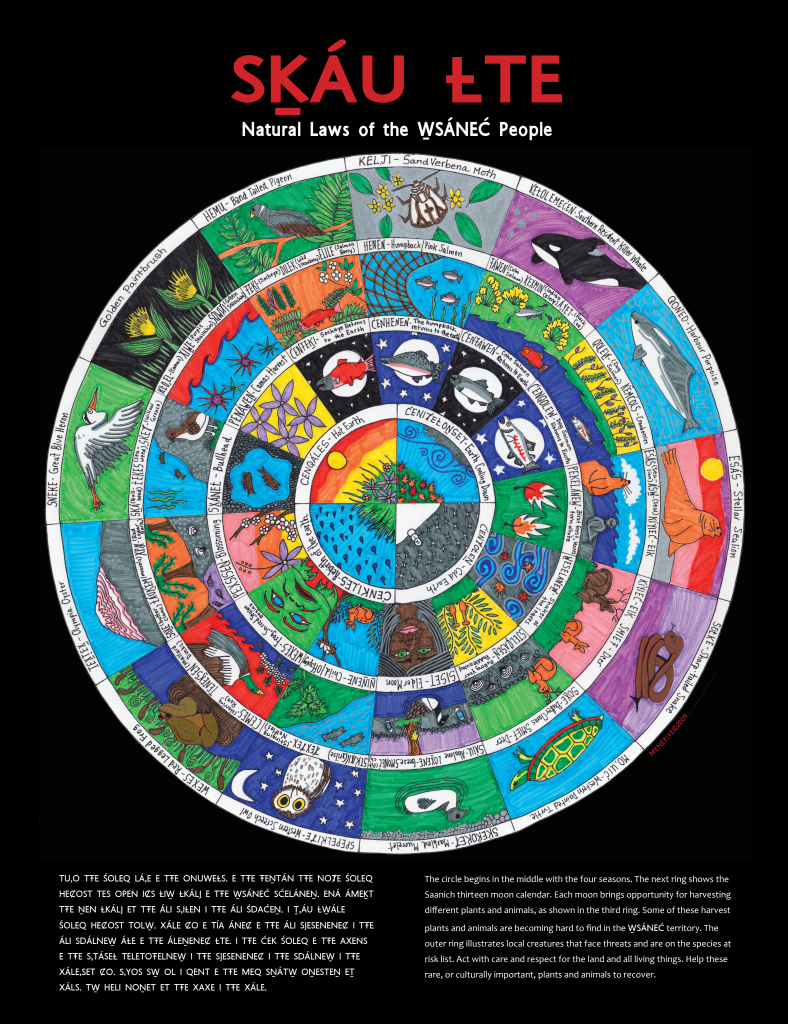
SḴÁU ȽTE - Photo by W̱SÁNEĆ Leadership Council
Early Fall (roughly September–October)
ĆENŦÁWEN — The Coho Salmon Moon
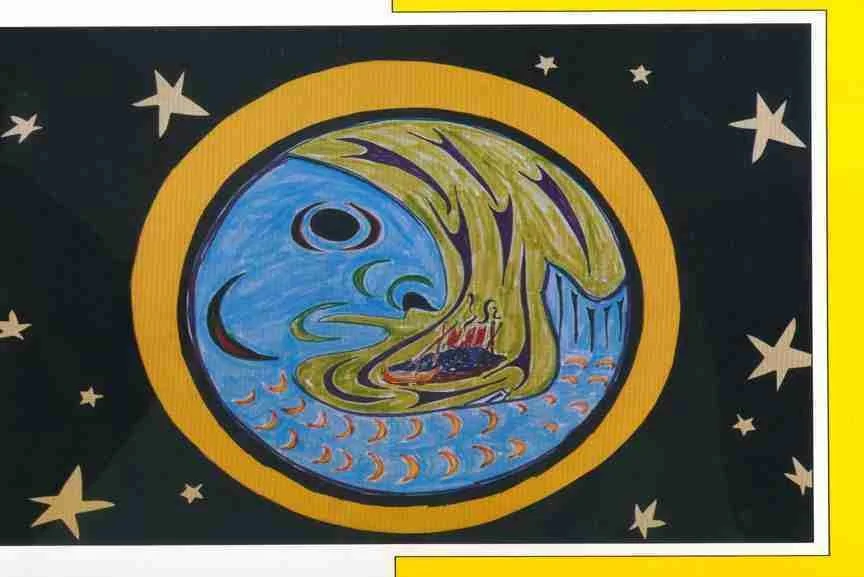
ĆENŦÁWEN - Photo by W̱SÁNEĆ Leadership Council
The last of the major salmon runs arrives with the chum salmon. This is a crucial harvest window — chum salmon is smoked and dried in large quantities to build up the winter stores that will sustain families through the leaner months ahead. The work is intensive and communal.
PEKELÁNEW̱ — The Moon that turn turns the leaves white
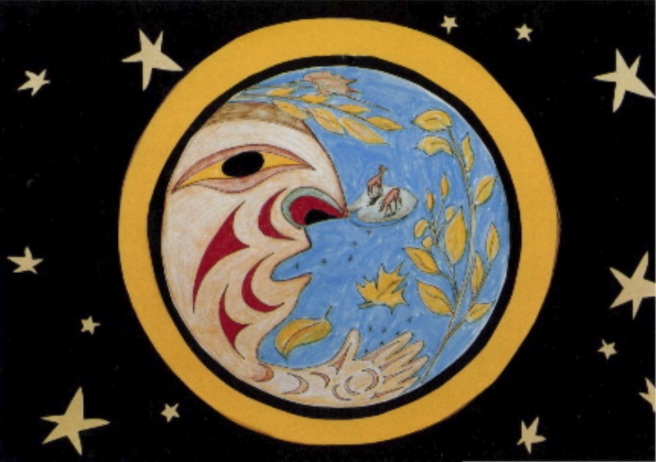
PEKELÁNEW̱ - Photo by W̱SÁNEĆ Leadership Council
As the weather cools, attention shifts to the land. This moon marks the fall deer and elk hunt, a vital source of fresh meat and hides. At the same time, W̱SÁNEĆ people begin splitting cedar logs that were felled in the spring — the start of preparing building materials and roughed-out canoes.
Late berries, roots, and plant medicines are also gathered during this window, and waterfowls begin arriving on the sloughs and inlets of the Saanich Peninsula.
Key terms for these seasons: ĆENIȾEȽOṈESET SȻÁĆELS - fall weather days, ĆENȾOȽEṈ SȻÁĆELS - colder weather days
Fall (roughly October–November)
W̱ESELÁṈEW̱ — The Moon of the shaker of the leaves
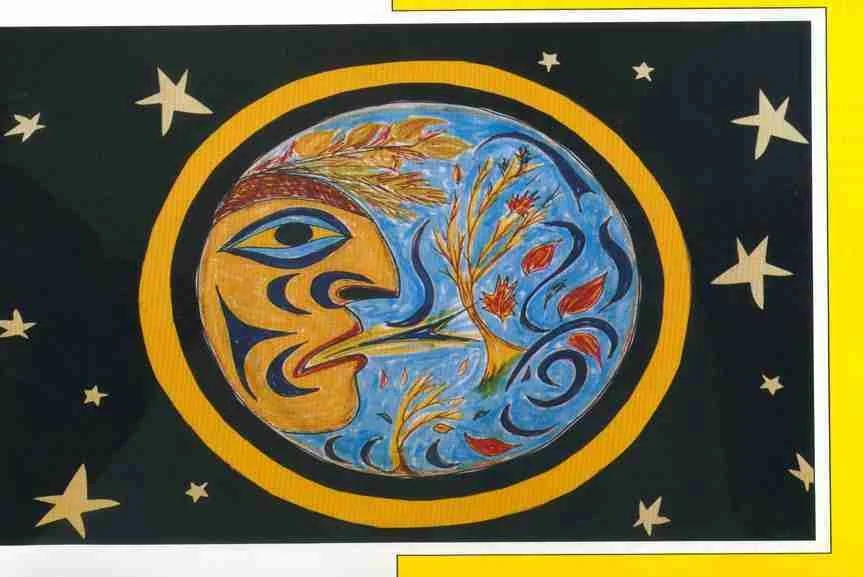
W̱ESELÁṈEW̱ - Photo by W̱SÁNEĆ Leadership Council
Days becomes colder – travelling in our food gathering territories in now very limited. The winds that come with this moon are a signal to move to the winter village as the open sea becomes dangerous for travelling. Fishing could be done mostly in the safety of our local waters, this is the time that big winds come and change the season to winter. Hunting continues as deer enters their rut, Elk were only hunted after the first snowfall as it was easier to track an elk if it was wounded, this way no meat would be wasted. The focus is on final provisioning before winter storms make travel difficult. Most Food were now in storage for the winter. Wood pitch is gathered for torches and fires — essential for both light and warmth in the months ahead. Nettles harvested earlier in the year are stripped and twisted into twine for nets, ropes, and cables.
This is also when families pull back from the summer village sites scattered across the Gulf and San Juan Islands (Mayne, Saturna, Salt Spring, and beyond) and return to the winter villages on the Saanich Peninsula.
Winter (roughly November–January)
SIS,ET — The Elder Moon (December/January)
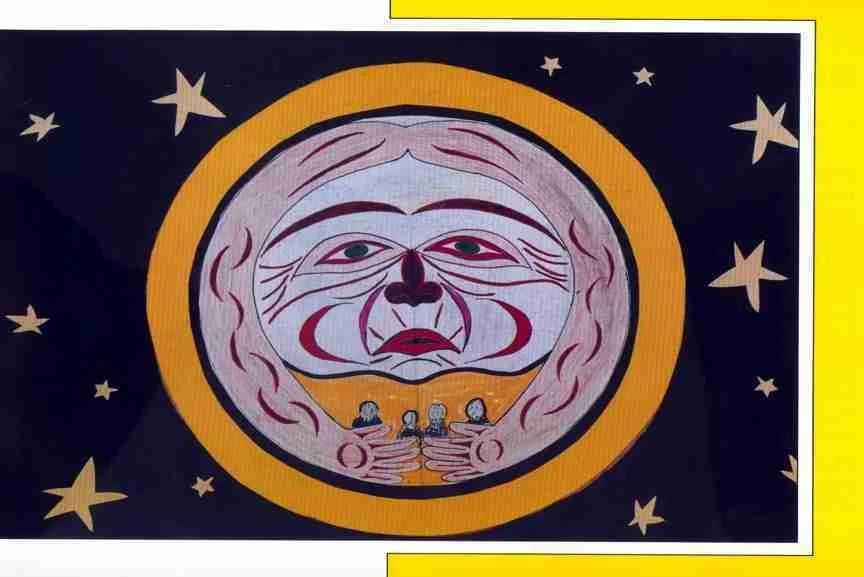
SIS,ET - Photo by W̱SÁNEĆ Leadership Council
This is the most important time of the year for spiritual and cultural life. Days are short, storms and heavy rainfall make sea travel unpredictable and unsafe, and people spend much more time indoors. But this isn't idle time — the rhythm shifts inward.
Economic activities:
Roughed-out canoes are brought into the longhouse to be carefully finished. Torches are used for night-tide shellfish gathering, which is common at this time of year. Ducks and geese are netted or speared on the sloughs and in protected inlets. Only the most sheltered inlets are used for ocean fishing — open-water travel is too dangerous. Nettle-twine work continues, producing nets, ropes, and cables for the coming year.
Cultural and spiritual activities:
Winter ceremonial dances take place in the longhouse — new dancers are initiated and witnessed by the community. Elders tell legends and stories to educate children about the right way to live, passing on teachings, history, and beliefs around the warmth of the firelight. This is fundamentally a season of teaching and transmission — the longhouse becomes a school, a ceremonial space, and a sanctuary all at once.
The Underlying Pattern
The seasonal round reflects a deep rhythm: spring and summer are outward-facing, with travel to island village sites, the camas harvest, salmon runs, reef-net fishing, berry gathering, and intercommunity gatherings like potlatches and canoe journeys. Fall is a pivot — hunting, final harvests, and the return to winter villages. Winter turns inward — stored food allows for sustained ceremonial life, craftsmanship, and the transmission of knowledge from Elders to the young.
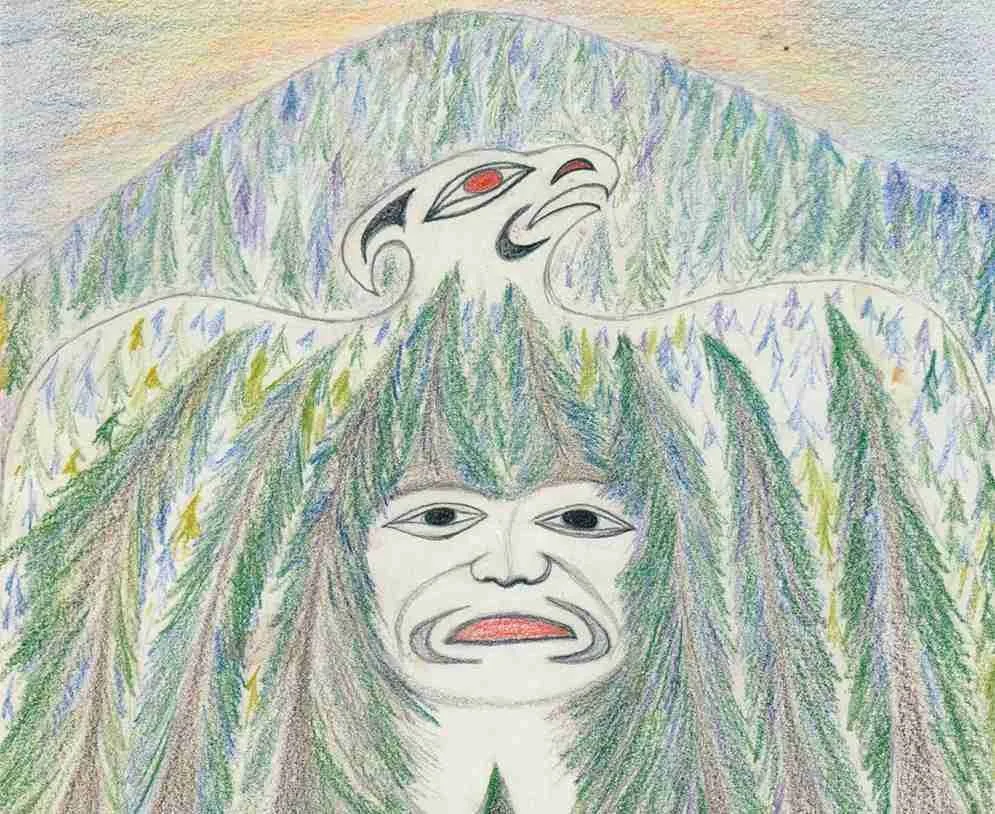
Illustration by STOLȻEȽ (John Elliott), The Legend of ȽÁU, WELṈEW̱ - W̱SÁNEĆ Leadership Council
As YELḰÁTŦE (Earl Claxton) and STOLȻEȽ (John Elliott) put it in The Saanich Year:
"It was not our way to separate these activities when we lived a traditional life because all was sacred to us. Our art, language, spirituality and our everyday activities were all one."