
If you’ve ever watched the 2003 movie Holes, there’s an iconic scene where Stanley and Zero turn to eating raw onions they discover growing in the desert to survive, which supposedly tasted like sweet peaches, and were able to ward off deadly lizards. The audible crunch is incredibly satisfying to listen to. That said, it has been revealed that these onions were actually apples wrapped in an edible cover, which was crushing (pun intended) to hear. Rest assured, if you’ve ever dreamed of stumbling across wild onions, you’ll be pleased to know that Vancouver Island and the Gulf Islands are home to several species of naturally occurring onions or Alliums, which is the genus that all onions belong to. In SENĆOŦEN (pronounced sen-CHOH-then) the traditional and ancestral language of the W̱SÁNEĆ People (pronounced wh-SAY-nuch), wild onions are known as ₭EX̱IEĆ (pronounced kuh-HEE-uch). These onions are visible for a short period of time. They flower, produce seeds, and then go through a process called senescence, which is when the foliage turns yellow and brown, sending the nutrients and energy back underground into the bulb where they remain dormant until the following year. They grow from small bulbs, are drought tolerant, colourful, and are widely considered to be resistant to damage from animals such as deer, mice, voles, and rabbits given their strong taste and odour.
Nodding Onion (Allium cernuum). In SENĆOŦEN, this species is known as SḴEX̱ (pronounced skw-ex). This species has grass-like foliage and delicate, nodding clusters of pink, bell-shaped flowers. These flower umbels (umbrella-like clusters) nod toward the ground, thus the name. The bulbs are conical, and taper towards the tip, akin to a shallot. You can find it growing on dry to mesic (well balanced moisture levels) rocky bluffs, grassy slopes, meadows, and open forests. Nodding onion needs good drainage, typically in full-sun, but will tolerate part-shade and clay soils. Seeds and plants are widely available through local native plant nurseries, and when conditions are right, it will create dense patches by self-seeding and bulb division. The entire nodding onion plant is edible, making it an excellent addition to salads, burgers, omelettes, or even stir-fries. Essentially, anything you may add chives to, you can swap out for nodding onion! If you want to add nodding onion to your breakfast cereal, hey, there’s no judgement here. That said, a little goes a long way, as the flavour can be quite intense!
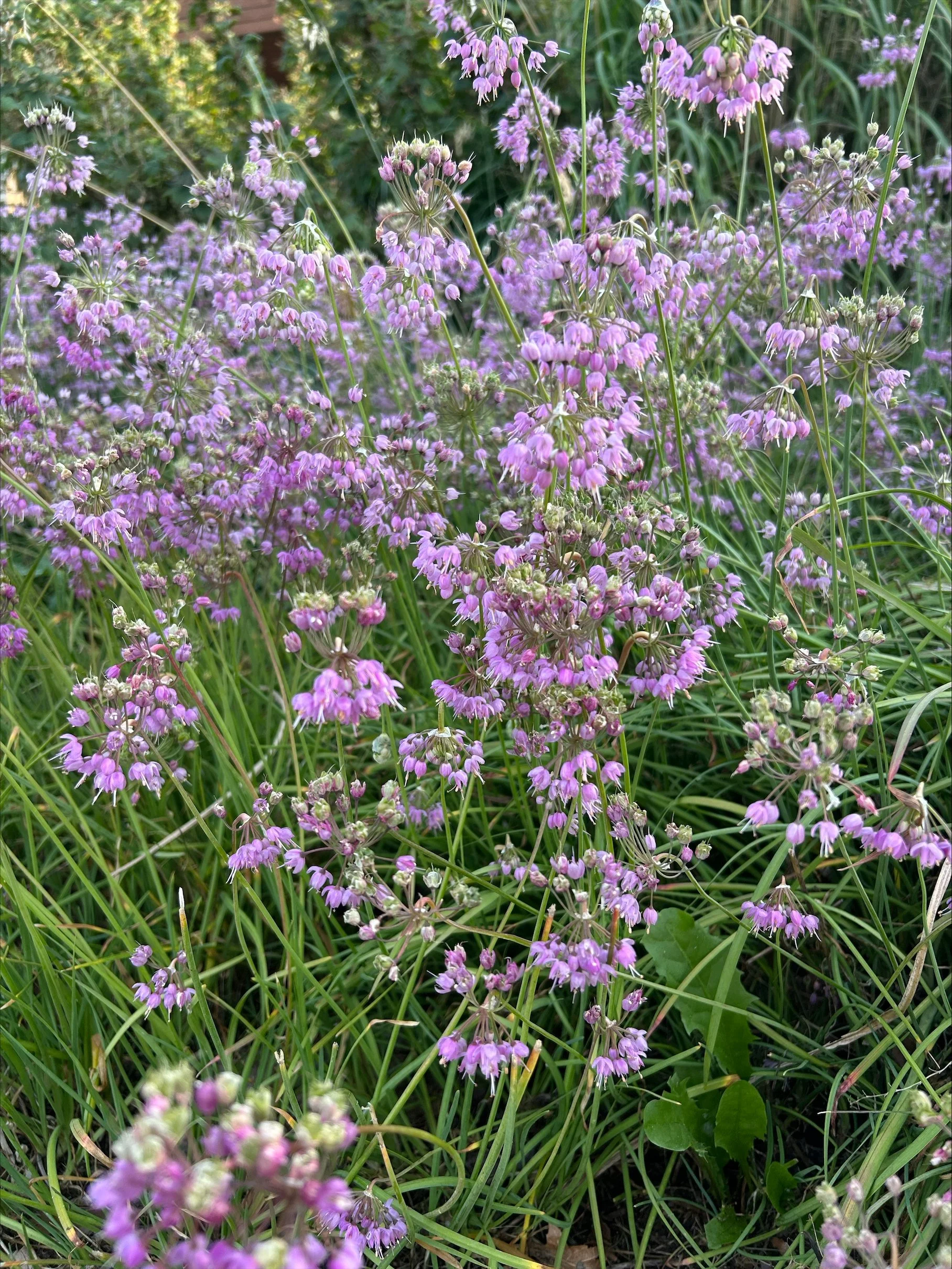
Nodding onion (Allium cernuum)
Hooker’s Onion (Allium acuminatum). This species is also known as tapertip onion, given their sharply pointed flower petals, and it is named after William Jackson Hooker (1785–1865), a famous English botanist. They are found in dry, rocky, well-drained soils, and their umbels can produce up to 40 magenta-pink flowers, creating a colourful display, marking it as an ideal species for xeric landscapes (reduced or eliminated watering requirements). The bulbs, although exceptionally small, can be roasted, sautéed, or added to soups and stews. Fancy!
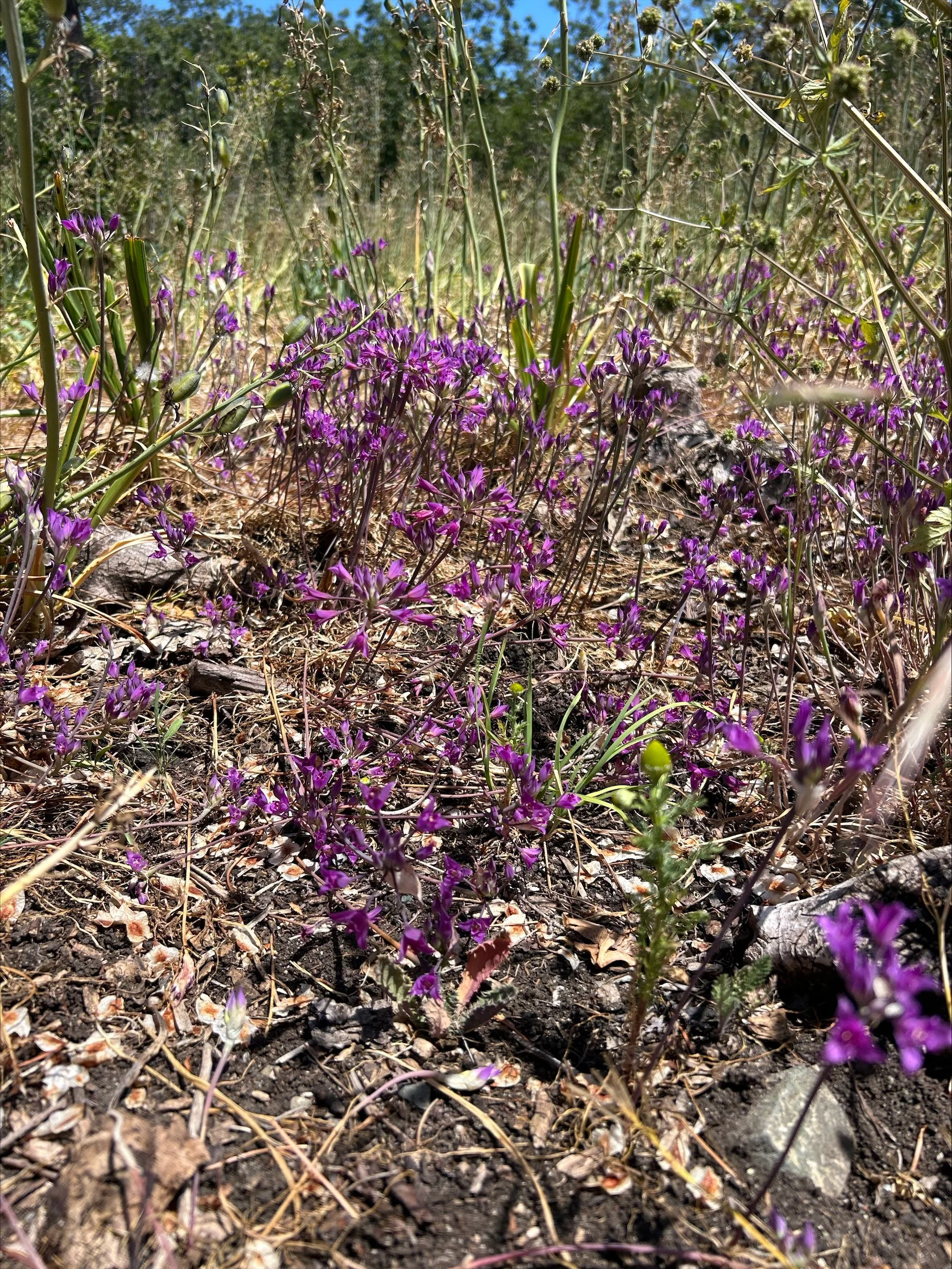
Hooker’s onion (Allium acuminatum)
Slimleaf Onion (Allium amplectens). This species is also known as Narrowleaf Onion or Paper Onion. In British Columbia, this species has a status of “S3” (Special Concern) and is Blue Listed, primarily because of habitat loss. The flowers are white to pink, arising from an egg-shaped scaly bulb with a brown to grey, wavy, fibrous coat. They require open, sunny locations which are moist in the spring but dry out over the summer. While this species is at risk, it can be purchased from local plant nurseries and included in ecological restoration projects.
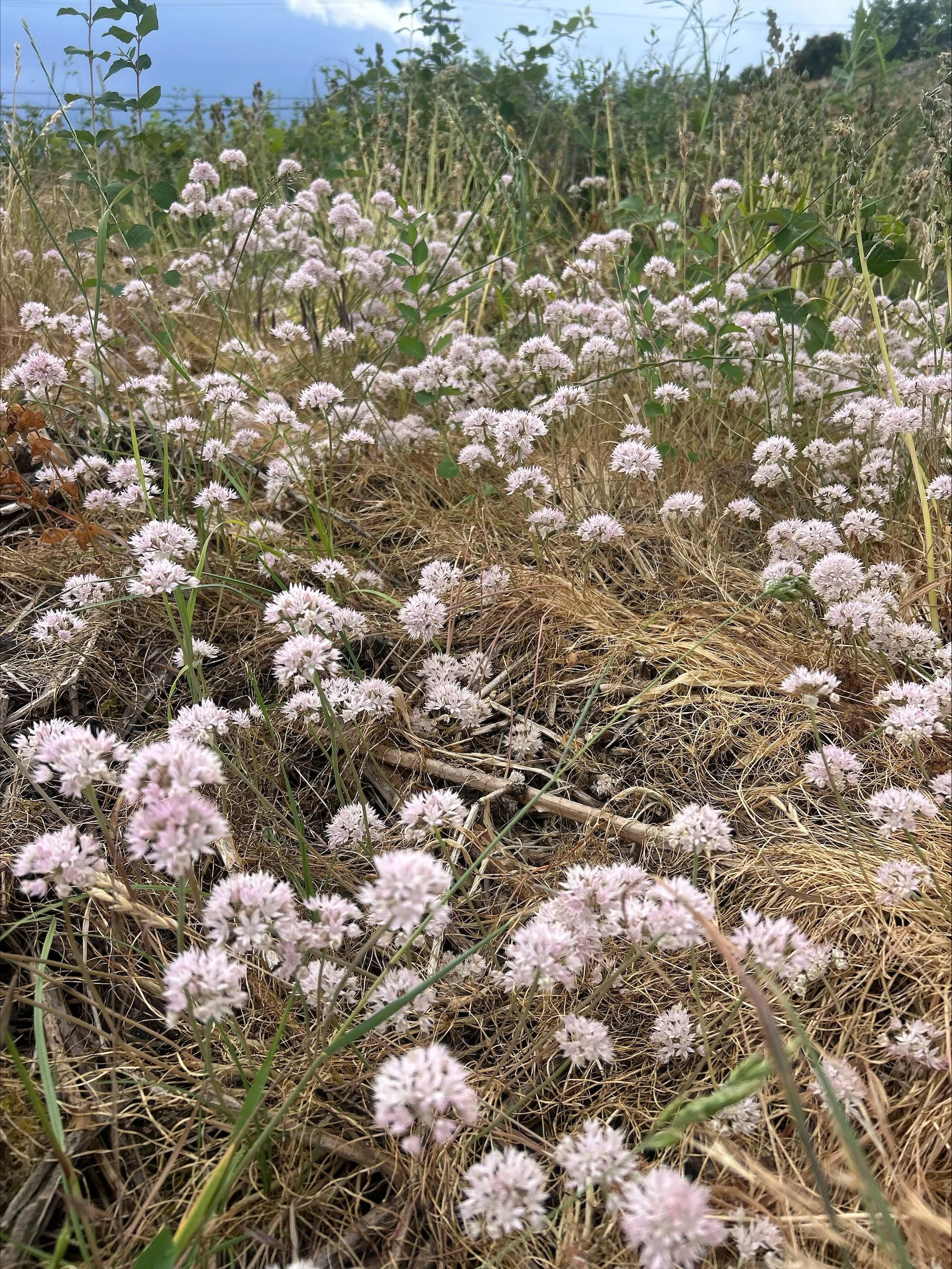
Slimleaf onion (Allium amplectens)
There are several other species to be aware of when learning about local Alliums. Firstly, you may have heard about fool’s onion (Triteleia hyacinthina). This species is not an Allium. The reason it’s called fool’s onion is because while it resembles an onion, it does not taste or smell like one, belonging to an entirely different plant family. You’ve been fooled.
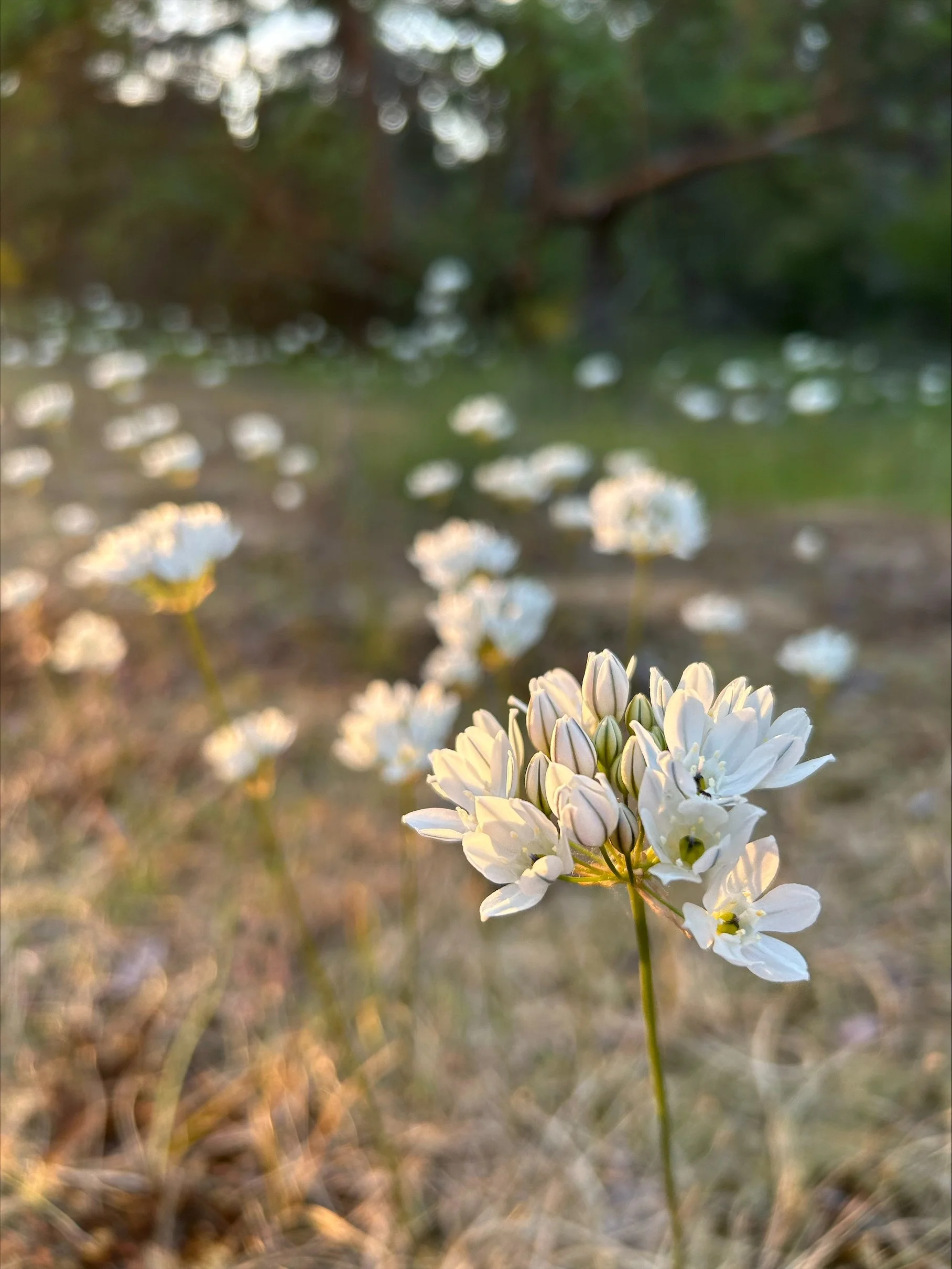
Fool’s onion (Triteleia hyacinthina)
Crow garlic (Allium vineale) is an invasive species in our region, with most observations occurring in the Greater Victoria area in British Columbia. It resembles chives and when crushed smells like onions. Uplands Park, for example, has been inundated with this invasive species, where it is negatively impacting the Garry Oak meadows there. Crow garlic is difficult to control and is considered too widespread to eliminate within the Capital Regional District.
Geyer’s onion (Allium geyeri) is a native species of onion, which can be found on many smaller coastal islands, in addition to the coastline of Salt Spring Island, for example. It is characterized by the ability to replace some of their flowers with bulbils (plantlets / mini bulb-like structures), to assist with propagation. While it’s important to understand Geyer’s onion exists, most people are unlikely to encounter it on their travels, especially without a watercraft. Finally, Olympic onion (Allium crenulatum), a native species with a status of “S3/S4” (Special Concern / Apparently Secure), has more than 17 known populations on Vancouver Island, with large clusters of observations near Mount Becher and Mount Arrowsmith. This species thrives in thin, gravelly, and rocky soils at high elevations, producing pink to purple-coloured flowers. The petals often have wavy (scalloped) edges, which is where the alternative name scalloped onion comes from.
Reading this article, I hope you have a newfound appreciation for Alliums. That said, we must acknowledge the scale in which Southwestern British Columbia’s natural habitats have been negatively altered by European settlement, from roughly the mid-1800s onwards. Many herbaceous plants that are found in this region have become significantly less common and rare. It’s of critical importance that these species are allowed to re-claim their place on the landscape, and it is with this understanding that we engage with the places they are still found in with respect. An excellent way to interact with herbaceous plants, such as native onions, is to source available species from native plant nurseries, neighbours, or community projects, and grow them yourself. By engaging with plants in this way, you can become familiar with each life stage, appreciate the time it takes for certain species to mature, increase your plant identification skills, and create new native habitat, all while reducing pressures on already stressed wild populations. The result of such a meaningful endeavor is a readily available delicious patch of local wild onions. They just may not taste like sweet peaches!