
Western Screech-Owl SPELḰIȾE Project Update
This season’s project work and blog post was made possible in part by our generous funders – RBC Foundation, and Nature Canada’s Bird Friendly City Small Grants Program.
Once scattered throughout conifer stands across Victoria, the coastal Western screech-owl (Megascops kennicottii kennicottii) is now facing drastic population declines. Habitat loss and pressure from invasive species are some of the contributing factors. HAT is working with a community of funders, volunteers, and biologists to locate and steward Western screech-owl habitat with the goal of preserving the spaces these critters call home.
The word for Western screech-owl in SENĆOŦEN is SPELḰIȾE (pronounced: spuhl-kweet-zuh). SENĆOŦEN is the traditional and ancestral language of the W̱SÁNEĆ People. To hear the pronunciation, visit: First Voices SPELḰIȾE. We would like to recognize and thank Dominique James for sharing the name of SPELḰIȾE with us.
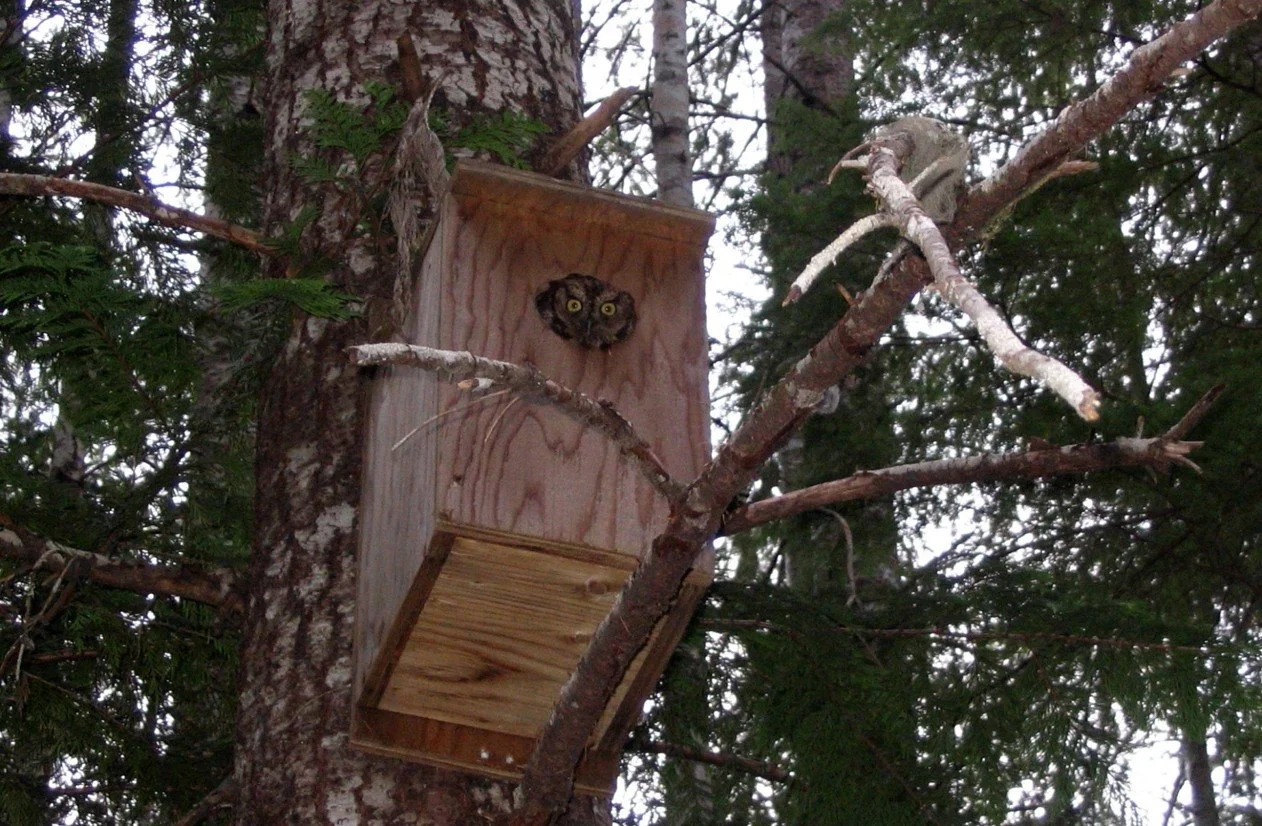
Western screech-owl nesting in a WESO nest box. Photo by Tania Tripp.
Decline of the Western Screech-owl
Across Greater Victoria, SPELḰIȾE Western screech-owls have suffered a population decline of over 90%. The coastal subspecies Megascops kennicottii kennicottii is listed as threatened under the Species at Risk Act and considered blue-listed listed within BC. This startling change is evidenced by the complete loss of breeding pairs on the University of Victoria campus, where there were 10 pairs in the mid–1990s; there are now none.
Threats come in several forms, ranging from habitat loss, predation and competition from invasive species to human-caused mortalities. Key habitat features, such as mature trees with natural cavities, are quickly disappearing due to urban development. Western screech-owls rely on cavities made by woodpeckers for nesting, as they are unable to excavate their own nesting cavities. As if this wasn’t enough, the barred owl (Strix varia) thrives in urban environments and outcompetes Western screech-owls for food and prey on them directly. Rodenticides, predation by domestic cats, and vehicle collisions place additional pressure on Western screech-owl populations.
What is Being Done?
HAT and its community network play an important role in supporting these little owls through the Western screech-owl Program. This program began in 2015, in partnership with Tania Tripp of Madrone Environmental Consulting, a biologist and Western screech-owl specialist who has researched the owls on the south coast for over 25 years. Today, the project continues with the expertise of Tania and other biologists, including Joanna Preston, to conduct annual acoustic monitoring surveys, habitat assessments, nest box enhancement and monitoring. These recovery strategies protect and maintain key habitat areas within the CRD—all of which are vital to the conservation of Western screech-owls. HAT works collaboratively with land stewards, local biologists, and volunteers, who are vital to the program's success.
Bird Conservation and Habitat Restoration
Nest Box Installation, Monitoring, and Maintenance
With the help of community partners, HAT has installed over one hundred nest boxes from 2015 to 2025 across dozens of properties located in ideal nesting habitat. In 2026, HAT staff and three volunteers installed 10 new nest boxes to enhance habitat for a known nesting pair of owls. Installing artificial nest boxes is a management strategy that aims to provide additional nesting habitat to landscapes that have lost them. In this case, the removal of mature trees with natural cavities or standing dead trees. These critical habitat features are often removed through logging and urban expansion.
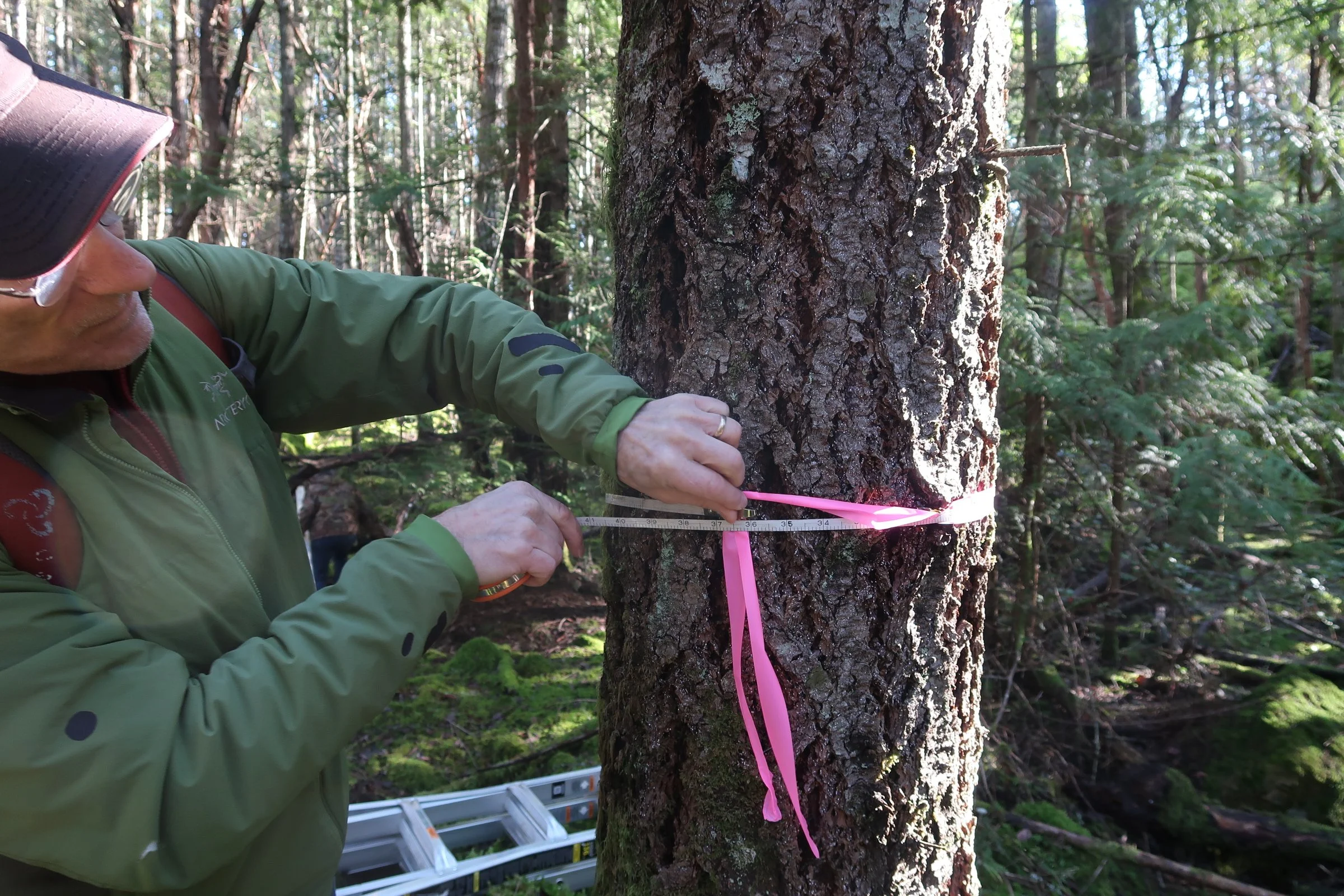
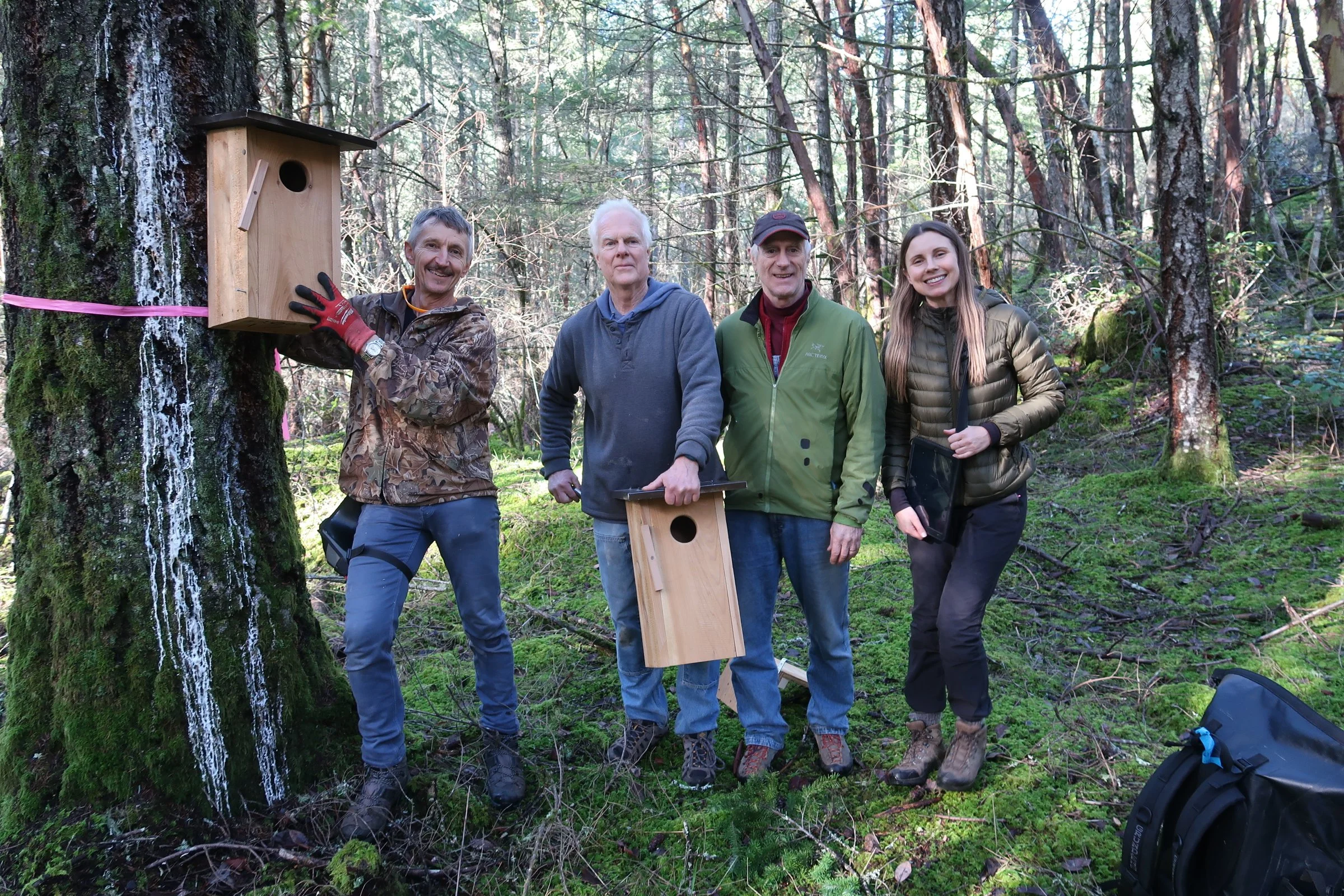
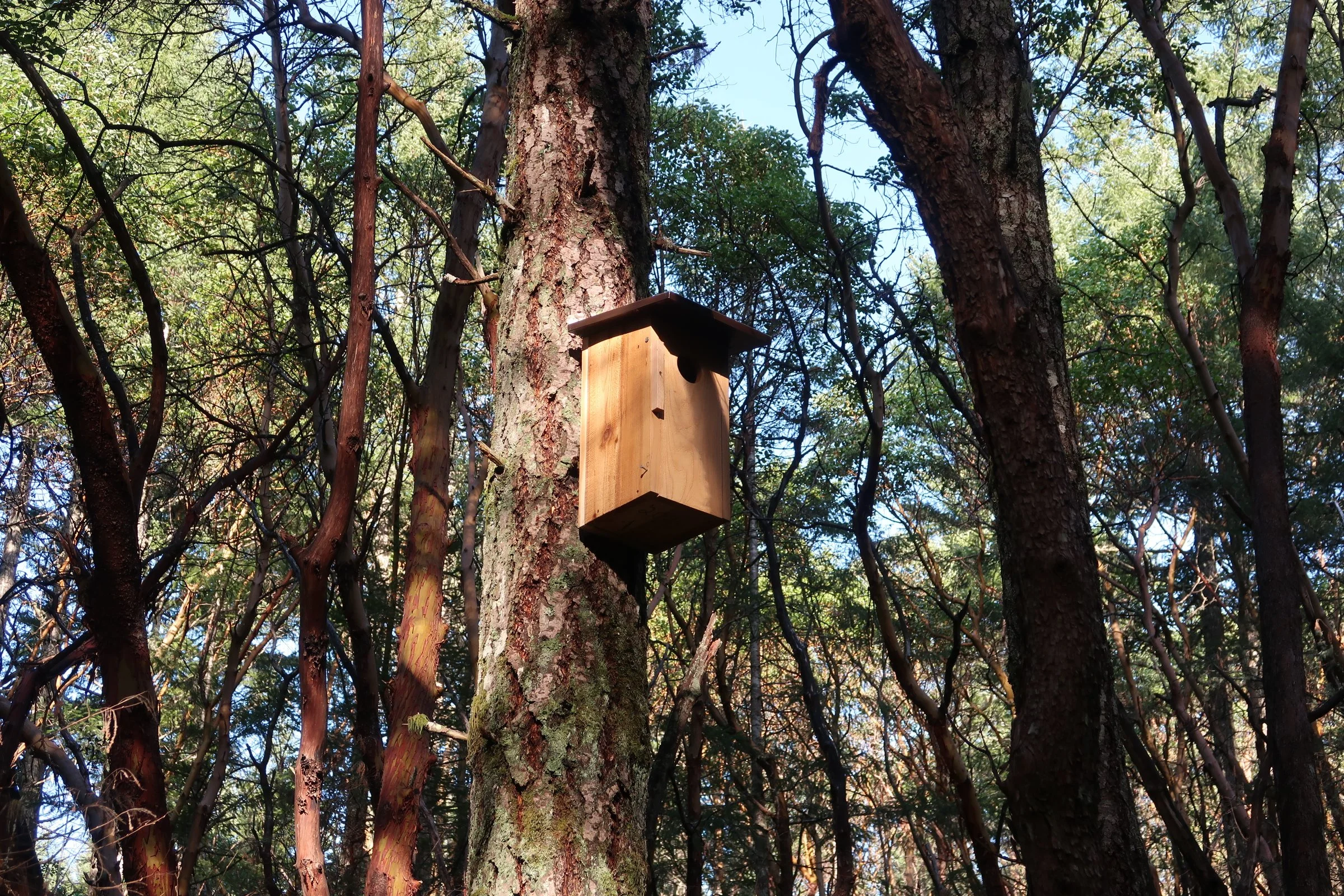
HAT staff and volunteers installing WESO nest boxes on a land steward’s property.
Monitoring happens in three different ways. Call playback surveys are conducted by HAT staff and volunteers in February and March. This is a type of acoustic monitoring method that uses recordings of a local Western screech-owl to elicit a response call from potential individuals in the area. Acoustic Recording Units (ARUs) are another form of monitoring that captures the vocalizations of Western screech-owls in a given area. These are installed throughout winter and spring and the data collected informs the presence of owls, sex and activity of individuals. Lastly, nest box checks occur throughout spring and early summer. The boxes of potential nesting pairs are checked, and the occupants are recorded.
Annual nest box maintenance is necessary to ensure the boxes are ready for nesting season. This takes place in January and involves locating boxes with a GPS and assessing the condition of the box exterior for weathering and damage. Next, a nest box camera (a camera on an “L” shaped pole) is used to investigate the box. Boxes are often filled with nesting material from grey squirrels which prevent owls from using them. The nesting material is removed and replaced with wood shavings. Because there are so many boxes, roughly half of them are cleaned out each year, alternating years. Boxes that have been previously occupied by Western screech-owls are prioritized during cleaning. All of this hard work is made possible by our dedicated community of lands stewards, biologists and volunteers.
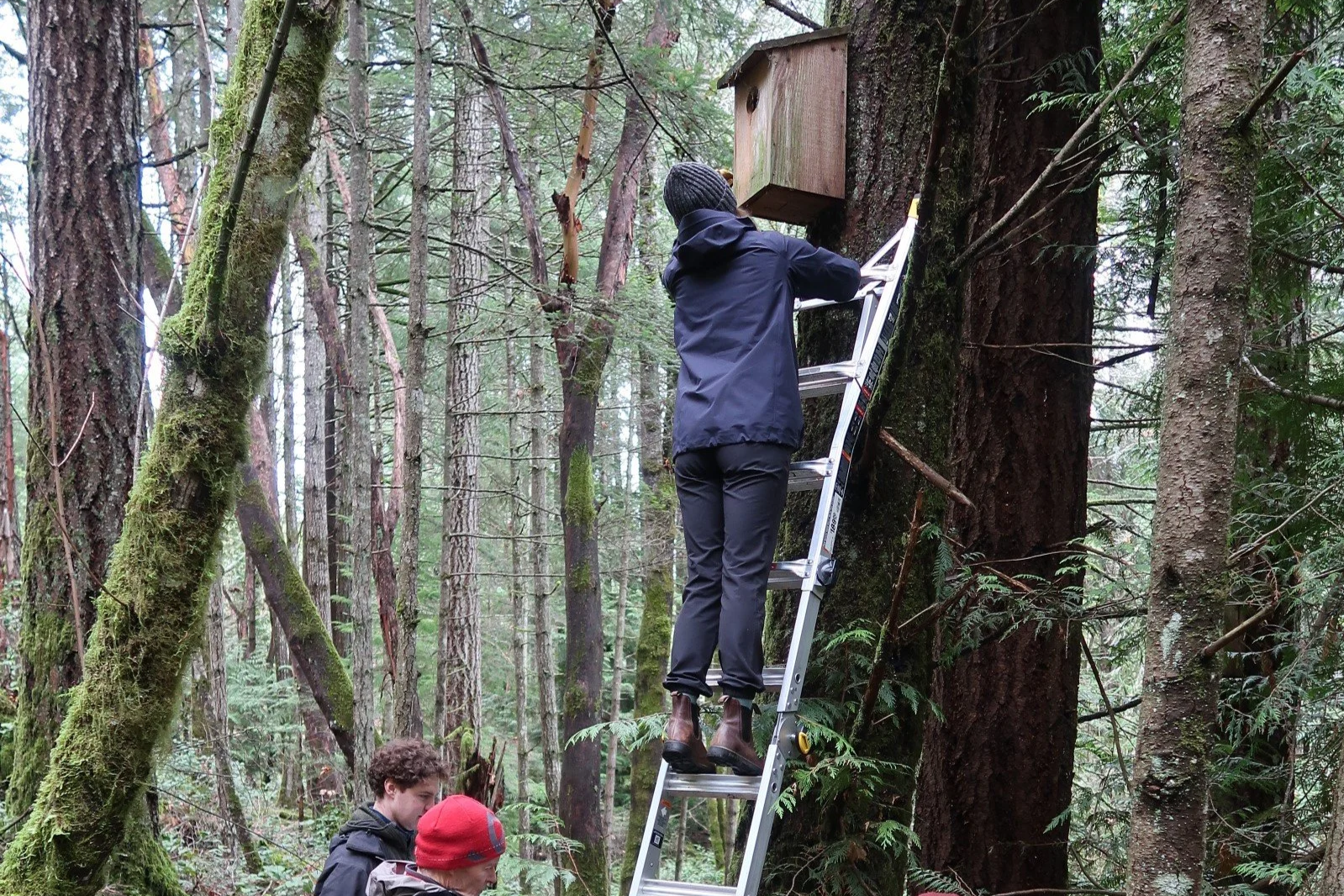
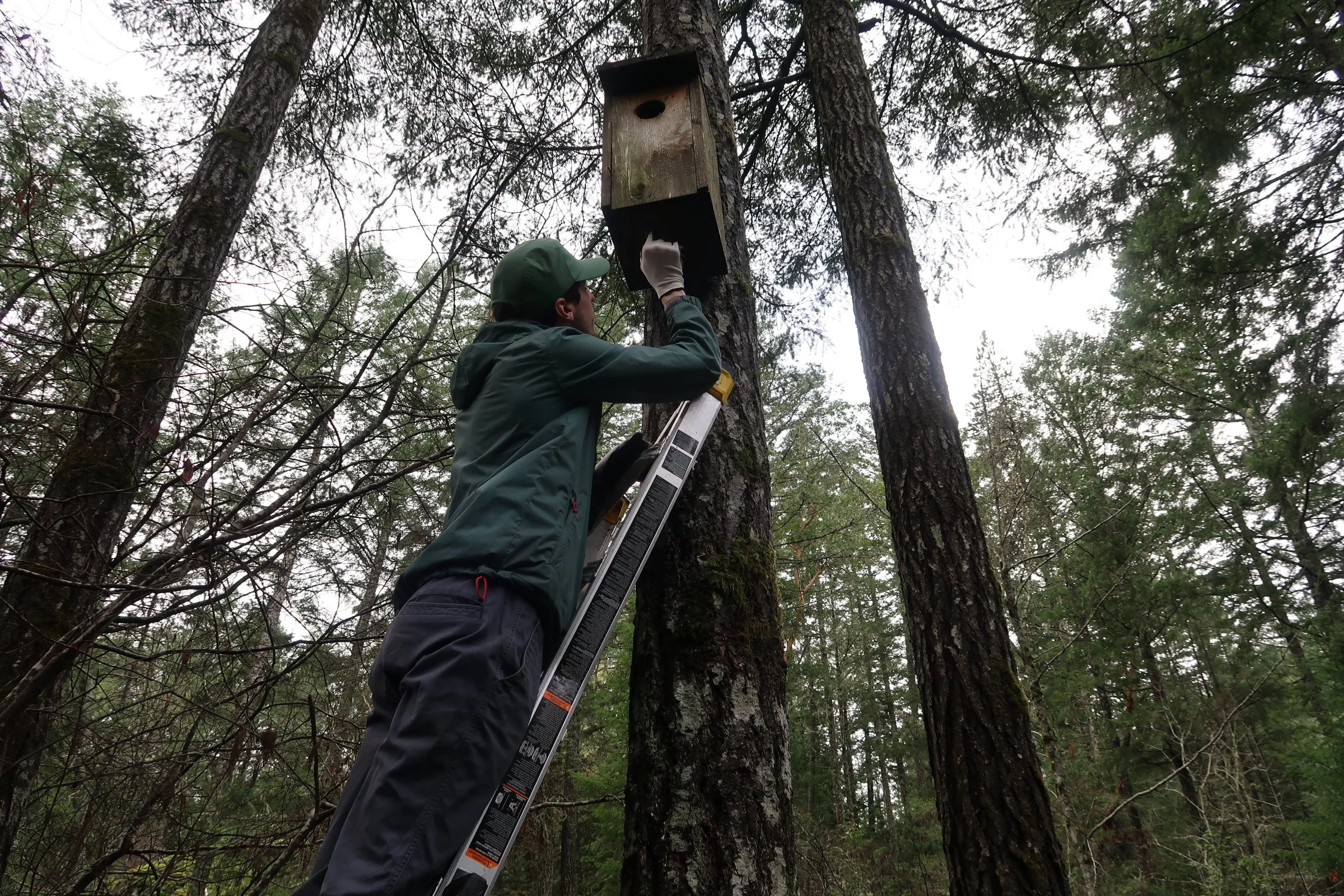
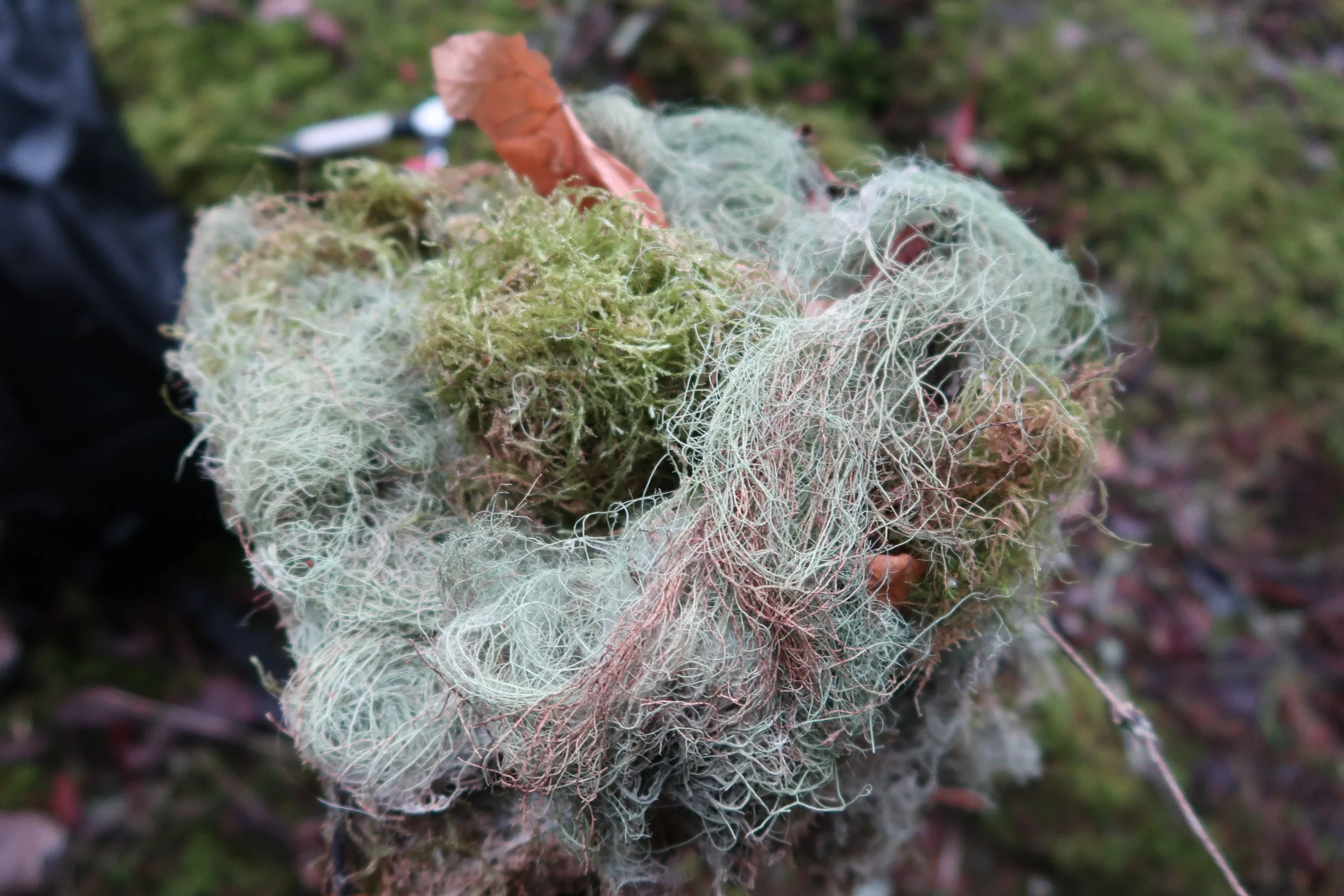
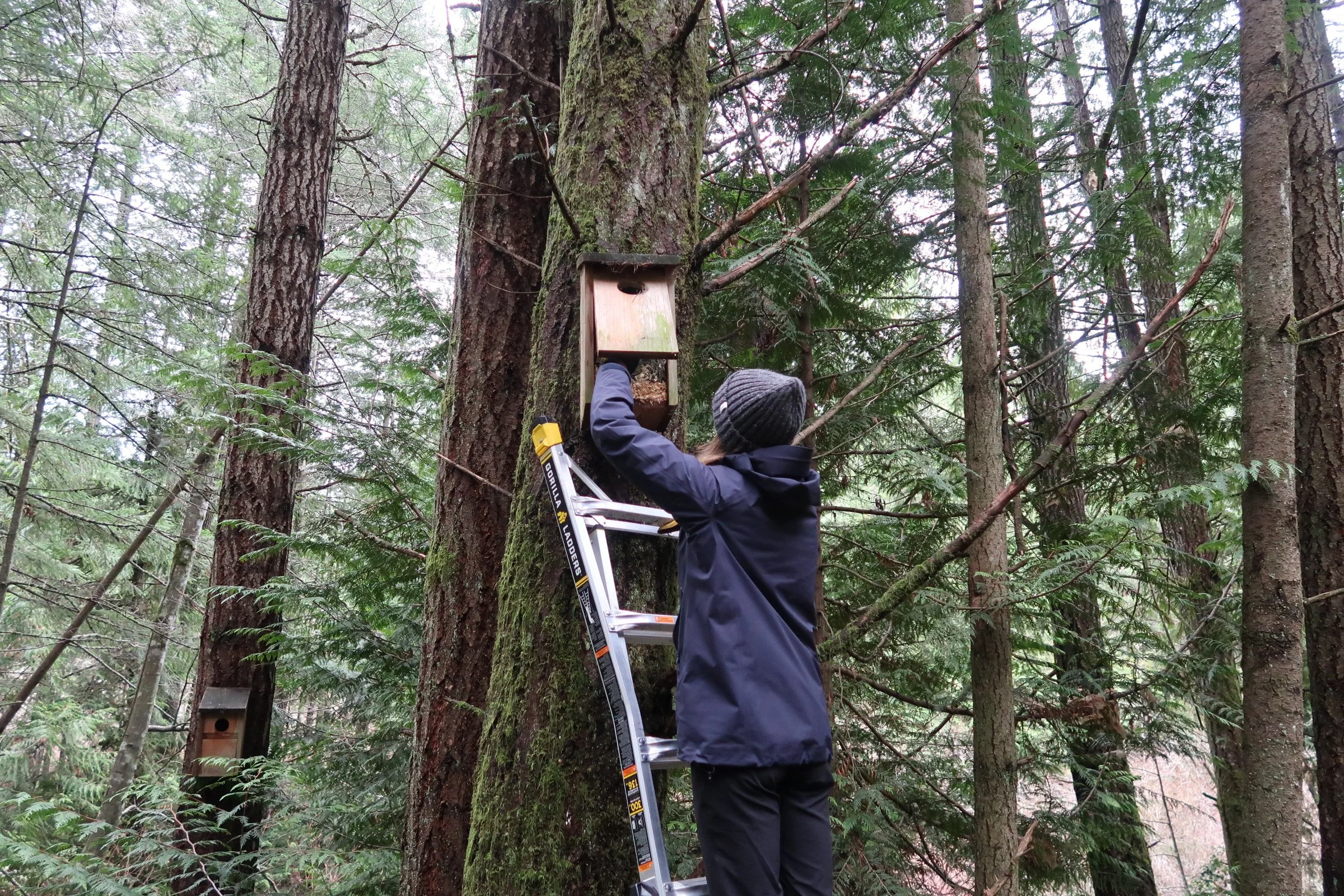
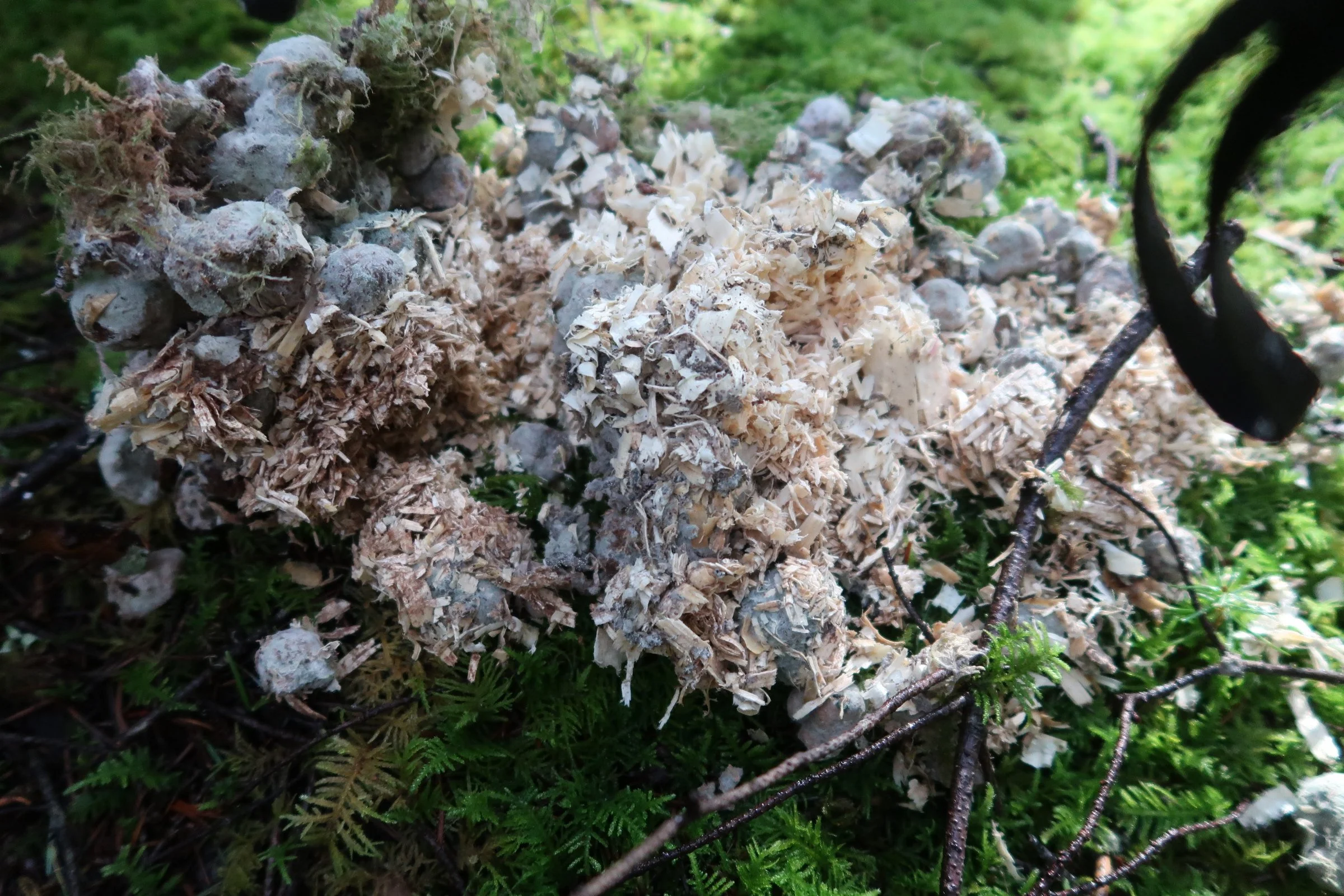
Cleaning out nesting boxes to prepare them for nesting season.
Public Engagement & Education
Call Play-Back Monitoring with Community Volunteers
The survey methodology has included guidance from owl specialist researchers in the Pacific Megascops Research Alliance who generously volunteered their professional expertise in this project. This year, call playback surveys were conducted by HAT volunteers and staff across the region, with additional efforts made this season by adding more volunteers and monitoring nights to detect the owls. The survey areas are called transects and are surveyed using an acoustic monitoring protocol that uses the recordings of a male western screech-owl territorial call. The methodology used is designed by owl specialists to ensure it does not cause distress or attract predators, such as the barred owl.
From February to early April of this year, 18 volunteers headed out along their assigned routes in hopes of finding western screech-owls by hearing their distinct “bouncing ball” call. Surveys happened from a half hour after sunset to midnight, a time when these nocturnal owls are more active in their territories. We increased our survey efforts this year, and HAT volunteers covered 10 transects from East Sooke to the Highlands. Each route was surveyed 2-3 times throughout the monitoring period. During the surveys, three WESOs were identified within the CRD survey area. Two of them were found during surveys, and one was an incidental observation as it flew in front of a surveyor's car!
In February and May, ARUs were installed across several properties within the CRD that were determined to meet the habitat requirements of western screech-owls. Eight ARUs were deployed across four properties; two of these occurred in February, and the other six occurred in May.
Nest boxes are monitored for occupancy from April to June each year.
Exciting Results: This year, we monitored 65 boxes and were excited to discover a Western screech-owl nesting in one box with at least 2 chicks, along with two nest boxes occupied by Northern saw-whet owls with chicks.
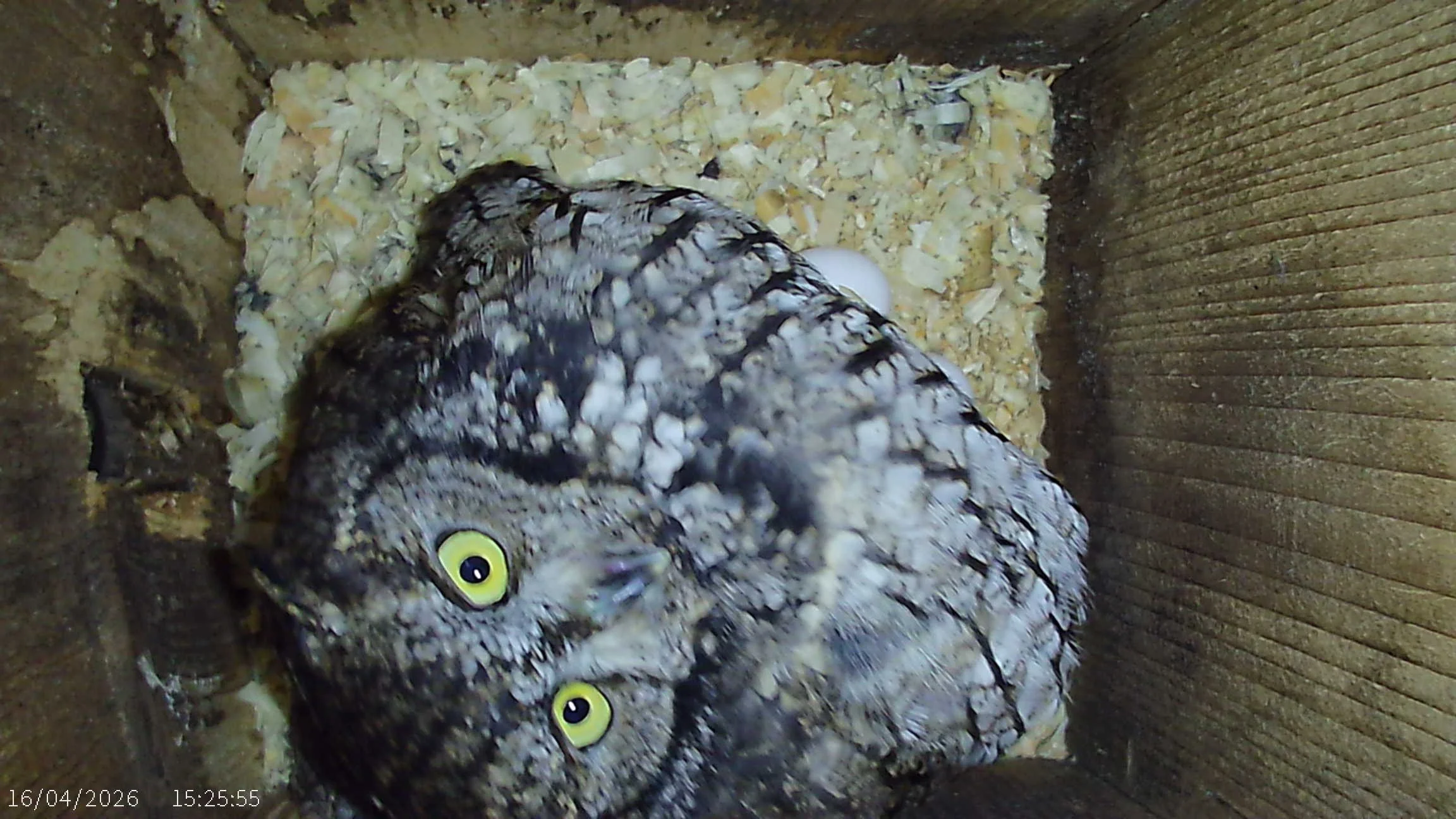
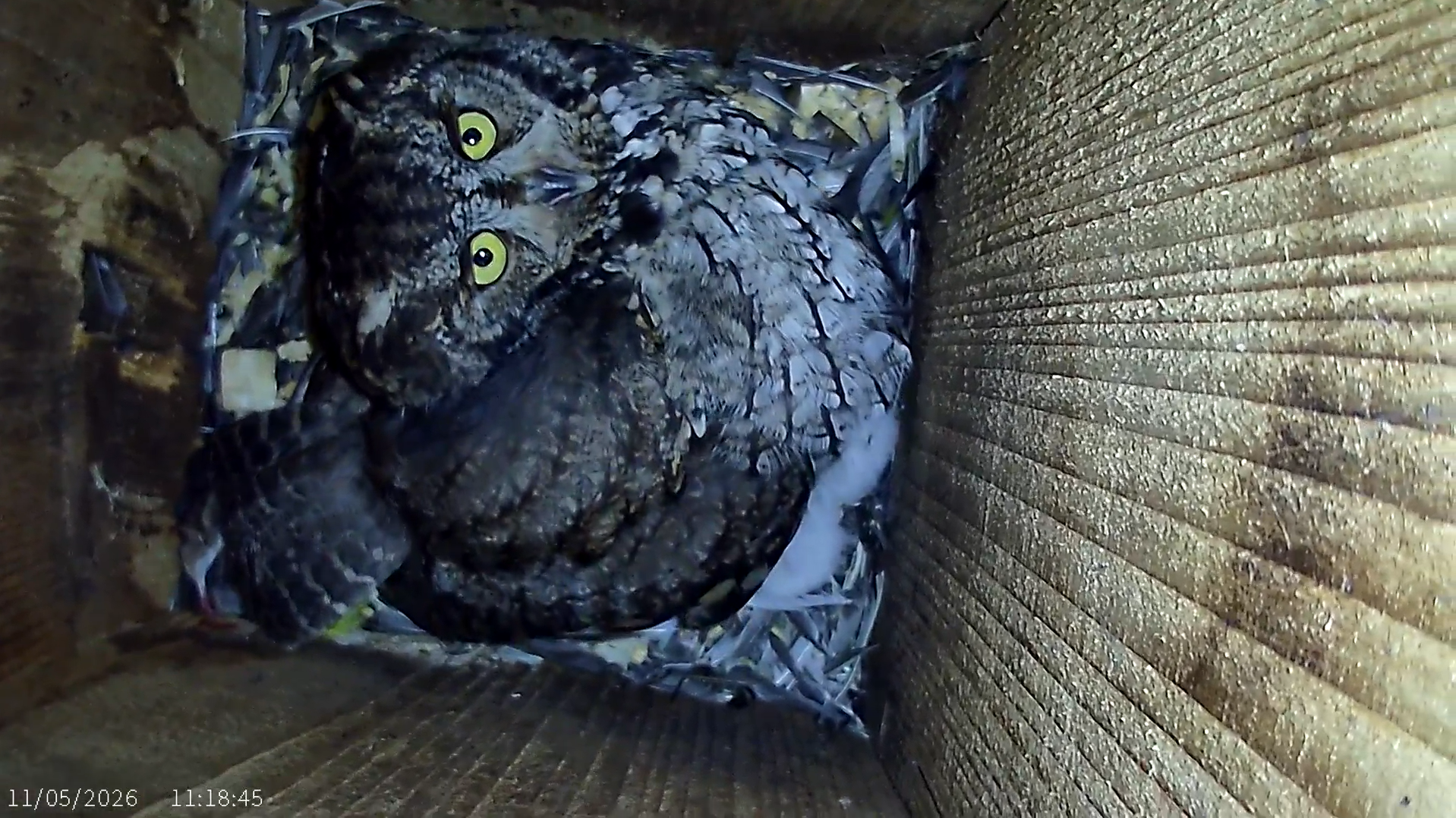
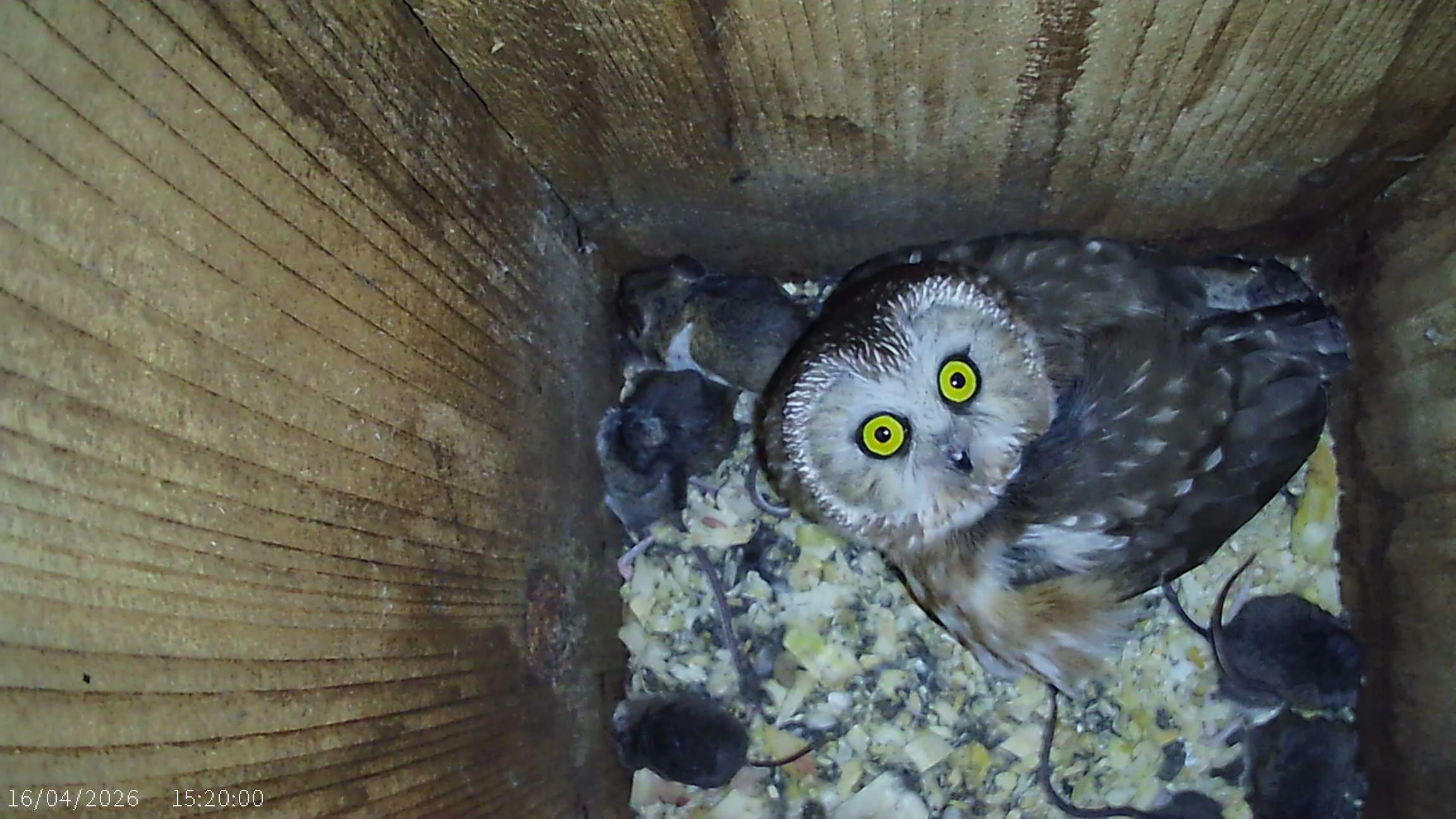
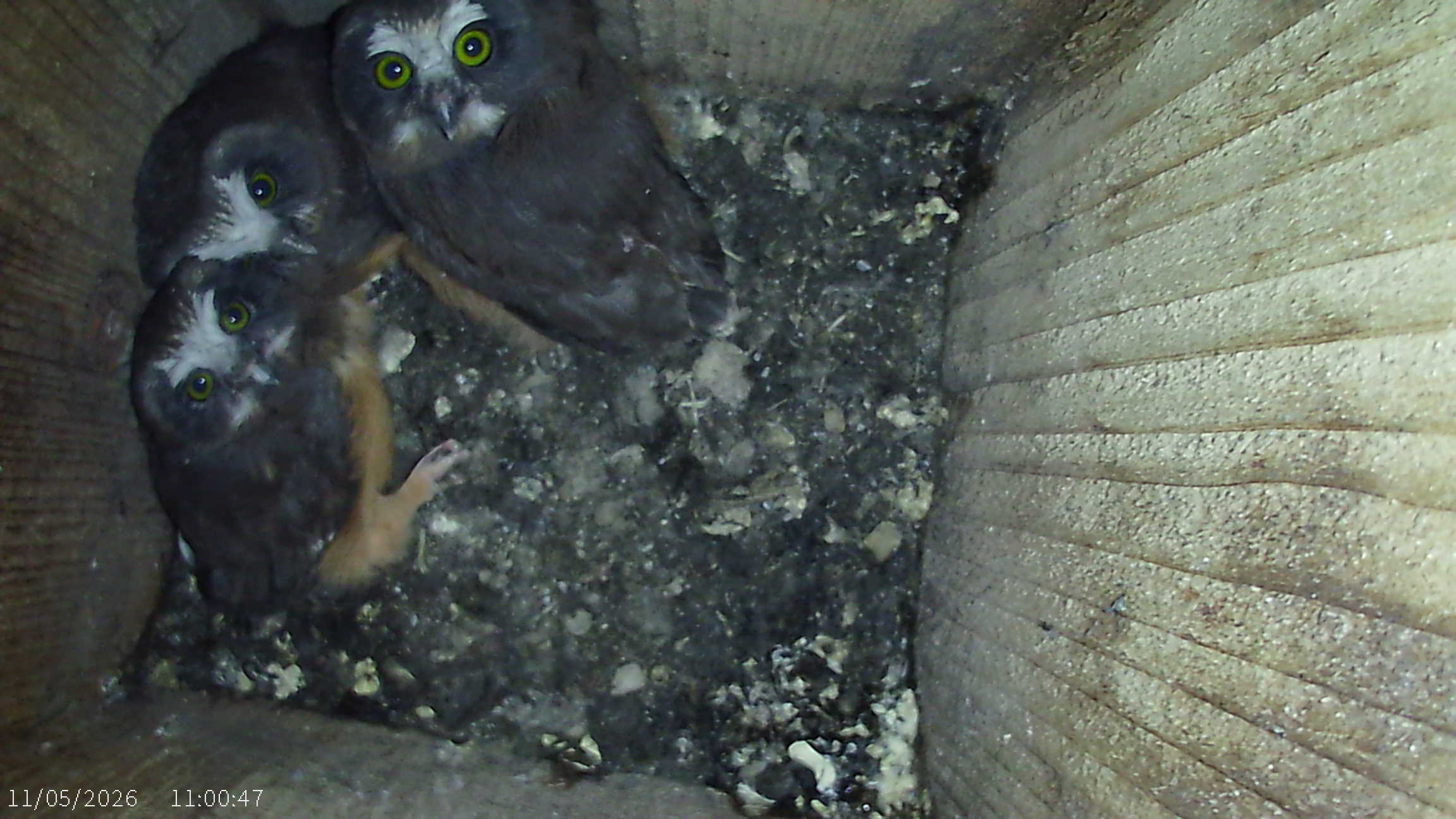
Western screech-owl (left two) and northern saw-whet owl (right two) nesting in HAT nest boxes. These were taken by HAT staff during spring nest box monitoring.
An ‘L-shaped’ nest box camera attached to a telescoping pole is used by HAT staff to monitor WESO nest boxes.
So What’s the Point?
Through partnerships with community members, funders, and biologist volunteers, HAT is able to continue stewarding the forested landscapes across Victoria that the Western screech-owl calls home. For 6 years (2019-2025), several nest boxes across three properties have been successfully occupied by the same returning pair, dutifully raising the next generation of western screech-owls.
What can you do?
Retain dead trees and old growth stands – These habitat features offer nesting habitat and places to find prey
Avoid the use of rodenticides – Owls consume poison through bioaccumulation in rodent prey
Reach out to HAT if you hear a WESO! – Listen for their distinct call when out in the woods
Put up barred owl-resistant nest boxes – a smaller entrance hole will prevent barred owls from entering and preying on WESO nestlings
Volunteer with us – Join HAT’s Western Screech-Owl Monitoring Program and help protect these incredible birds!
Donate to the HAT Wildlife Program - Your donation helps install and maintain nest boxes, expand monitoring programs, and protect critical habitat for Western screech-owls and other wildlife - select Wildlife Program in the form.