
Spring on the Field Crew
By Chelsea Nuez, Habitat Restoration Lead Technician
The very start of the field season is the most energizing, inspiring time to spend working on restoring Garry oak ecosystems for me. It is also the most intimidating, as we step into meadows on our tippy toes to avoid crushing the fresh cotyledons, emerging flower buds, and teeny frogs tucked into the damp morning moss.
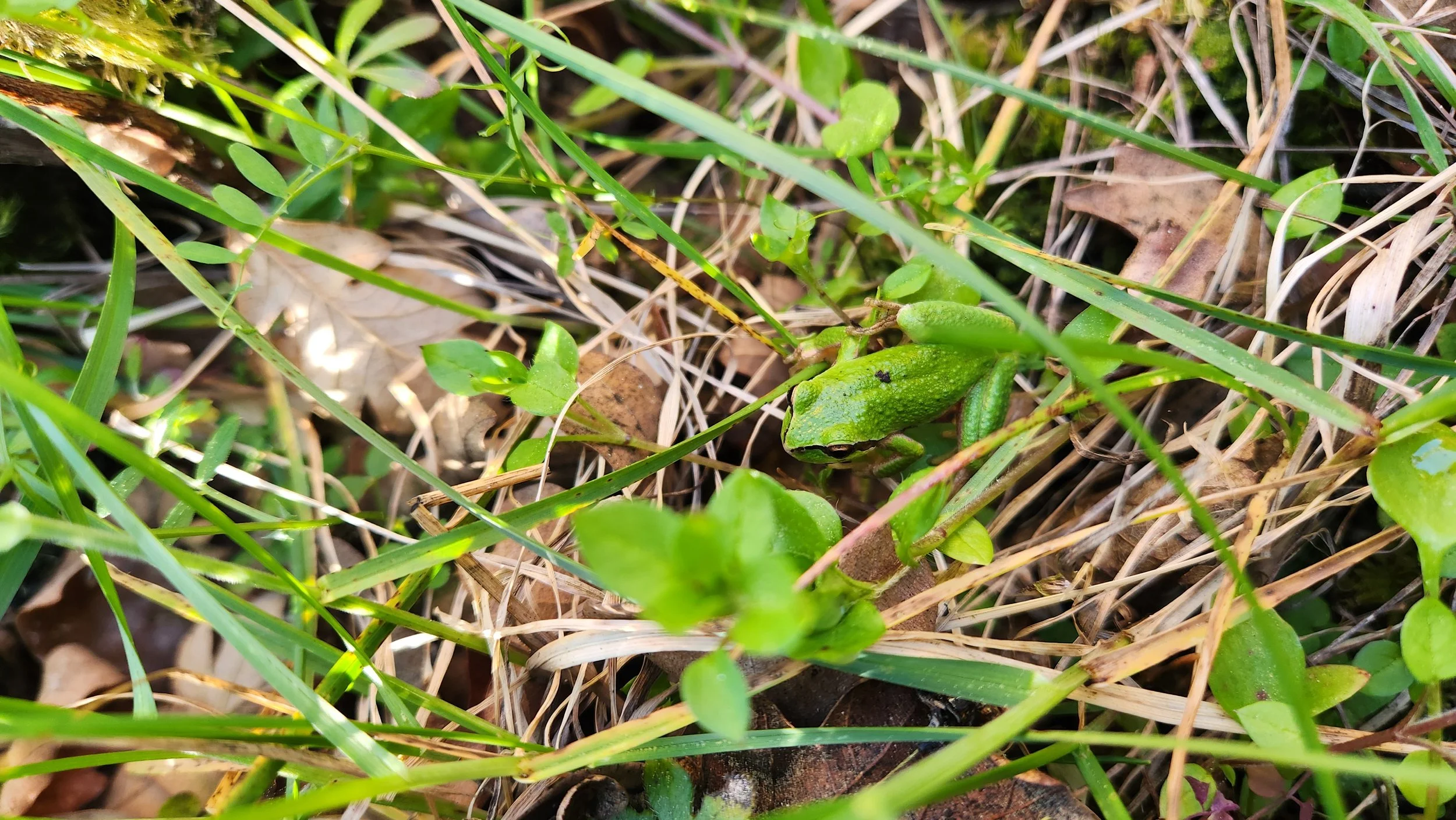
Pacific tree frog (Pseudacris regilla) blending into the green groundcover.
This is the beginning of my fourth season on the HAT field crew, and in my earlier years on the team we would start the season rushing to get to the Scotch broom before it has a chance to flower and seed. This year we have a new target species for the earliest part of spring: shiny geranium.
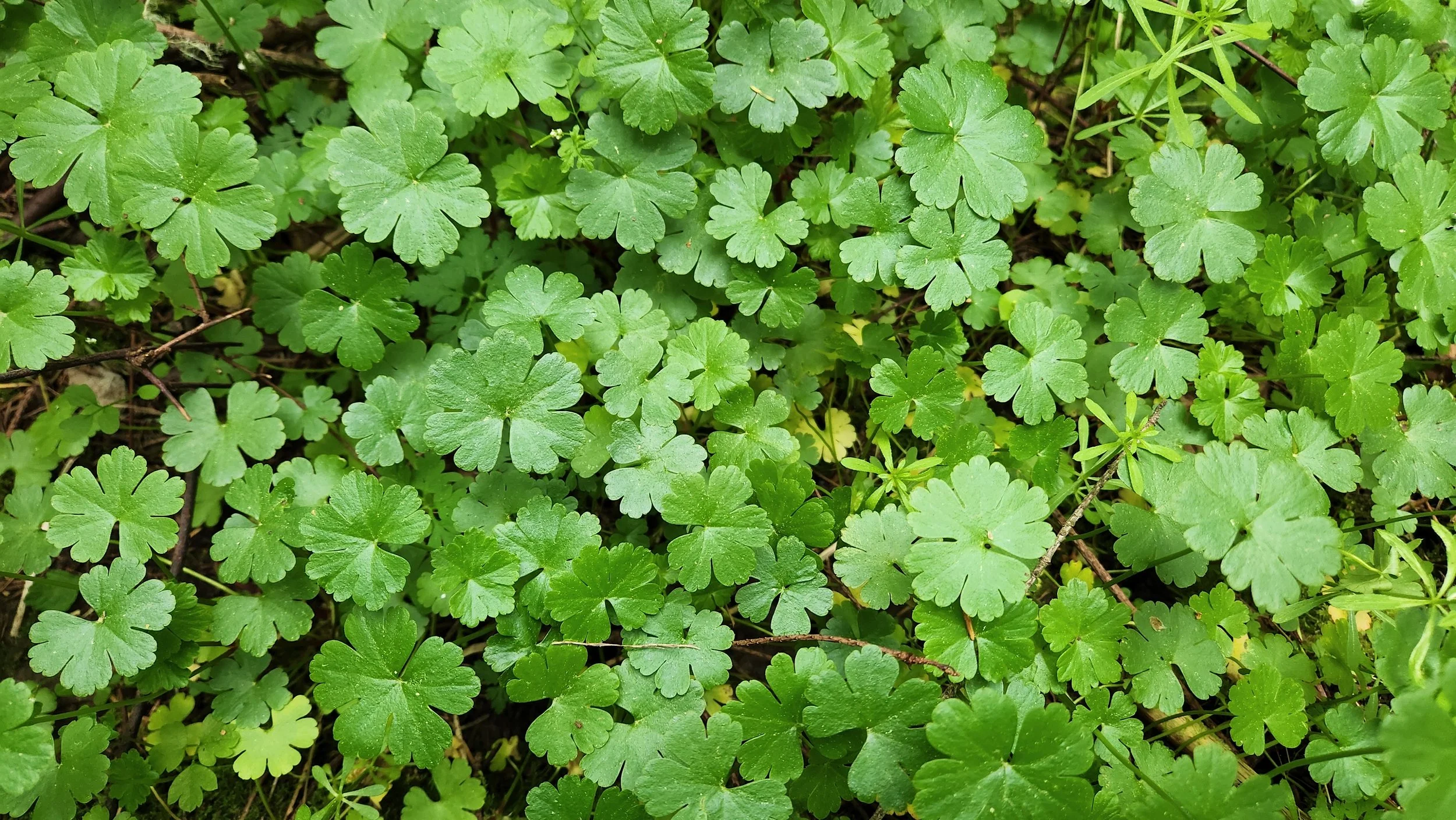
Shiny geranium (Geranium lucidum).
Shiny geranium (or as we refer to it, “shiny G”) is relatively new to Vancouver Island. It is a fast-growing groundcover that is prolific in a range of habitats from open meadows to damp shady woodlands, where I’ve seen it quickly grow into monocrops that dominate the understory. The seeds of shiny G can project up to 6 metres away and are viable for up to 5 years, making it critical to remove new populations as quickly as possible and check the area again year after year to ensure that future seeding opportunities are cut off.
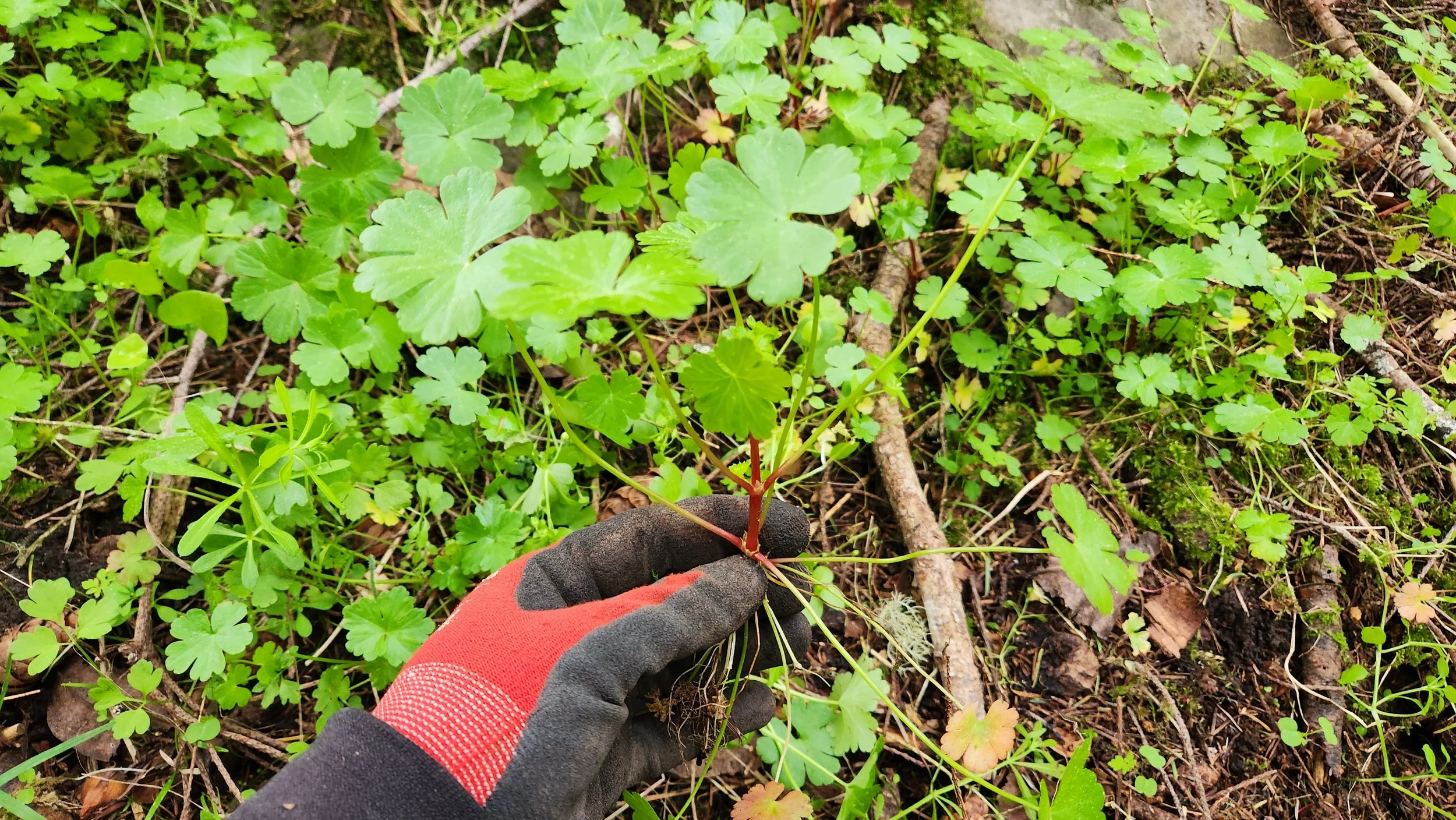
Our crew removes shiny G with careful, deliberate hand-pulling straight into garbage bags in April and May before they go to seed. It is important to dispose of the plants properly because the flowers can continue to mature and produce seeds even after the plant has been removed from the ground.
An unexpected benefit to removing shiny geranium is that because it is such slow meditative work, you will have lots of time to gab, gossip, and laugh together with your friends while admiring the emerging native species that persist despite this encroaching invasive, giving us hope that we are contributing to a future where those native plants continue to thrive.
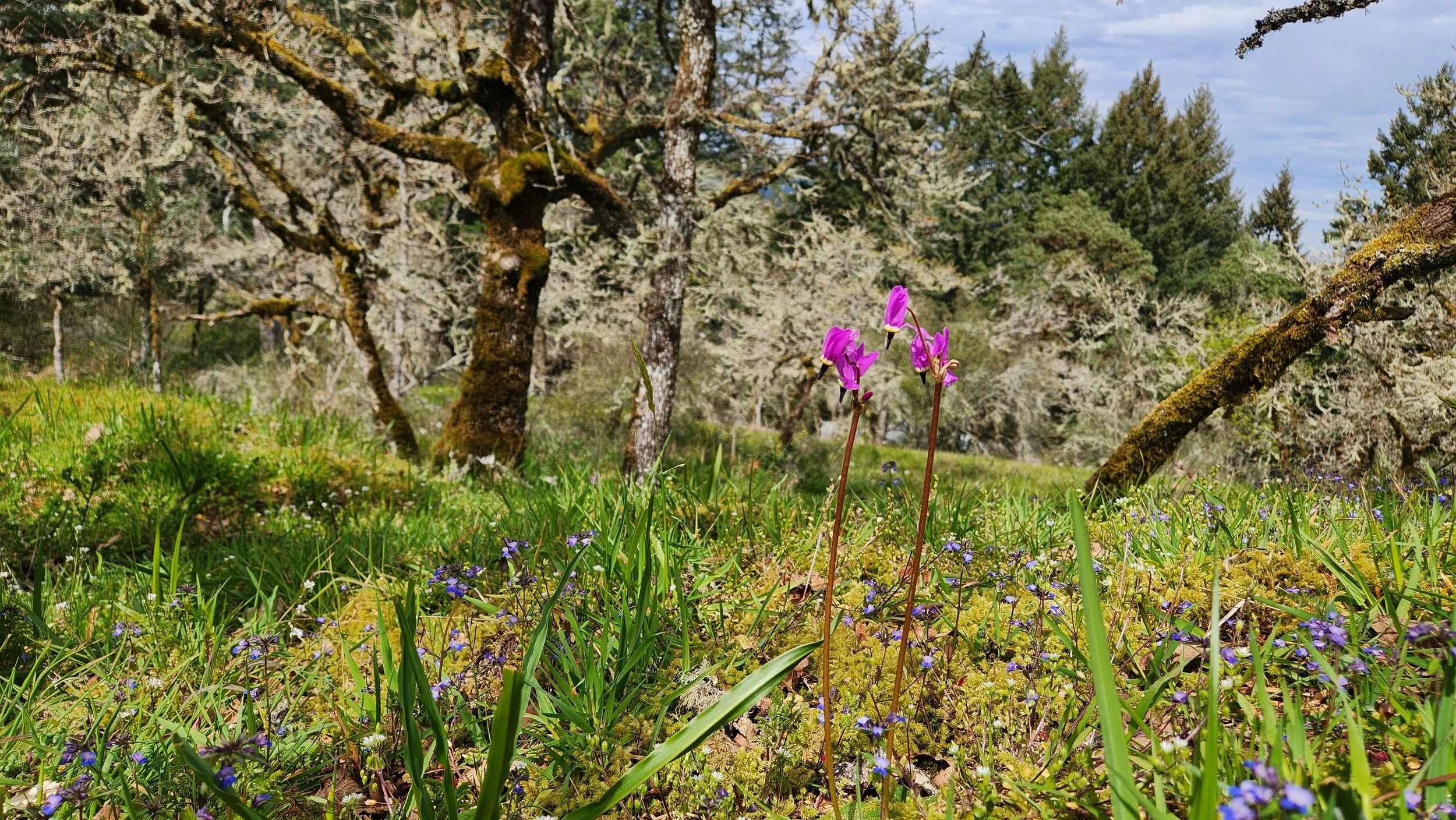
A Garry oak meadow speckled with small-flowered blue-eyed Mary (Collinsia sparsiflora) and broad-leaved shooting star (Primula hendersonii).