
Support Western Screech-Owls
HAT Urges Action to Save Western Screech-Owl from Local Extinction
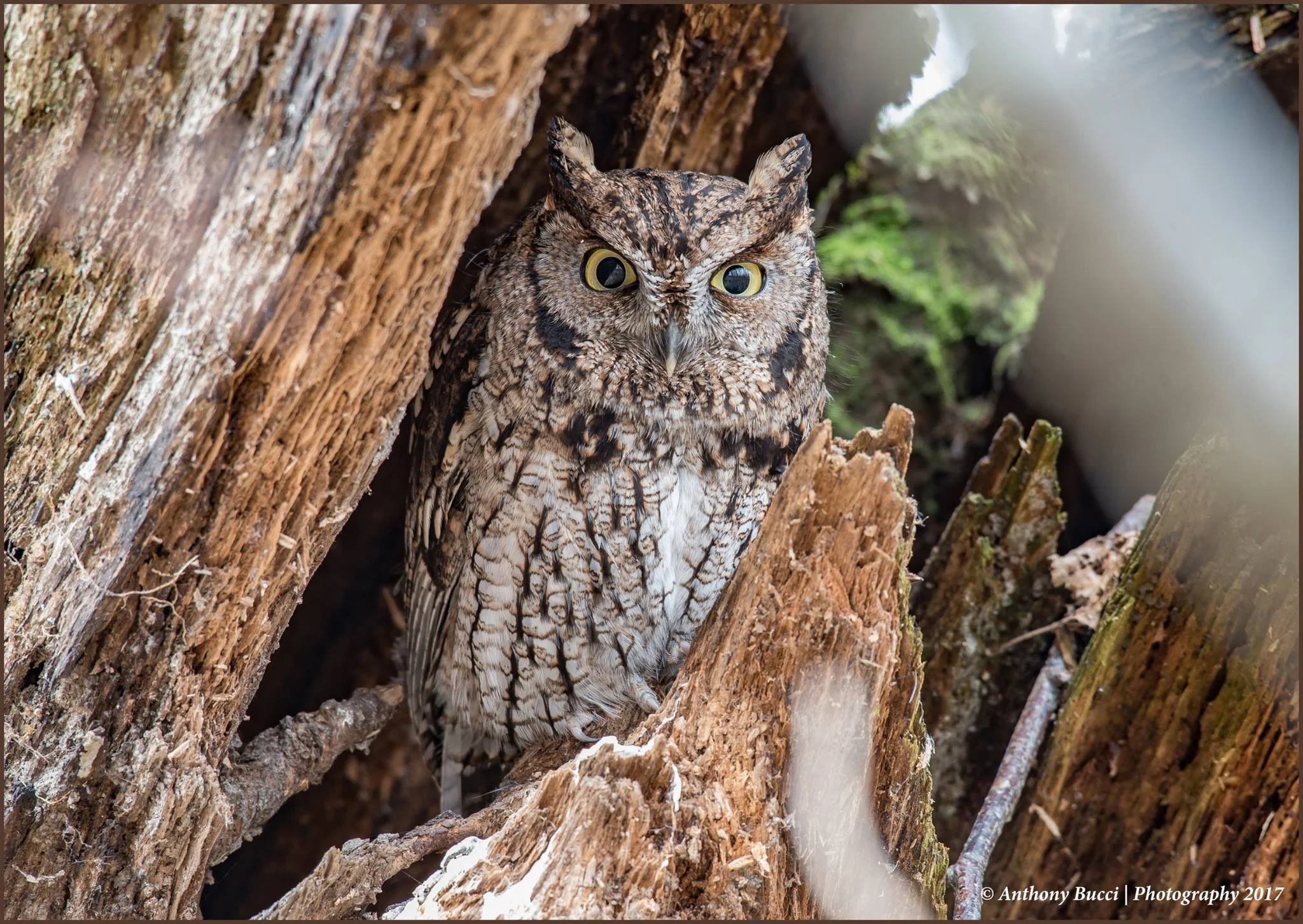
Photo by Anthony Bucci
HAT is raising urgent concern for the coastal Western screech-owl (Megascops kennicottii kennicottii), a species now teetering on the brink of local extinction in Greater Victoria.
Once common across the region, the Western screech-owl has suffered a catastrophic decline of more than 90 percent over the last decade. Surveys conducted by HAT detected only two calling owls were detected last winter, compared to ten in 2015. This is one of the most dramatic declines we’ve seen. There may be only a few pairs left in the entire Victoria area. In the mid-1990s, there were ten breeding pairs just on the University of Victoria campus. Today, those pairs are gone.
The Western screech-owl faces multiple threats. Habitat loss from urban development has fragmented the large forest patches these owls need to survive; they require at least 50 hectares of connected forest with creeks, roughly 50 times the size of Royal Athletic Park, to establish territories and raise their young.
Predation and competition have compounded the problem. The much larger barred owl (Strix varia), which thrives in urban areas, has expanded its range and now overlaps with Western screech-owl habitat. Researchers suspect barred owls not only outcompete Western screech-owls for food but also prey on them directly. Domestic cats, rodenticides, and vehicle collisions add further pressure.
Western screech-owls are small—barely larger than a robin—and nest in cavities of dead trees created by woodpeckers. They cannot excavate their own cavities, making them dependent on older forests with dead, standing trees. People have the tendency to remove standing dead trees for aesthetic reasons, but that is removing homes for these owls.
Fledglings spend time on the ground and rely on shrubs for cover, which are disappearing as forests are cleared for roads, housing, and parking lots.
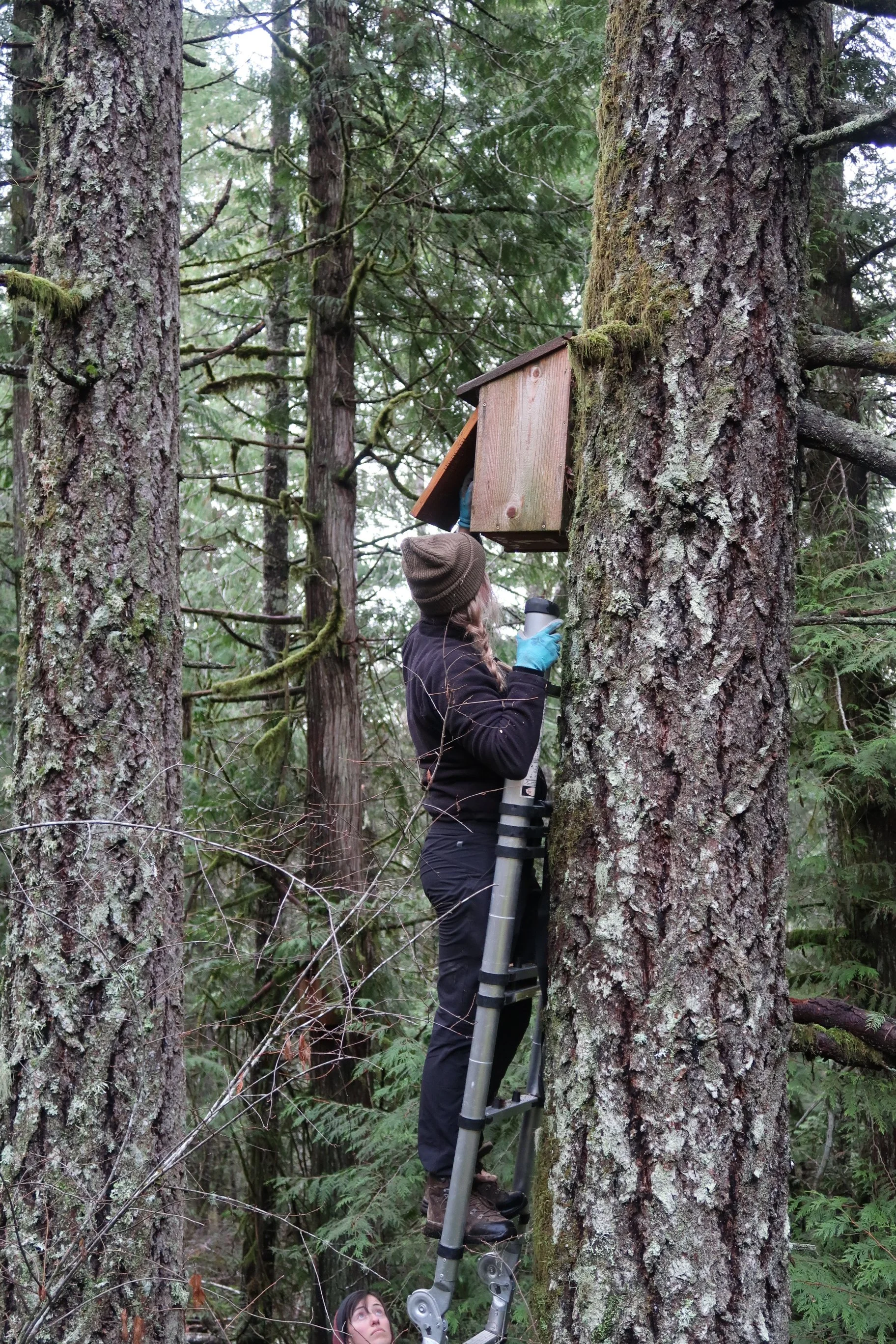
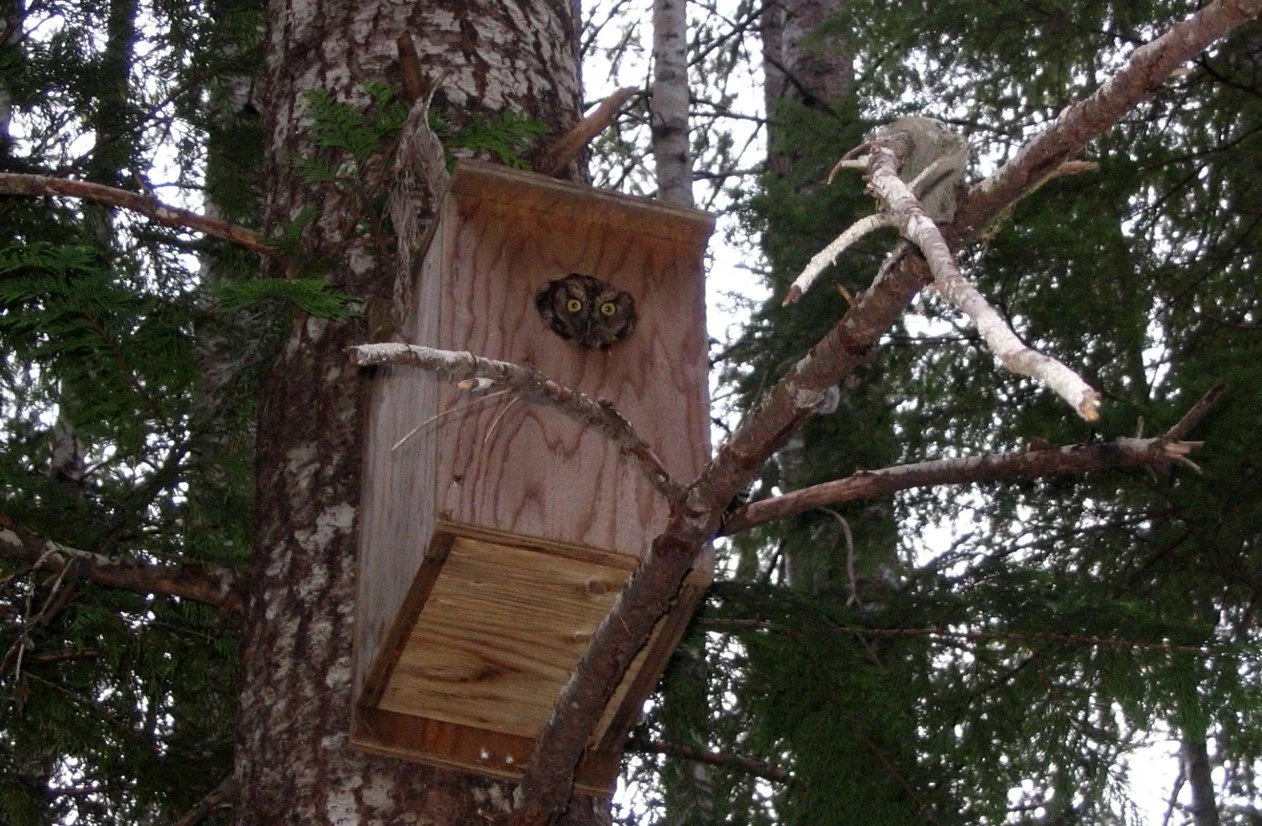
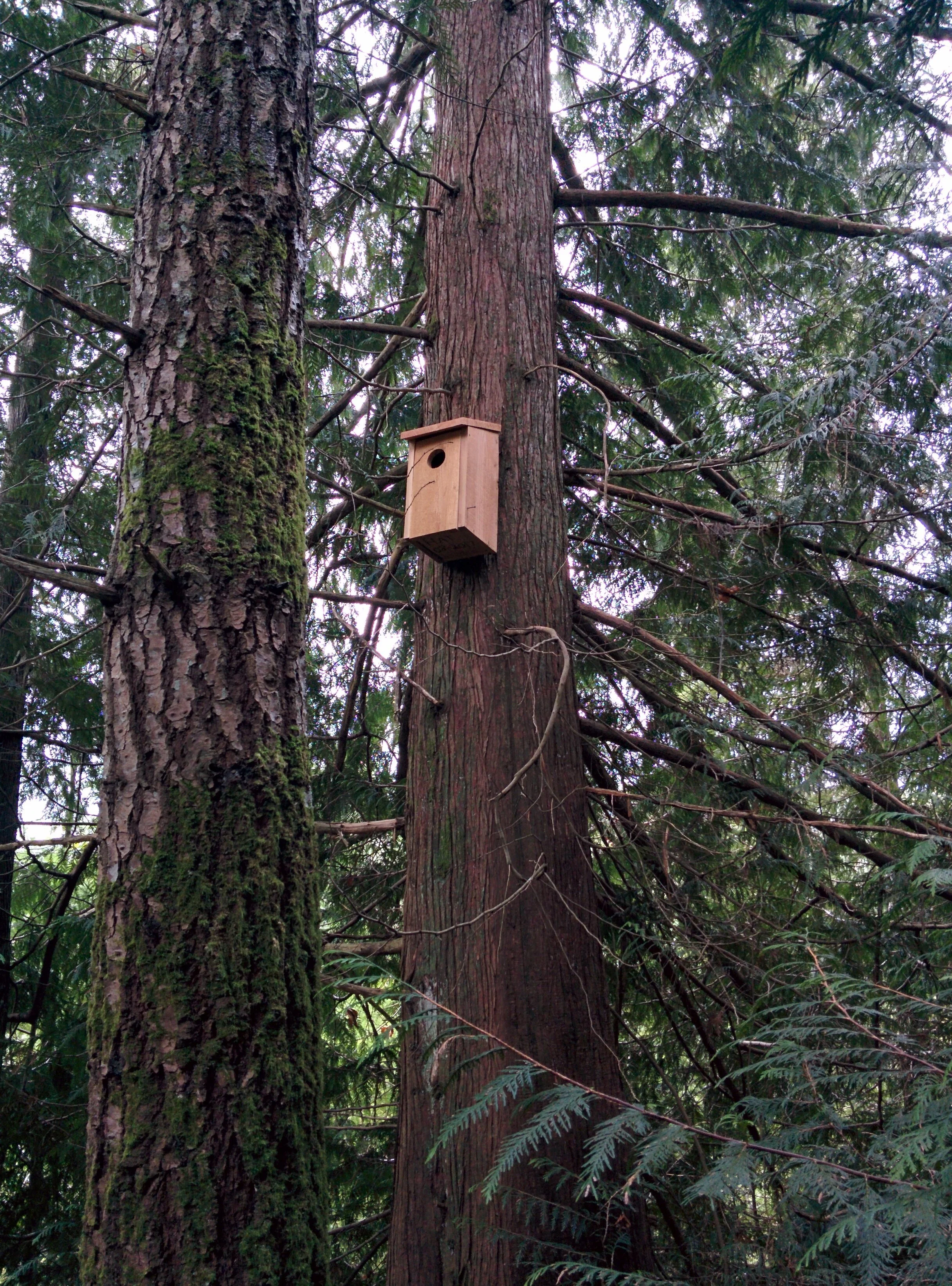
To counter the loss of natural nesting sites, HAT has installed nest boxes designed to mimic tree cavities. These boxes are designed with entrance holes that prevent access by barred owls. Six of these boxes have been used successfully by one breeding pair, offering a glimmer of hope for the species.
Mating season for the Western screech-owl runs from February to April, with territorial calls beginning in late January. The Western screech-owl call is not a screech, but a distinctive series of descending whistles, often described as sounding like a bouncing ball. To hear the call and learn more about the species, visit www.allaboutbirds.org.
About the Western Screech-Owl
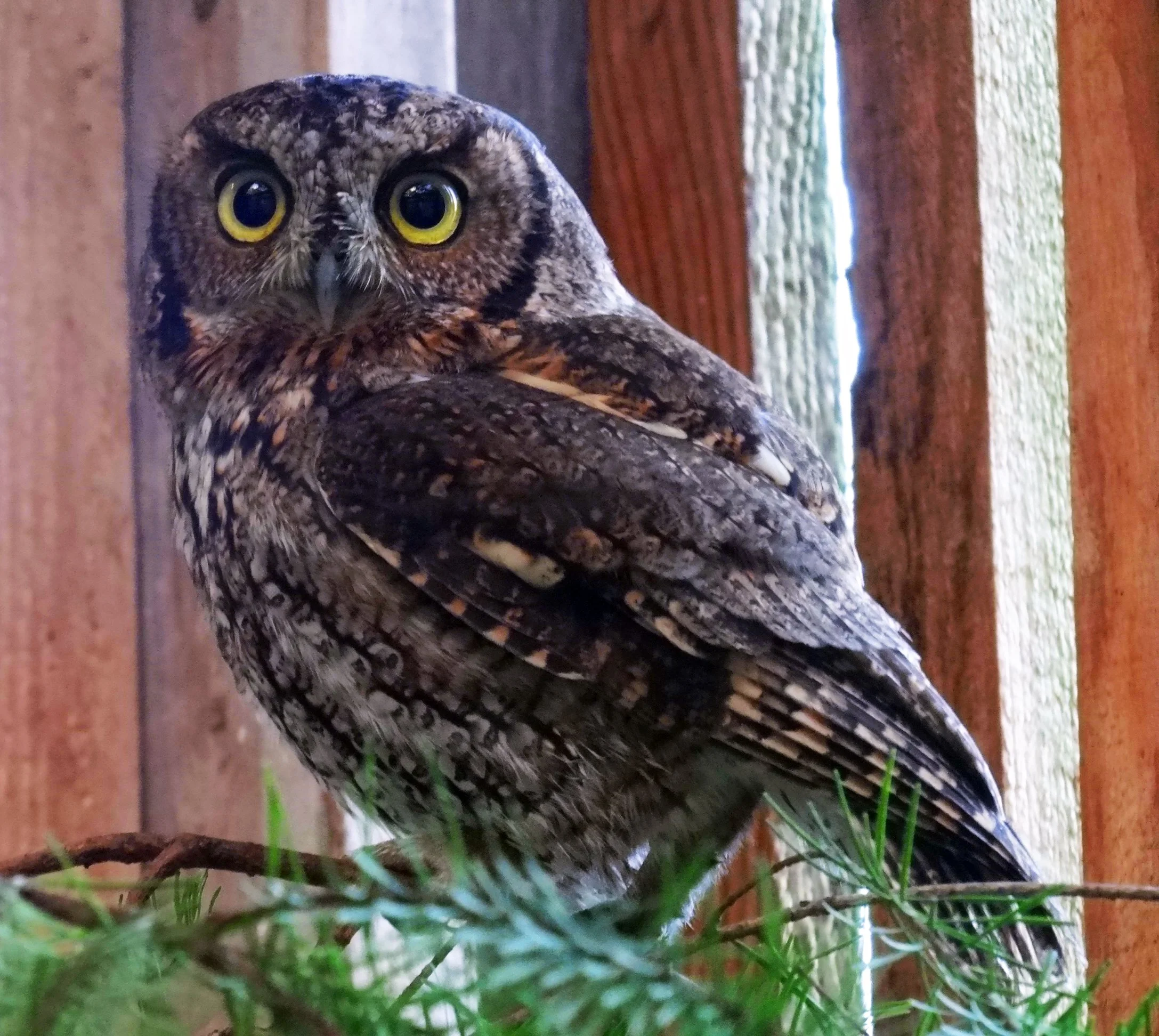
The coastal Western screech-owl (Megascops kennicottii kennicottii) is a small owl with yellow eyes and feathered ear tufts that aid in camouflage.
Historically abundant in Greater Victoria, the species has declined by more than 90 percent in the past decade due to forest and wetland habitat loss and barred owl expansion.
Today, only a handful of individuals may remain in the last large patches of older forest.
How You Can Help
Donate to Support Western Screech-Owl Conservation: Your contribution will help us purchase the necessary tools, time, and nest boxes needed to properly monitor and protect our local screech-owls. Visit www.hat.bc.ca/donate and select ‘Wildlife Program’ to support these endangered creatures.
$50 can help us purchase survey equipment.
$150 can help us build three nest boxes.
$500 can help us establish a safe nesting site within their ideal habitat.
$750 can help us purchase 1 audio recording unit (ARU) required for species monitoring.
Listen, Learn, and Share: Visit www.hat.bc.ca/westernscreechowl to learn more about the species and spread awareness about their decline. Listen for their distinctive call when hiking through the forest and report it on eBird or to HAT.
Habitat Acquisition Trust is calling on the community to support conservation efforts that protect remaining forest habitats and reduce threats to this endangered species. For more information or to donate, visit www.hat.bc.ca.
Contact
Julianna Laposa-Wilde, Wildlife Stewardship Coordinator
Email: julianna@hat.bc.ca
Phone: 250-995-2428
www.hat.bc.ca/westernscreechowl