
SṈIDȻEȽ
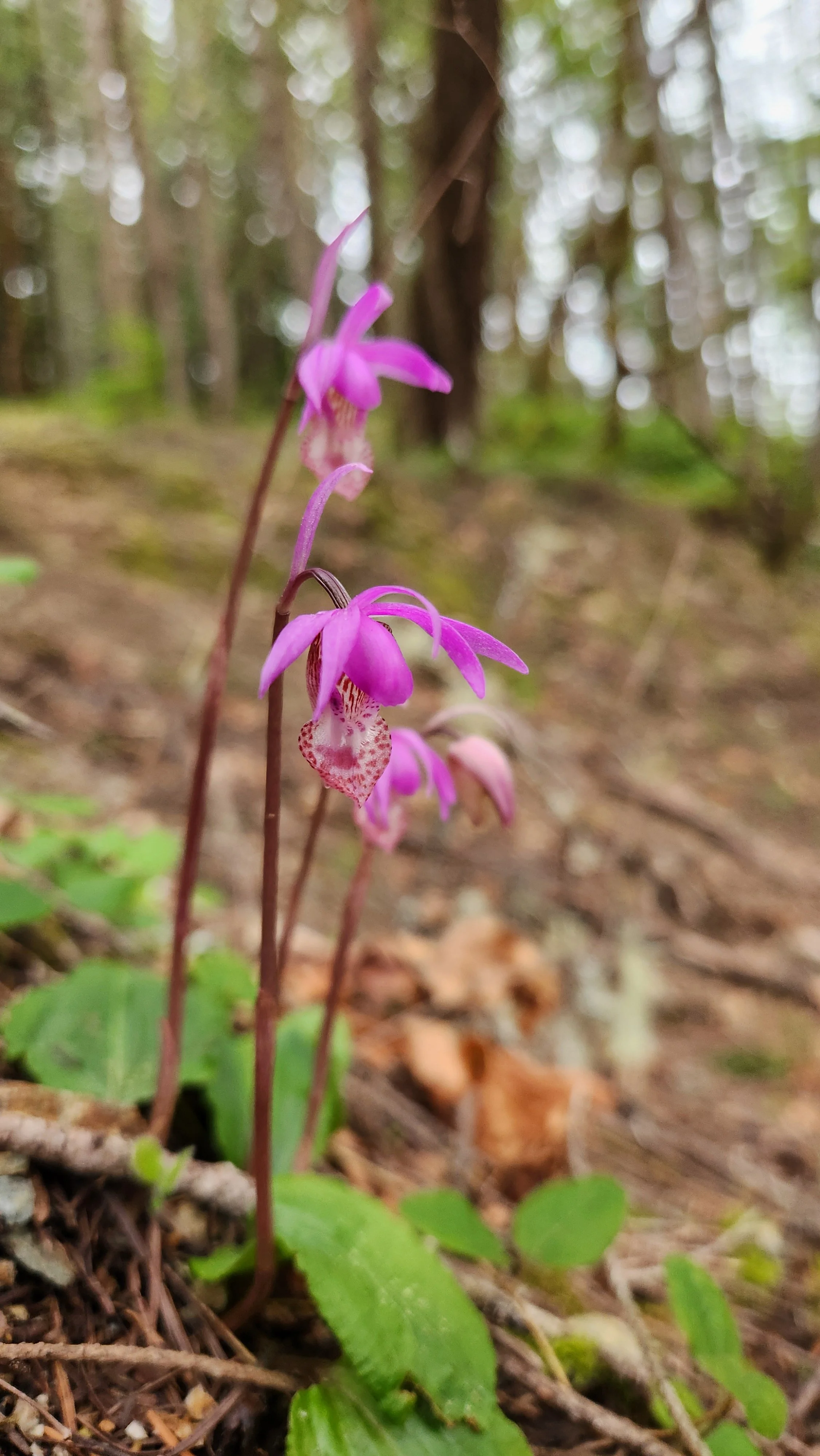
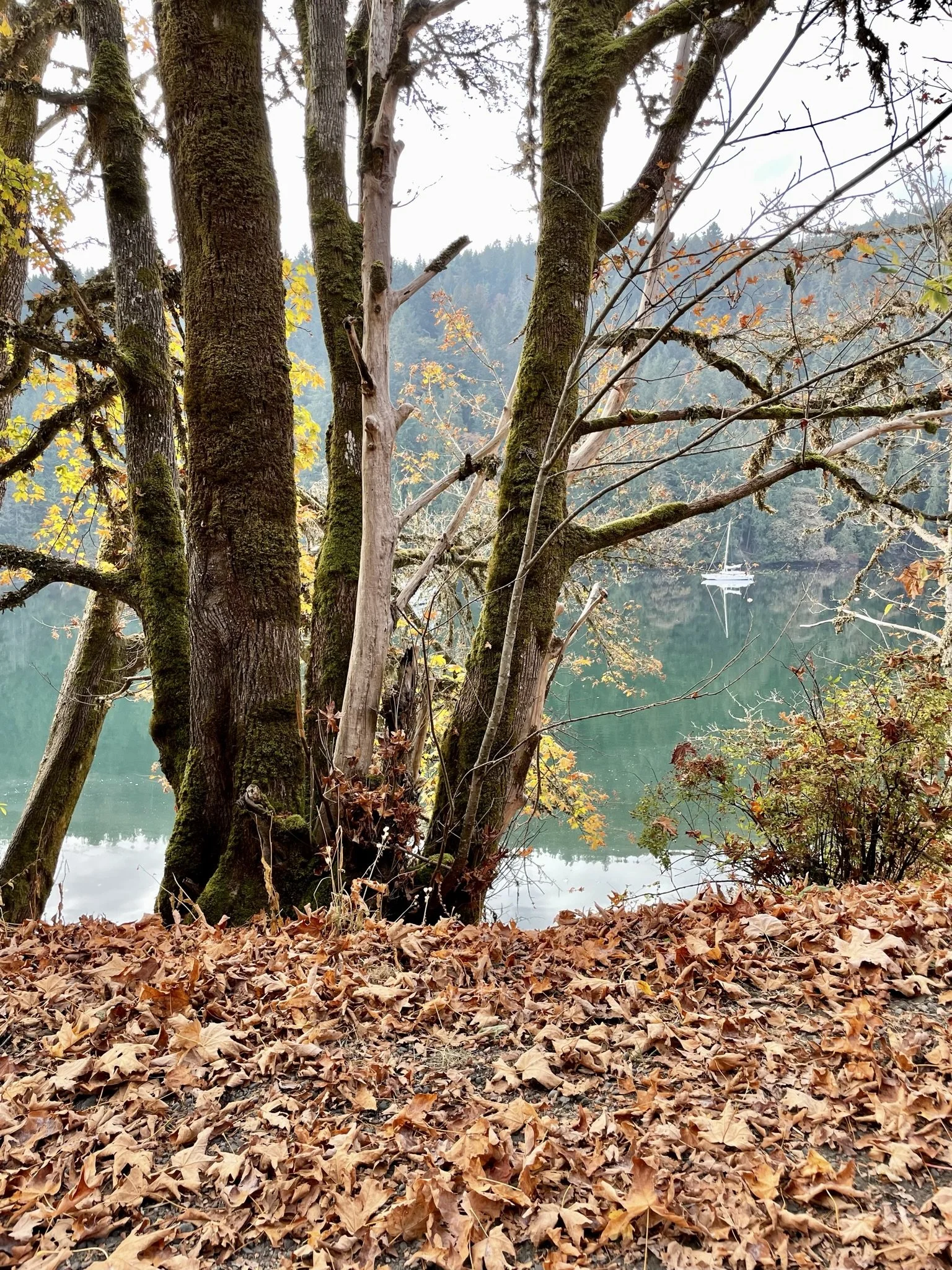
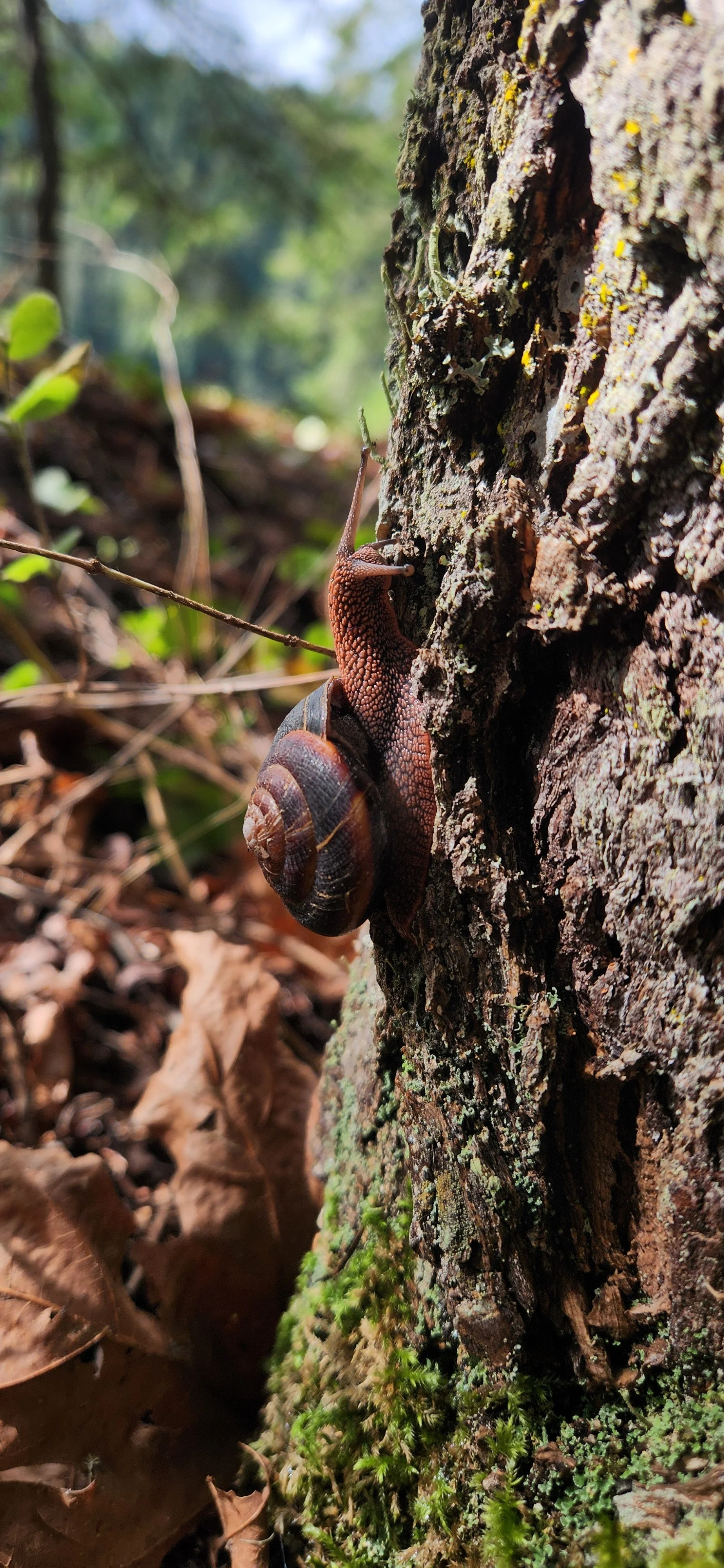
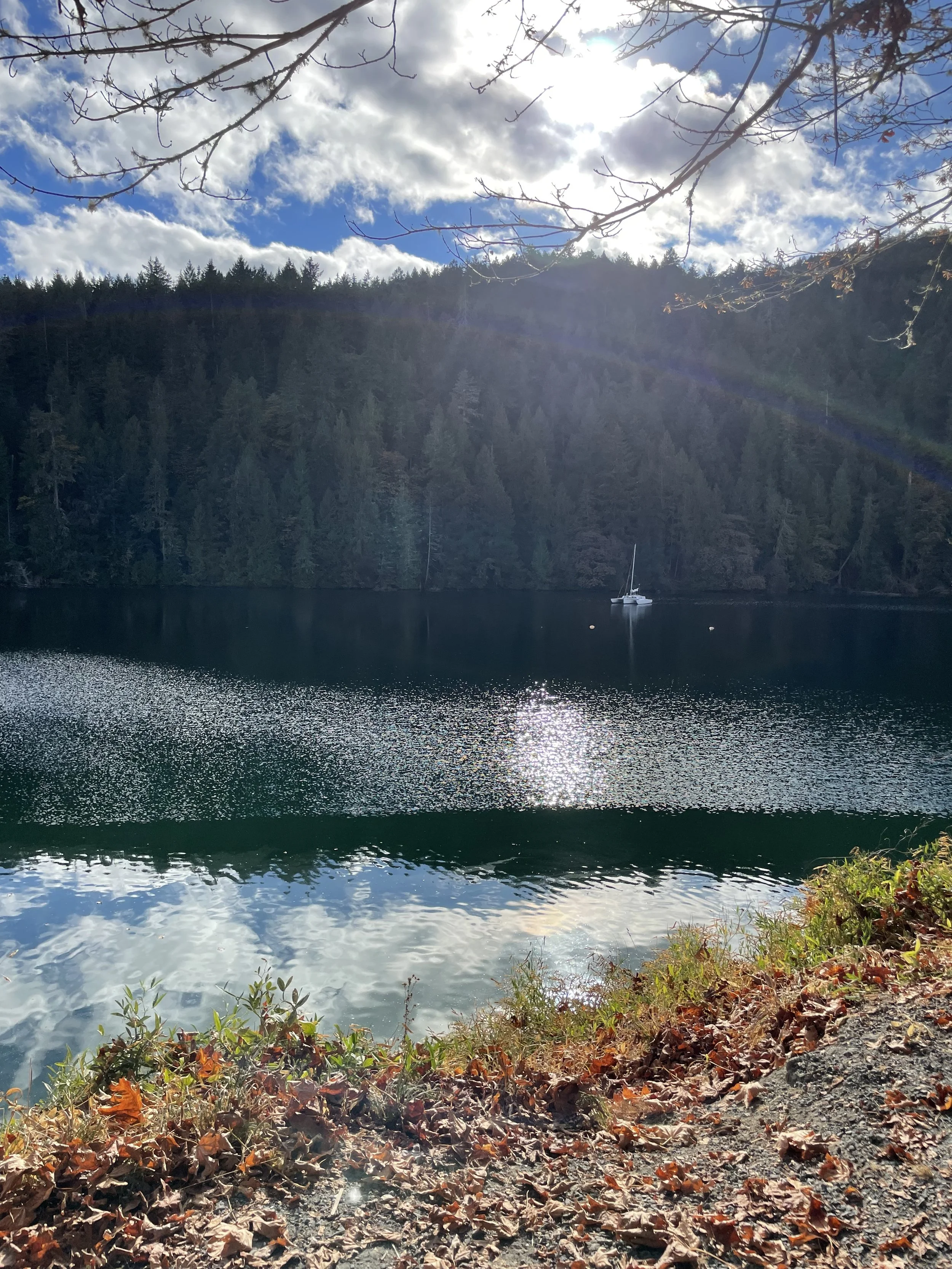
SṈIDȻEȽ is a small inlet on the Saanich Peninsula that features forest, beach, meadows, and riparian habitats. SṈIDȻEȽ means “Place of the Blue Grouse” in SENĆOŦEN and is the first W̱SÁNEĆ village site. SṈIDȻEȽ is situated within Gowlland Tod Provincial Park and is commonly referred to by its English name, Tod Inlet. This work takes place on W̱JOȽEȽ land, in cooperation with and with permission from the W̱JOȽEȽ community.
The site supports a mosaic of ecosystems shaped by its varied topography and coastal conditions. Wetland areas within the forest are characterized by species such as skunk cabbage, while mixed stands of arbutus, Douglas-fir, western redcedar, and alder slope down toward the inlet. Along the shoreline, sandy conditions create unique growing environments where SȽEQȺ (dune grass) has been planted to stabilize soils. Open areas support native rose shrubs and meadow plantings, including species such as pearly everlasting, contributing to overall biodiversity and habitat complexity.
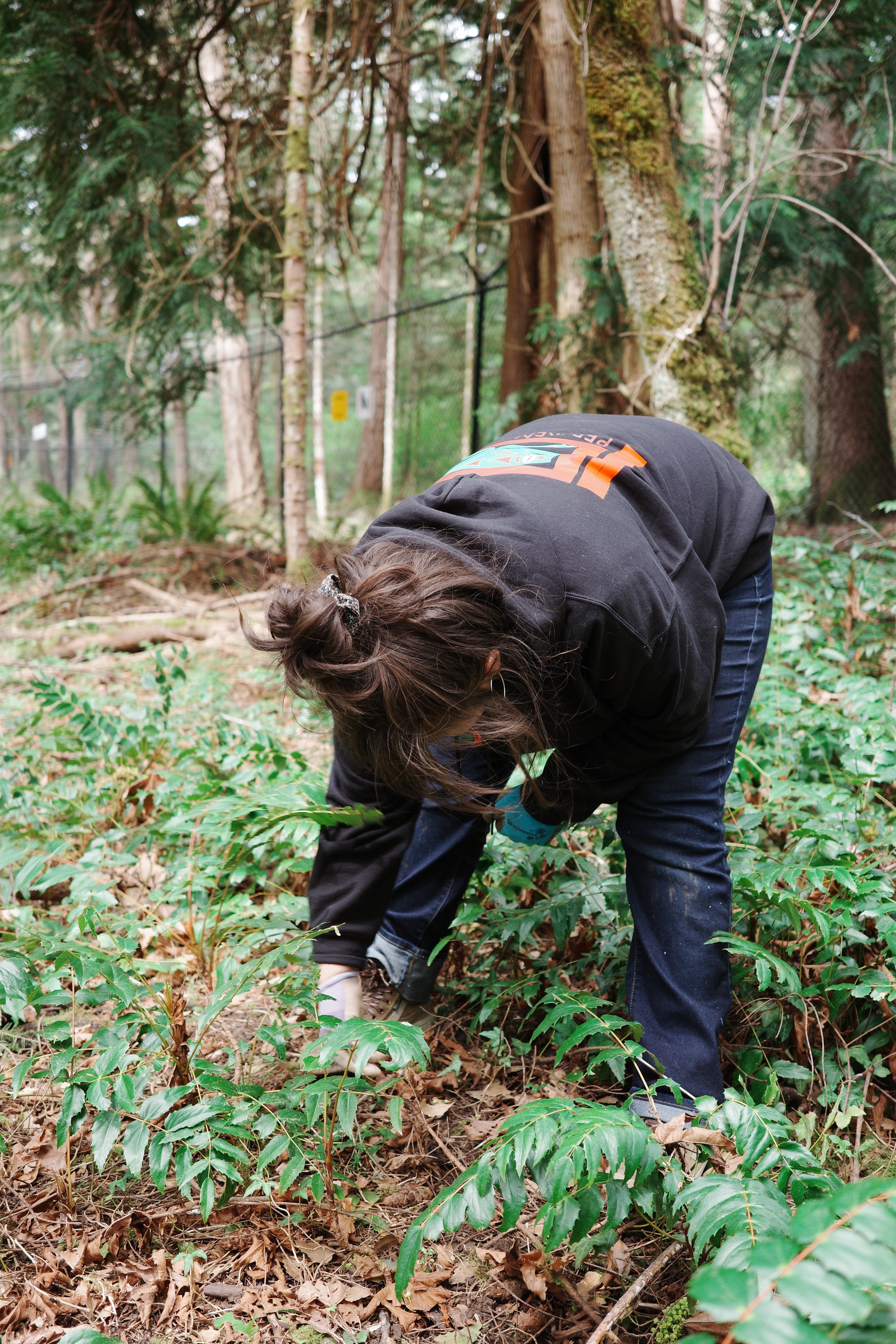
The PEPAKEṈ HÁUTW̱ Foundation has been restoring SṈIDȻEȽ since 2010, working to heal the land from the industrial legacy of the Portland Cement Company, which operated here from 1904 to 1921. Community events for the SṈIDȻEȽ Resiliency Project, led by PEPAKEṈ HÁUTW̱ and supported by HAT, bring together volunteers from the local community, schools, and organizations, as well as students from the W̱SÁNEĆ School Board. These events are critical to restoring this special place while fostering meaningful community connection and stewardship. Read more about PEPAKEṈ HÁUTW̱ Foundation and their work at SṈIDȻEȽ here.
The stewardship of SṈIDȻEȽ is shared among several groups, primarily PEPAKEṈ HÁUTW̱ Foundation, HAT, and Peninsula Streams and Shorelines. Located within a provincial park, restoration efforts at SṈIDȻEȽ are protected in perpetuity, ensuring the long-term health and resilience of this culturally and ecologically significant landscape.
-
Coastal Douglas-fir forest, open meadow, riparian, wetland, and marine.
-
Kwetlal/ḰȽO¸EL/qʷəɬáʔal & SPÁNW/speenhw(Camas/Camassia species): A culturally significant species, camas bulbs are root vegetables that form the foundation of Kwetlal food systems (Garry oak ecosystems). Their beautiful purple and blue flowers can be observed in the spring in open meadow areas.
Purple martin (Progne subis): These birds are blue-listed (Special Concern) in BC. Their population is considered precarious because of a lack of naturally occurring suitable nesting habitat, making them incredibly dependent on a nest-box program. Nest boxes are installed just off of the shore at SṈIDȻEȽ, allowing a resurging population to thrive here.
Northern red-legged frog (Rana aurora): Northern red-legged frogs are a blue-listed (special concern) species in BC and have been observed in a seasonally wet zone at SṈIDȻEȽ. Restoration work at this site will include supporting foraging and refuge habitat for adult frogs.
-
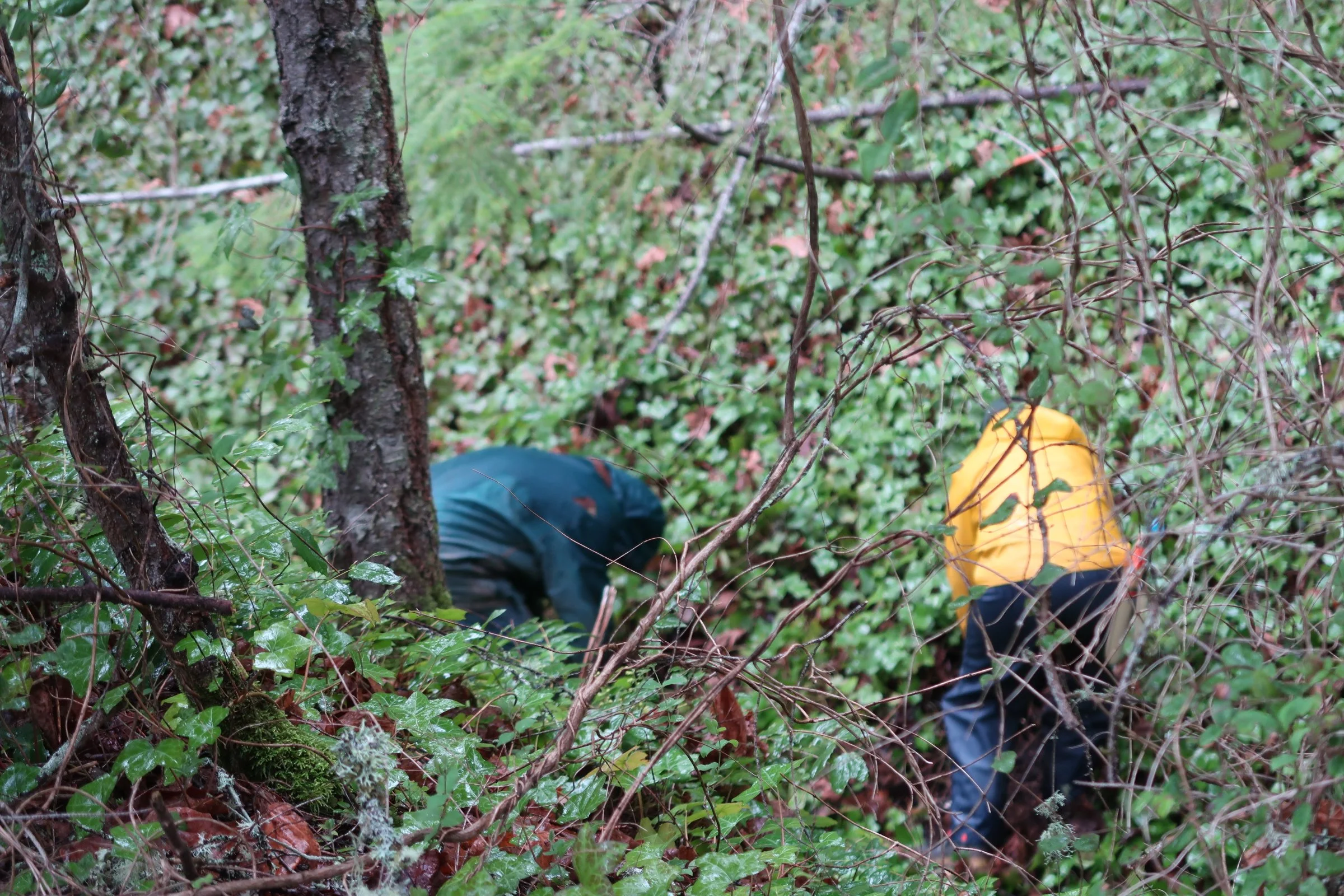
The history of SṈIDȻEȽ includes the operation of a cement factory in the early 1900’s that has created ongoing ecological issues including soil contamination, compaction, invasive species, hydrological changes, and physical remnants of cement and brick. Ongoing restoration work at this site, carried out collaboratively by PEPAKEṈ HÁUTW and HAT, aims to carry out targeted native species planting and invasive plant removal that will restore habitat for at-risk Northern red-legged frogs, improve water retention across the site, increase biodiversity, and include the community in the restoration process. Invasive species removed include creeping buttercup, English ivy, Himalayan blackberry, yellow archangel, common mullein, lemon balm, English holly, common hawthorn, and broad-leaved sweet pea. Native plants installed have included species like pearly everlasting, entire-leaved gumweed, SȽEQȺ (dune grass), ḰȽO¸EL (camas), ȾEX̱EN¸ (June plum), SḴEX̱ (nodding onion), and S₭ELÁṈEW̱ (trailing blackberry).
Your Investment:
$16,515.36
What You’re Supporting:
You are investing in the collaborative, community-based, Indigenous-led restoration of the first W̱SÁNEĆ village site. This unique landscape supports a rich diversity of coastal species and habitats, providing critical ecological value for a wide range of wildlife. Your investment pays for:
Over 150 hours of targeted invasive species removal and native species planting
Three free and accessible community restoration events
Ecological monitoring, data collection, and mapping
Tools, equipment, event supplies, plants, and seeds
Travel to and from the site
Coordination, logistics, and operational capacity
What You Receive:
As a Local Habitat Partner, you receive:
A communications package with social media graphics and copy promoting our partnership, and a Local Habitat Partner badge to proudly display on your website or at your place of business
Opportunities for staff to attend community events and participate in restoration work
Recognition and branding through logo placement online and at events, public acknowledgement as a partner, acknowledgement in HAT’s Annual Report, and association with meaningful local environmental outcomes
Impact reporting from the field that shows the real results of your support, including the area restored and the amount of invasive species removed, reports highlighting progress, and before and after site photos
A charitable tax receipt
Other Supporters of SṈIDȻEȽ