
W̱S͸ḴEM Ivy Forest
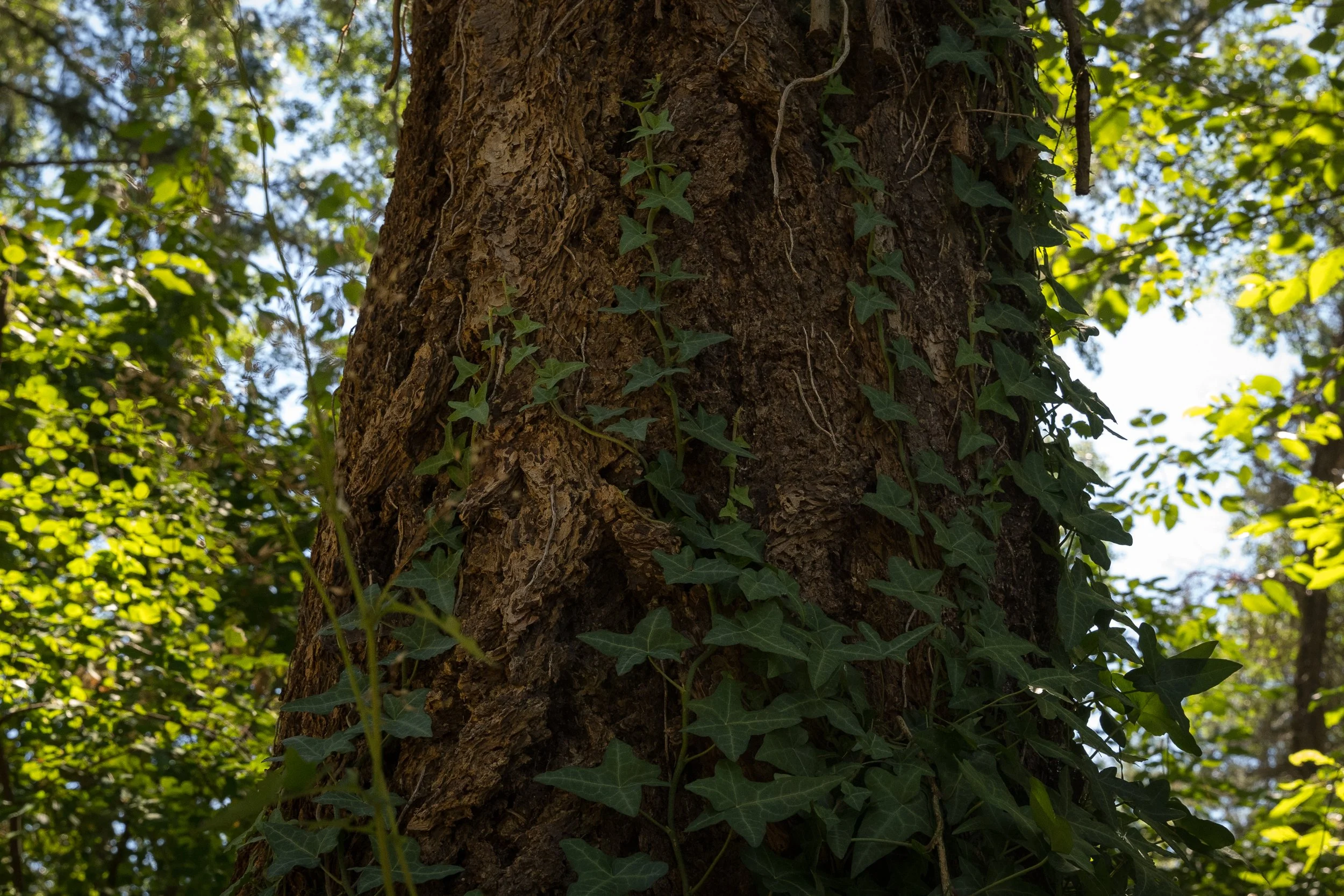


W̱S͸ḴEM means “Place of Clay” in SENĆOŦEN, and the soil texture at this forest site reflects this name. The forest at this site contains a mix of coniferous and deciduous trees, with Douglas-fir, red alder, and bigleaf maple dominating the canopy layer. The understory contains a mixture of June plum, snowberry, salmonberry, oceanspray, and other native shrubs.
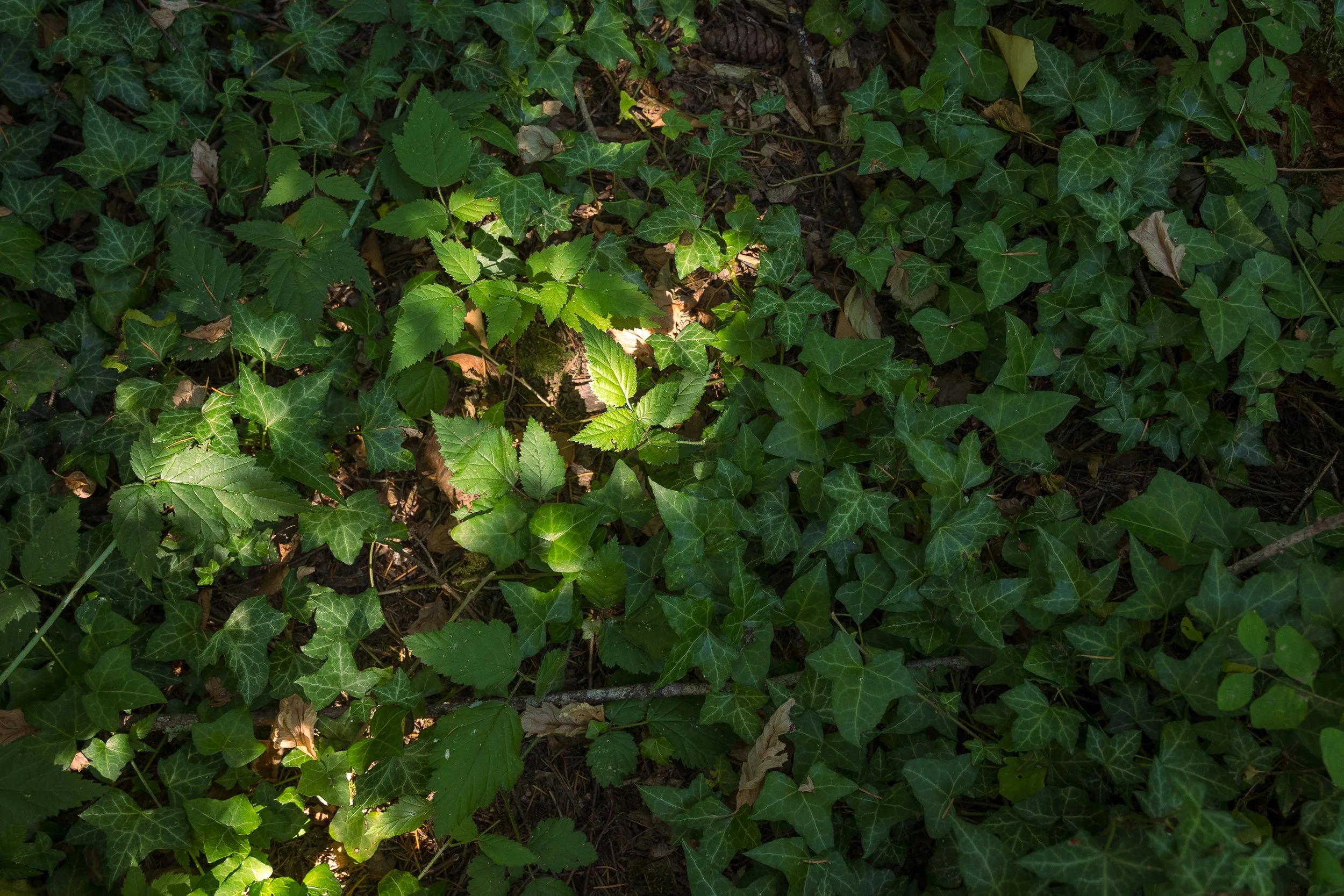
As the English ivy removal has progressed, the ground cover has come alive with trailing blackberry, Oregon grape, Pacific sanicle, white fawn lilies, and trillium. Within the forest are also vernal (seasonally wet) pools, which provide suitable habitat for frogs and newts. Mosquitos are also drawn here, providing an ample food source for a small group of bats that have been observed on the property.
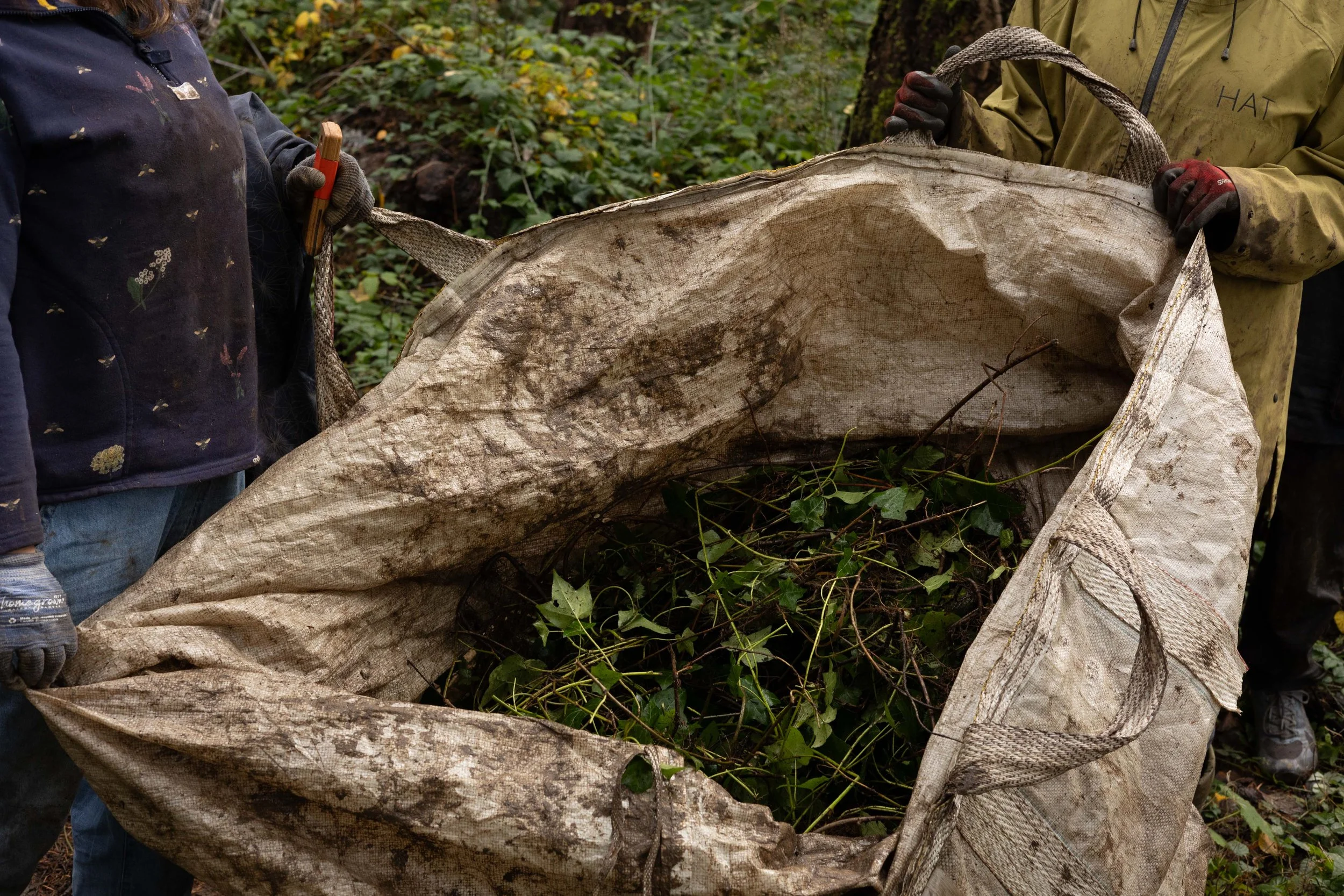
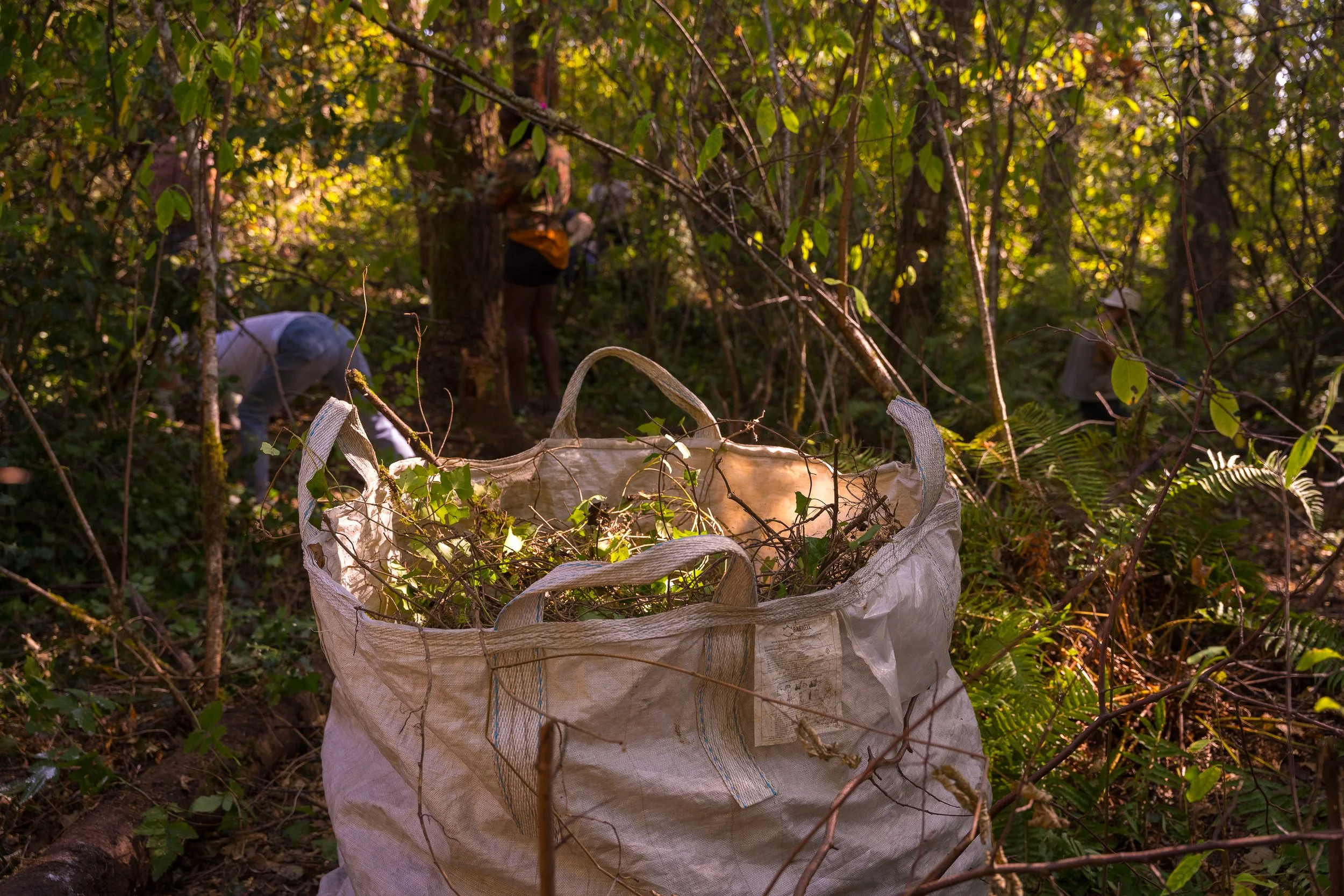
Leading this work is Sarah Jim, a proud member of the W̱SÁNEĆ Nation. Sarah is an artist and language learner who is deeply passionate about land stewardship through ecosystem restoration. Sarah’s project brings family, friends, allies, and volunteers together who are dedicated to healing one of the last remaining forests on the W̱S͸ḴEM reservation located on the lands of the Jim family. While Sarah guides this work on her family's lands, HAT supports this work through operative support, volunteers, and time spent in the field.
The project’s vision focuses on removing English ivy, increasing biodiversity and supporting the health of the forest, creek, and ocean nearby. This work is done to decolonize the land for the bees, birds, bats, frogs, newts, and countless other non-human kin. Sarah’s dream for this area is to create an accessible harvesting site for W̱SÁNEĆ family. We are so honoured to be a part of this project.
-
Coastal Douglas-fir forest and vernal wetlands.
-
ELILEIȽĆ/Salmonberry (Rubus spectabilis): ELILEIȽĆ in SENĆOŦEN, this flowering shrub is an important species to the W̱SÁNEĆ people and is closely tied to the “Salmonberry bird” (the Swainson’s thrush, or W̱EW̱ELEŚ in SENĆOŦEN).
S₭ELÁLṈEW/Trailing blackberry (Rubus ursinus): The only native blackberry species in BC, trailing blackberry is characterized by its trailing growth pattern, three leaflets, and sweet berries that are an important food source for songbirds, small mammals, bears, and humans. Ivy removal at the Jim family’s home has already allowed the space needed for this plant to grow, promoting a healthier forest floor.
W̱EW̱ELEŚ/Swainson’s thrush(Catharus ustulatus): Sarah Jim shares that the SENĆOŦEN word for the Swainson’s thrush isW̱EW̱ELEŚ, and their song signifies the ripening of the ELILEIȽĆ (Salmonberries).
WEXES/Pacific tree frog (Pseudacris regilla): Sarah shares that theSENĆOŦEN word for frog is WEXES. Pacific tree frogs are a frequent, delightful discovery at Sarah’s W̱S͸ḴEM Ivy Project events. These tiny frogs require ephemeral (seasonally wet) wetlands and adequate vegetation cover for their breeding sites. Restoration efforts can encourage healthy hydrology and native plant cover for these precious WEXES.
-
While English ivy has been the target invasive species for this project, other species, including Himalayan blackberry and creeping buttercup, pose additional challenges. Restoration efforts at this site will include managing these invasive species and supporting Sarah’s goals of decolonizing the land, increasing biodiversity, supporting a healthy forest ecosystem, and creating an accessible harvesting site for W̱SÁNEĆ family.
Your Investment:
$33,633.80
What You’re Supporting:
You are investing in the collaborative, community-based, Indigenous-led restoration of 7.28 hectares of coastal Douglas-fir forest, where targeted invasive species management is essential to support ecosystem recovery and long-term resilience. Your investment pays for:
Over 300 hours of targeted invasive species removal and native species planting
Ten free and accessible community restoration events
Ecological monitoring, data collection, and mapping
Tools, equipment, event supplies, plants, and seeds
Travel to and from the site
Coordination, logistics, and operational capacity
What You Receive:
As a Local Habitat Partner, you receive:
A communications package with social media graphics and copy promoting our partnership, and a Local Habitat Partner badge to proudly display on your website or at your place of business
Several opportunities for staff to attend community events and participate in restoration work
Recognition and branding through logo placement online and at events, public acknowledgement as a partner, acknowledgement in HAT’s Annual Report, and association with meaningful local environmental outcomes
Impact reporting from the field that shows the real results of your support, including the area restored and the amount of invasive species removed, reports highlighting progress, and before and after site photos
A charitable tax receipt
Other Supporters of W̱S͸ḴEM