
Metchosin Meadows
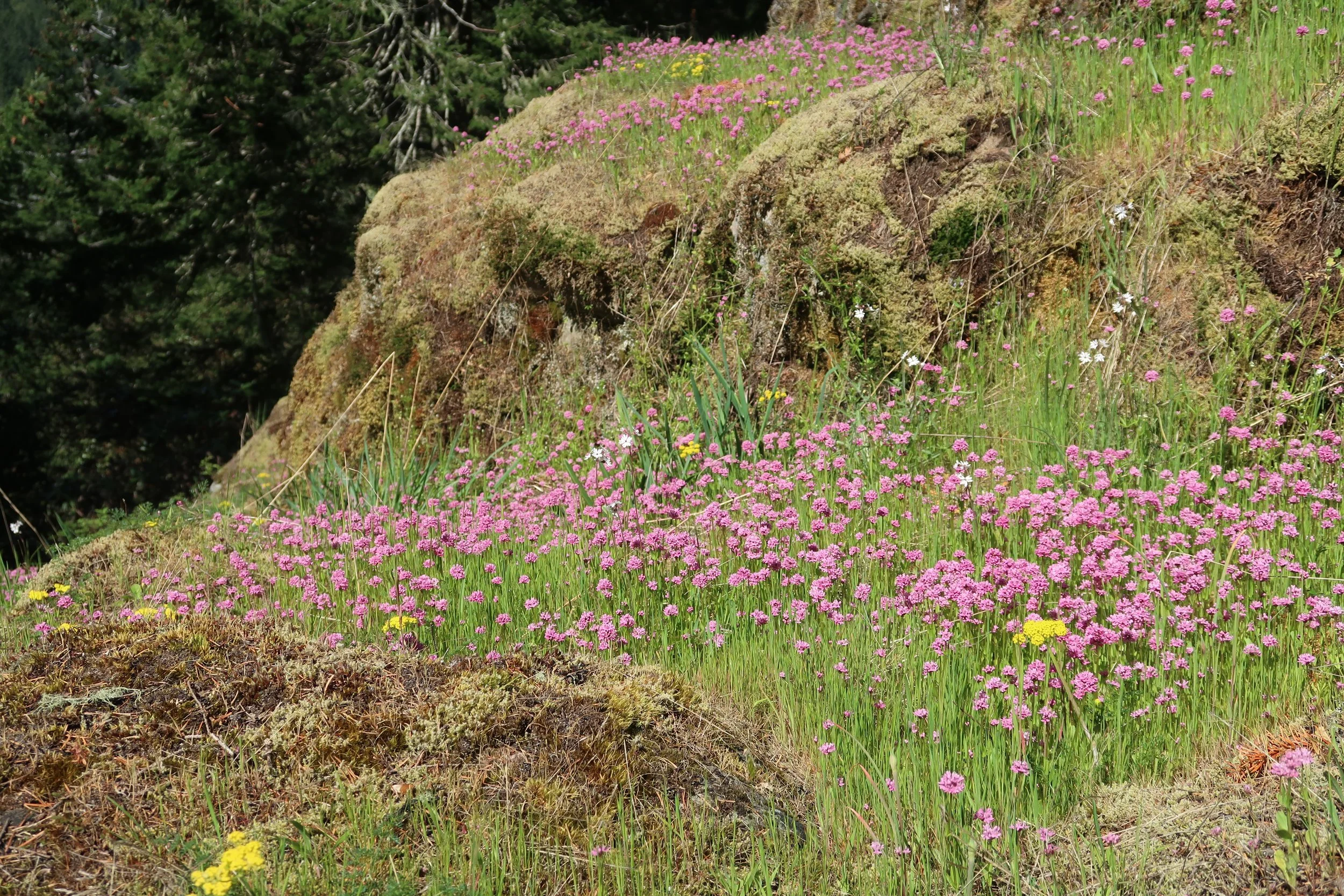
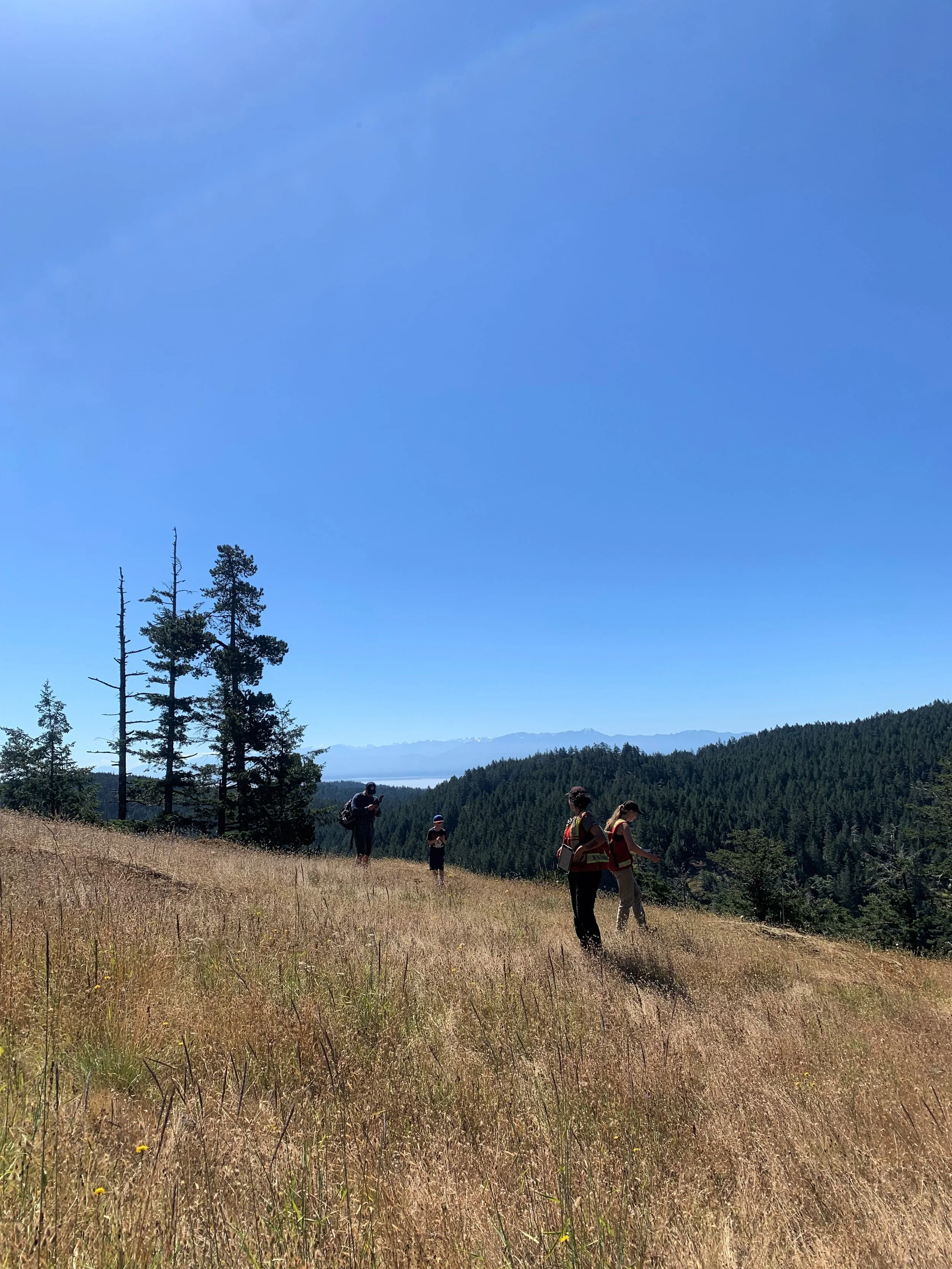
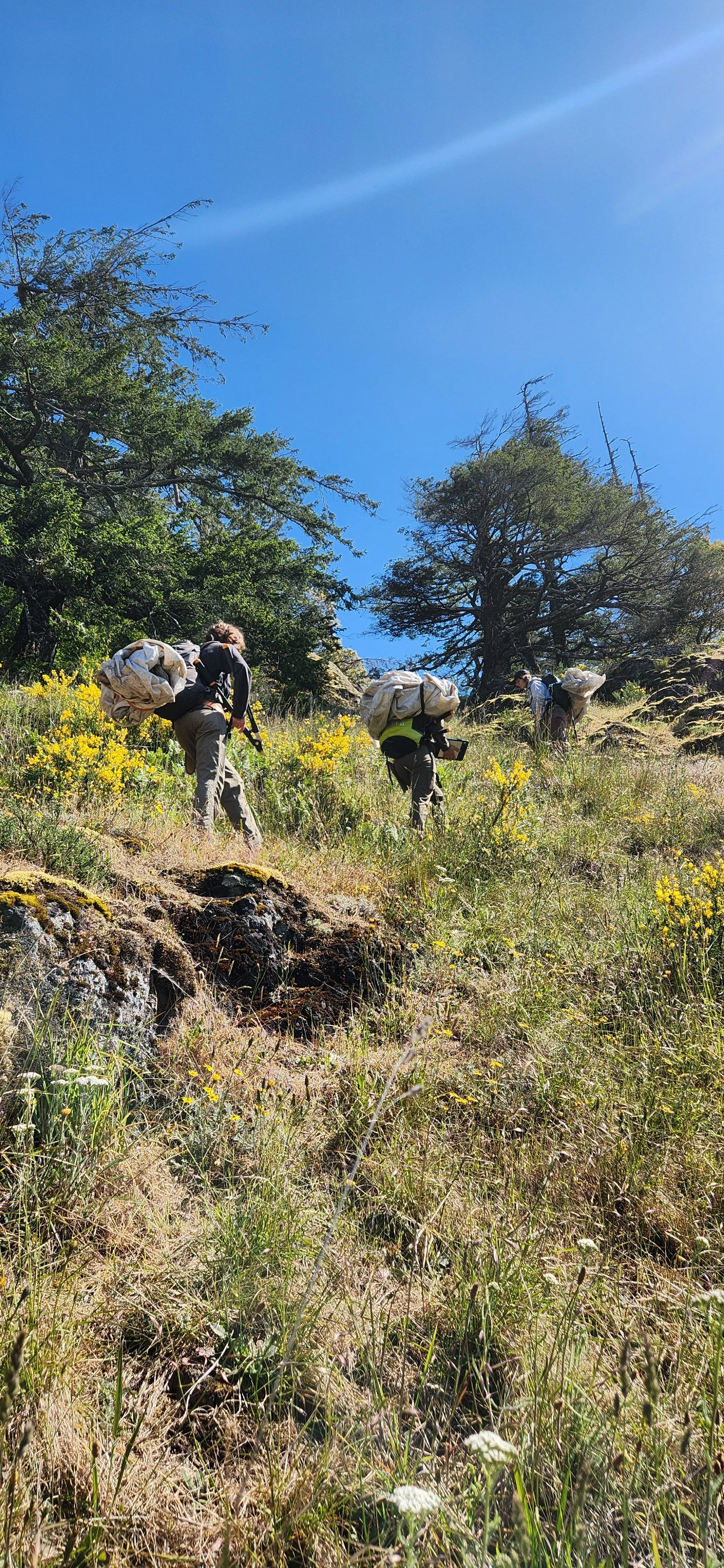
The Metchosin Meadows are a 12.39-hectare collection of visually striking and ecologically rich sites across Metchosin. Shaped by steep slopes, rugged terrain, and expansive views, these areas include a mix of Garry oak meadows, rocky outcrops, dry southwest-facing slopes, riparian areas, and second-growth Douglas-fir forests.
These sites lie in a transition zone between the Coastal Douglas-fir moist maritime biogeoclimatic zone and the Coastal Western Hemlock very dry maritime subzone, which supports a wide variety of plant communities. Among these are rare and sensitive ecosystems like Douglas-fir–arbutus and arbutus–hairy manzanita, along with Douglas-fir–salal forests and wetter areas that include seasonal vernal pools.
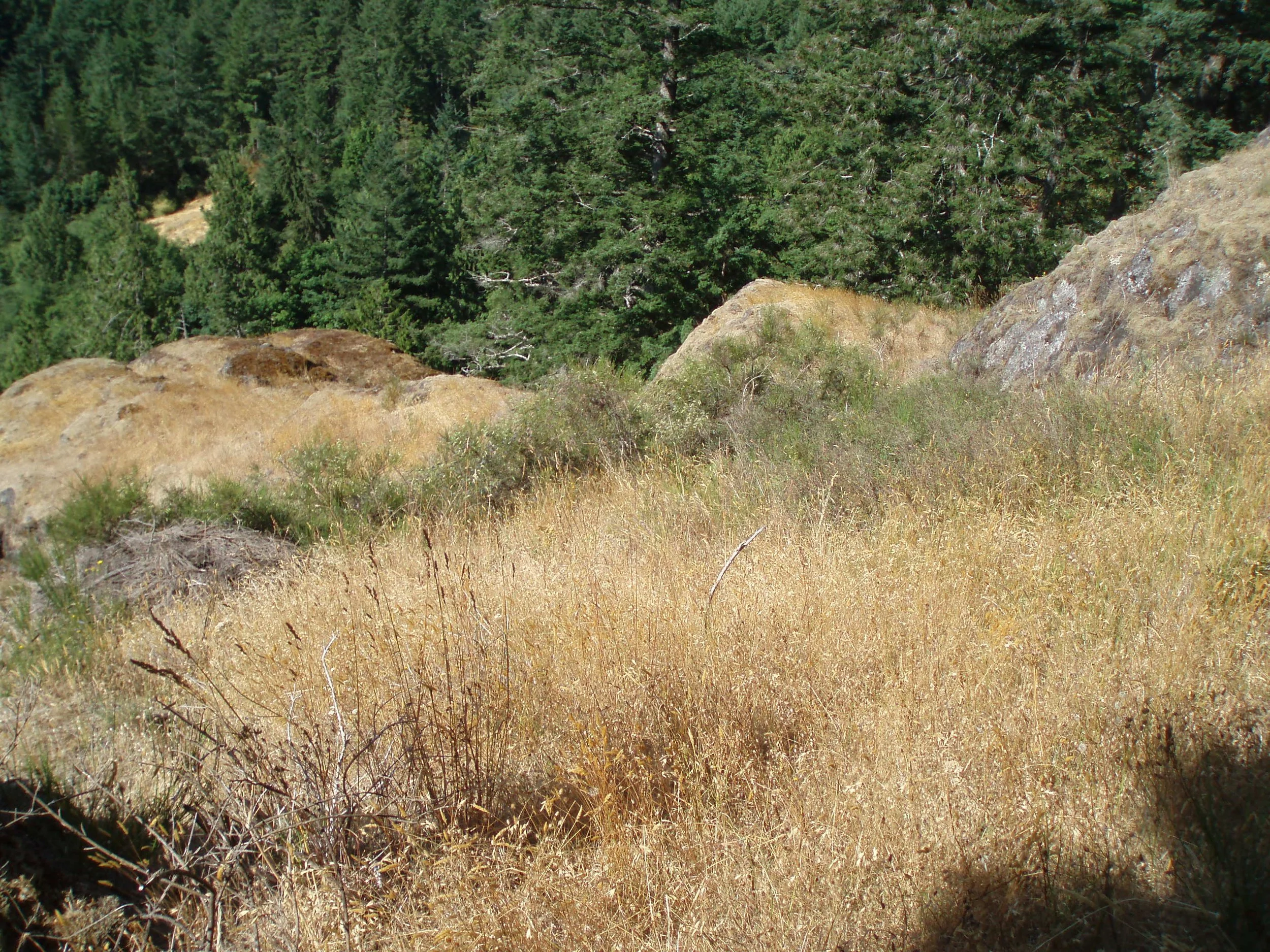
The landscape changes noticeably from top to bottom. Higher elevations are very dry and exposed, with bedrock outcrops and thin soils that support open meadow habitats. Moving downslope, soils become deeper and hold more moisture, allowing forests to develop. In some areas, there are sheltered and moist forested areas which add to the diversity of habitats. Even though the overall climate is quite dry, the presence of vernal pools creates small, seasonal wetland areas that are important for plant and wildlife diversity.
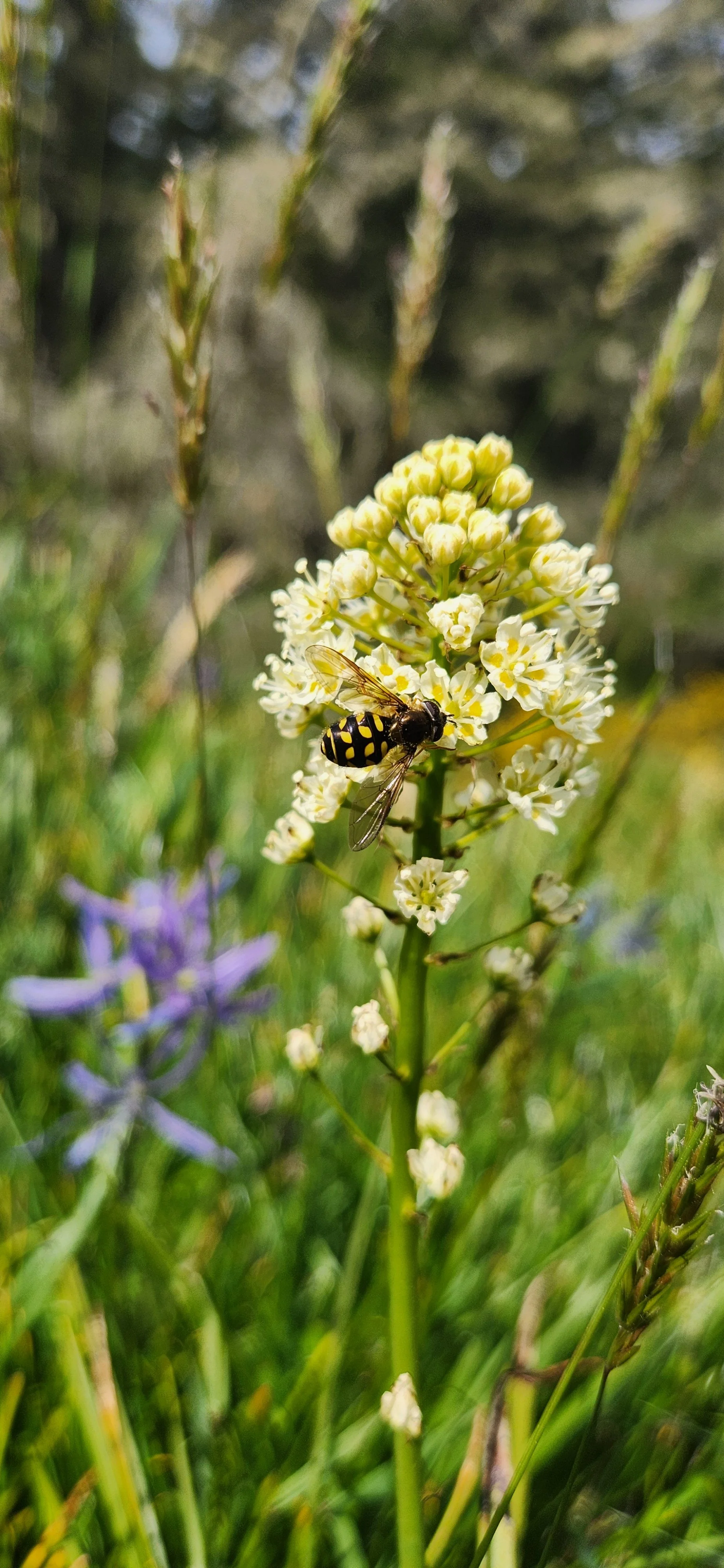
In the spring, these sites are especially vibrant, with a wide range of native plants in bloom. Wildflowers like yarrow (Achillea millefolium), Hooker’s onion (Allium acuminatum), harvest lily (Brodiaea coronaria), and common camas (Camassia quamash) create a colourful display across the landscape. Native grasses are also abundant and play an important role in these ecosystems.
The area supports a variety of wildlife habitat features, including many medium to large wildlife trees and plenty of coarse woody debris, which creates ideal microhabitats for small creatures. The hilly terrain and relatively intact natural areas help connect habitats from lower to higher elevations. The Metchosin Meadows have also been identified as a potential habitat for endangered species like the western screech-owl and western bluebird.
The Metchosin Meadows are located on private property and held as Section 219 conservation covenants by Habitat Acquisition Trust. Supporting these sites means safeguarding a rare and rapidly disappearing landscape in perpetuity. Your support will directly fund invasive species removal, habitat restoration, and long-term stewardship to ensure these meadows and forests continue to thrive. Become a Local Habitat Partner to keep these ecosystems healthy, resilient, and alive with biodiversity.
-
Garry oak meadows, riparian habitats, vernal pools, rocky outcrops, second-growth Douglas-fir forests, and terrestrial herbaceous ecosystems.
-
Purple sanicle (Sanicula bipinnatifida): A red-listed (Threatened) species in British Columbia, this small purple flower is found in dry Garry oak meadows and woodlands. Scotch broom and invasive grasses pose an ongoing threat to this species.
Slimleaf onion (Allium amplectens): Provincially blue-listed, this species is found in vernally moist rocky bluffs and ledges within oak meadow habitats, and prefers minimal tree and shrub cover.
White-top aster (Sericocarpus rigidus): A provincially blue-listed species (Special Concern). Habitat loss from invasive species spread and forest encroachment are ongoing threats to this small flora. Restoration efforts include a focus on creating suitable habitat pockets for this species.
Northern Red-legged Frog (Rana aurora): A blue-listed (Special Concern) species in BC, these frogs can be observed in a small forest pond within the Metchosin Meadows that also supports rough-skinned newts (Taricha granulosa) and possibly long-toed salamanders (Ambystoma macrodactylum). While the pond is self-sustaining, spurge laurel (Daphne laureola) must be be removed to maintain natural hydrology and protect native vegetation.
Sharp-tailed snake (Contia tenuis): These snakes are listed as a Schedule 1 “Endangered” species under the Federal Species at Risk Act and are a red-listed (Endangered) species in BC. Their unique habitat needs include south-facing rocky outcrops with considerable debris to provide cover. A sharp-tailed snake was observed in the Metchosin Meadows after installing an Artificial Cover Object (ACO). You can learn more about HAT’s Sharp-tailed snake program here.
Western branded skipper (Hesperia colorado oregonia): A provincially blue-listed butterfly that is thought to use fescue and sedge species as host plants. These sites retain some abundance of Roemer’s fescue (Festuca roemeria) and long-stoloned sedge (Carex inops) which could be the larval stage food source for this butterfly.
Moss’s Elfin (Incisalia mossii mossii): A provincially blue-listed butterfly that depends on broad-leaved stonecrop (Sedum spathulifolium) as a host plant.
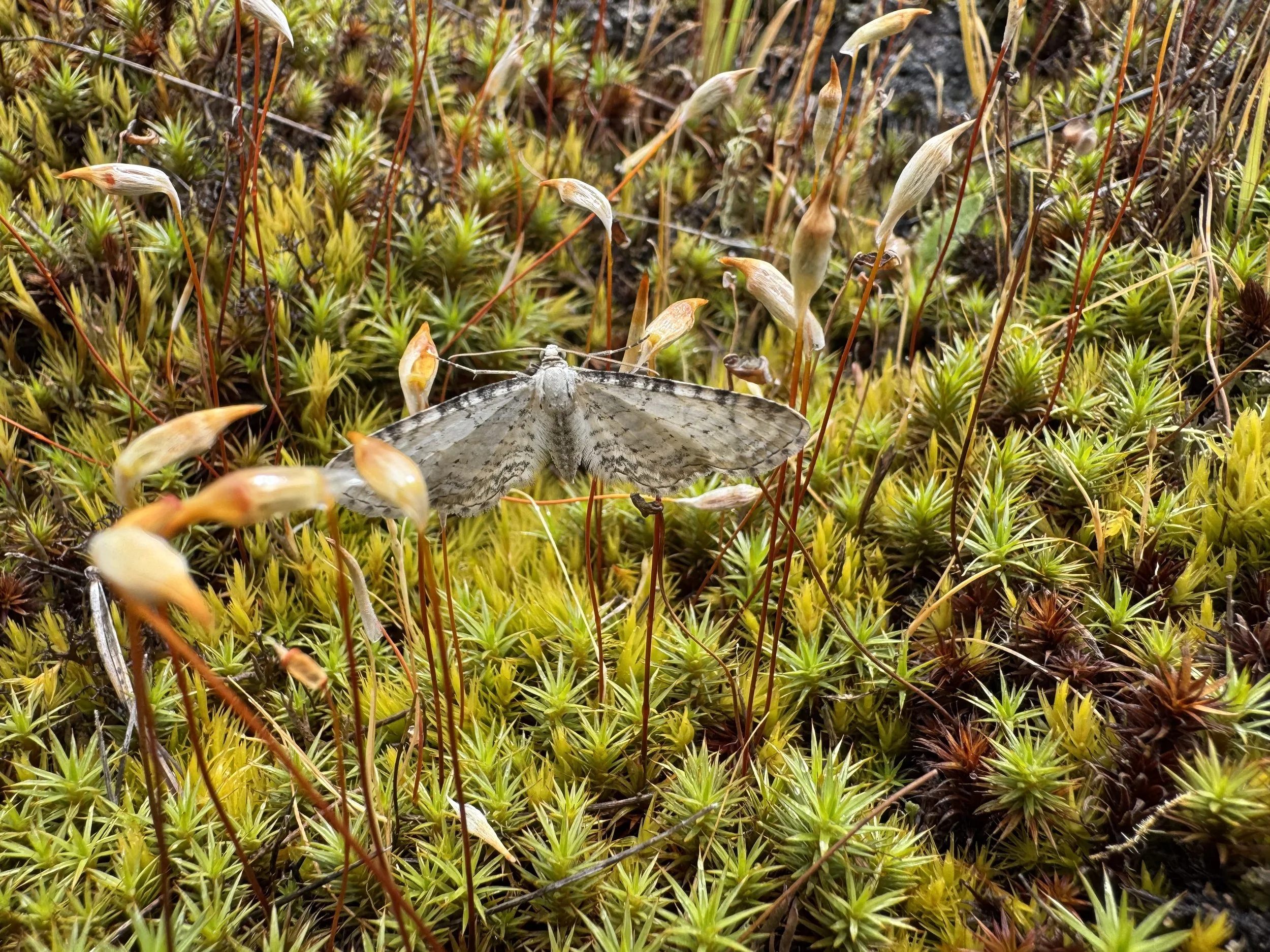
Island Snow Scorpionfly (Boreus insulanus): A snow scorpionfly species, believed to be endemic to one of the Metchosin sites, associated with mosses.
Hairy tufted jumping spider (Phidippus comatus): In July 2024, one of the first Canadian records was observed on a Metchosin site by HAT crew member Hannah Hickli. There is one other record in Saskatoon, however details are unknown. There have been other occurrences on Vancouver Island but nowhere else in BC.
Northern alligator lizard (Elgaria coerulea): Rocky outcrops, talus slopes, and streams provide the perfect habitat for this native lizard. The Northern alligator lizard is slightly stouter and shorter than its invasive counterpart, the common wall lizard (Podarcis muralis).
-
Invasive species spread, including Scotch broom, shiny geranium, orchard grass, tansy ragwort, daphne laurel, invasive grasses, Himalayan blackberry, bur chervil, cut-leaf blackberry, English holly, English ivy, and thistle, are an ongoing challenge. Restoration efforts at these meadow sites will continue to target invasive species removal efforts around at-risk slim-leaf onion, purple sanicle, and sharp-tailed snake habitat, while avoiding damaging these sensitive areas during blooming times.
Your Investment:
$44,128.50
What You’re Supporting:
You are investing in the restoration of 12.39 hectares of critically endangered Garry oak meadows spanning across the District of Metchosin. These habitats are home to numerous endangered species, like the island snow scorpionfly, which is believed to be endemic to one of the sites in Metchosin. Your investment pays for:
Over 570 hours of targeted invasive species removal and native species planting
Ecological monitoring, data collection, and mapping
Tools, equipment, plants, and seeds
Travel to and from the site
Coordination, logistics, and operational capacity
What You Receive:
As a Local Habitat Partner, you receive:
A communications package with social media graphics and copy promoting our partnership, and a Local Habitat Partner badge to proudly display on your website or at your place of business
Recognition and branding through logo placement online and at events, public acknowledgement as a partner, acknowledgement in HAT’s Annual Report, and association with meaningful local environmental outcomes
Impact reporting from the field that shows the real results of your support, including the area restored and the amount of invasive species removed, reports highlighting progress, and before and after site photos
A charitable tax receipt
Other Supporters of Metchosin Meadows